From Affordable Haven to Multi-Million-Dollar Real Estate: The Two-Decade Transformation of Hanoi’s Xa La Urban Area

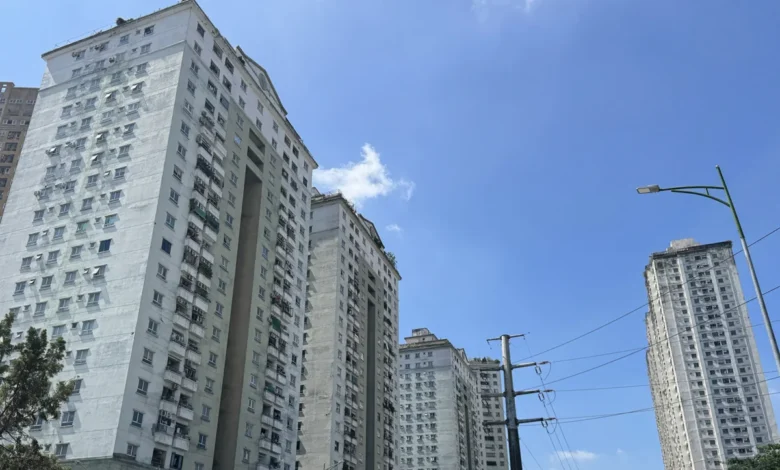
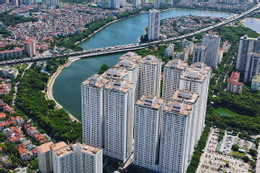
The Xa La urban area in Hanoi’s Ha Dong district, initiated in 2007 by the No. 1 Construction Private Enterprise of Dien Bien province and completed in 2012, stands as a prime example of the dramatic evolution characterizing the Vietnamese capital’s real estate market. Spanning a development cycle that began nearly two decades ago, this massive residential project comprises 10 high-rise apartment buildings, delivering approximately 2,200 residential units to a burgeoning urban population. Originally conceived to meet the urgent housing demands of middle-income families in a rapidly expanding Western corridor of Hanoi, Xa La has transitioned from an affordable, highly sought-after community into a dense residential hub grappling with the pressures of urban aging, infrastructure strain, and surging property valuations that reflect broader macroeconomic trends across the city.
Historical Context and Development Chronology (2007–2012)
The genesis of the Xa La urban area dates back to the mid-2000s, a period marked by aggressive urbanization and an acute shortage of housing for domestic families in Hanoi. Construction officially commenced in 2007 under the stewardship of the No. 1 Construction Private Enterprise of Dien Bien, an investor that capitalized on Ha Dong’s administrative transition into the capital following the expansion of Hanoi’s boundaries in 2008.
Between 2009 and 2012, as the towers were progressively completed and handed over to buyers, the real estate market experienced a phase of high liquidity coupled with accessible entry pricing. During this initial commercialization window, primary market prices for apartments at Xa La hovered between 10 million and 14.5 million Vietnamese Dong (VND) per square meter.
The project rolled out its inventory in distinct phases. The early blocks—namely CT1, CT2, and CT3—were launched at competitive primary rates ranging from 10.5 million to 12.5 million VND per square meter. As demand picked up and construction progressed, subsequent phases saw marginal increases. Towers CT4 and CT5 were priced between 11.5 million and 13 million VND per square meter, while the final blocks, including CT6, were introduced to the market between 2011 and 2012 at prices ranging from 13 million to 14.5 million VND per square meter.
Initial Affordability and Secondary Market Dynamics
During its early years of operation, Xa La was widely recognized as a financial sanctuary for young couples and low-to-middle-income families. Two-bedroom apartments, typically ranging from 60 to 75 square meters, were traded on the primary market for roughly 700 million to 950 million VND. Larger three-bedroom configurations spanning 80 to 100 square meters commanded prices between 1 billion and 1.3 billion VND.
Crucially, a vast majority of the units could be acquired for a total outlay of less than 1.5 billion VND. This price point aligned perfectly with the purchasing power of homebuyers seeking affordable housing in Ha Dong during that era. However, the secondary market was not without its friction. During periods of heightened market speculation and high demand, certain units experienced "chênh" (under-the-table premium payments) ranging from 50 million to 200 million VND per unit, depending entirely on the specific floor, orientation, and view. When factoring in these unofficial premiums, actual acquisition costs for eager buyers effectively rose to between 13 million and 17 million VND per square meter.
Infrastructure Strain and Safety Challenges
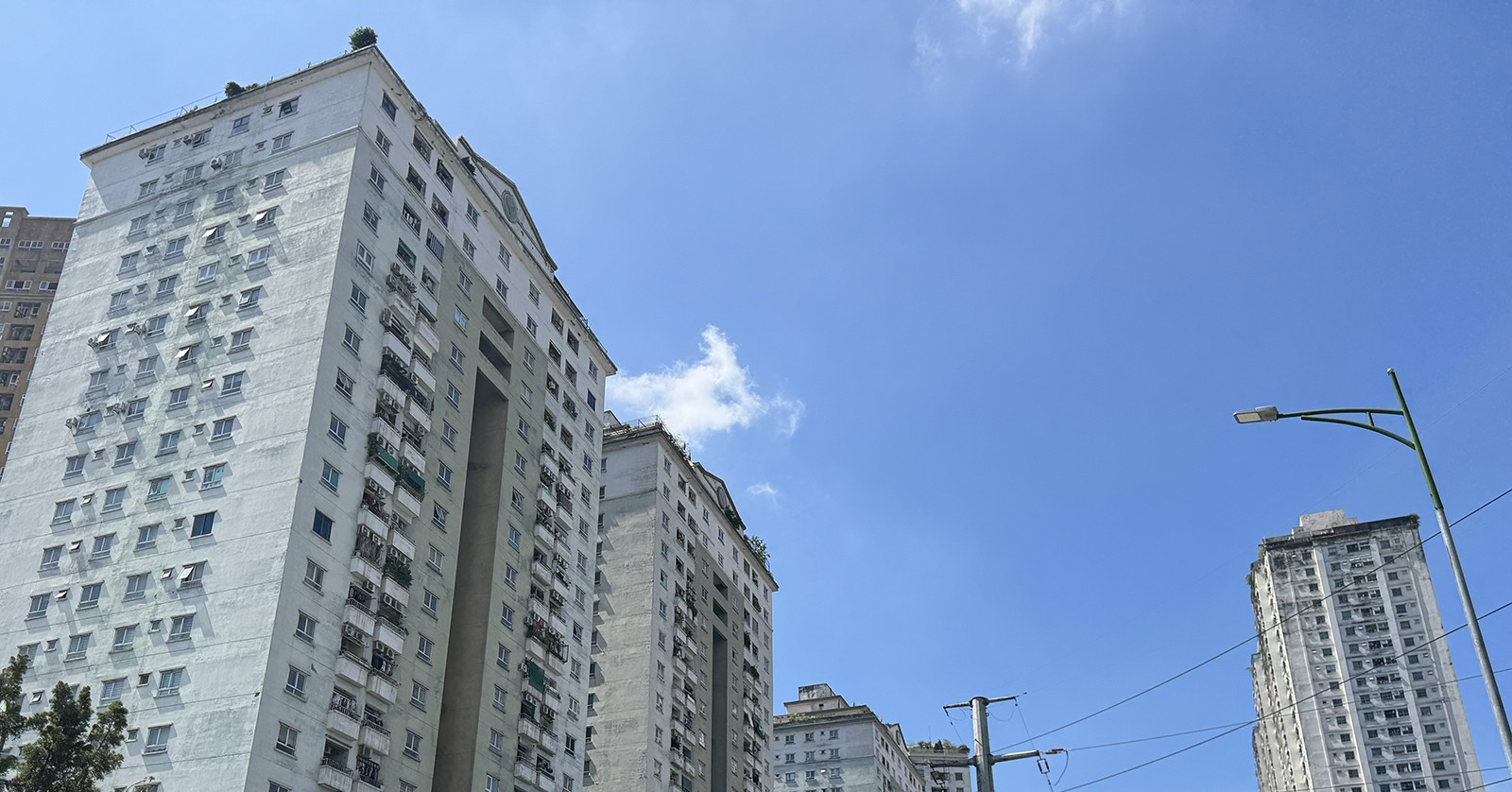
As the years progressed, the high-density nature of the Xa La urban area began to manifest distinct operational and infrastructural challenges. Designed to accommodate thousands of residents across a relatively compact footprint, the project’s public spaces, internal circulation roads, and parking infrastructure faced escalating pressure from a burgeoning population and a rising volume of private vehicles.
A critical turning point in the public perception of safety at Xa La occurred in 2015, when a severe fire broke out in the basement parking garage of tower CT4A. The incident caused substantial material damage, destroying approximately 200 motorbikes and nearly 50 bicycles, while leaving dozens of vehicles completely charred. Furthermore, intense heat and thick smoke from the subterranean blaze impacted numerous residential units in the floors above, triggering widespread anxiety among residents regarding high-rise fire safety protocols, emergency evacuation procedures, and building management accountability. This event served as an early warning sign regarding the vulnerability of high-density developments lacking modernized safety retrofits.
The Multi-Fold Surge in Property Valuations
Nearly two decades after its initial groundbreaking, the valuation landscape of Xa La apartments has undergone a staggering transformation. Driven by rapid urbanization, rapid inflation of construction costs, and a severe scarcity of affordable housing supply within inner-ring districts of Hanoi, secondary prices at Xa La have skyrocketed compared to their launch values.
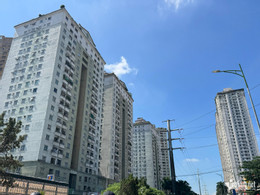
Recent market surveys indicate that apartments in Xa La are currently being offered at vastly higher price brackets, with prevailing market rates ranging widely between 48 million and 62 million VND per square meter. The final valuation of any given unit depends heavily on its specific building block, floor level, total area, legal documentation status, and interior renovation quality. Consequently, properties that once traded for roughly 1 billion VND in the early 2010s are now commanding values several times higher.
A breakdown of current asking prices across different property configurations illustrates this massive capital appreciation:
- 1-Bedroom Apartments: Units spanning 40 to 55 square meters are currently listed between 2.2 billion and 2.9 billion VND.
- 2-Bedroom Apartments: Units with areas ranging from 53 to 75 square meters are priced between 3.0 billion and 4.5 billion VND.
- 3-Bedroom Apartments: Larger units encompassing 80 to 105 square meters are offered between 4.3 billion and 6.0 billion VND.
When examining specific building clusters, pricing variations become even more distinct. In blocks CT1A, CT1B, and CT1C, prices fluctuate between 48 million and 58 million VND per square meter. Standard two-bedroom units measuring 63 to 70 square meters command 3.1 billion to 3.8 billion VND, while larger three-bedroom units of 90 to 100 square meters reach 4.8 billion to 5.8 billion VND.
Towers CT2 and CT3 maintain slightly more moderate pricing, averaging 47 million to 56 million VND per square meter, with two-bedroom units (63 to 75 square meters) valued at 3.0 billion to 4.2 billion VND, and three-bedroom units (100 to 104 square meters) priced between 4.5 billion and 5.7 billion VND.
Within the CT4 cluster (CT4A, CT4B, and CT4C), compact units of 53 to 54 square meters are priced between 2.9 billion and 3.2 billion VND, whereas 63 to 70 square meters configurations range from 3.3 billion to 4.2 billion VND. Along Phung Hung Street, the CT5 block features two-bedroom apartments (68 to 72 square meters) valued at 3.5 billion to 4.5 billion VND. Meanwhile, tower CT6 presents a wider spectrum: 1-bedroom apartments (40 to 55 square meters) trade between 1.3 billion and 2.7 billion VND, while 2-bedroom units (68 to 84 square meters) command 2.8 billion to 3.8 billion VND.
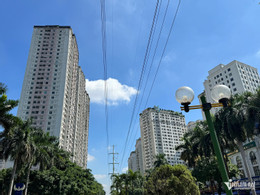
In the immediate vicinity of Xa La, neighboring projects have experienced parallel inflationary pressures. The Nam Xa La project features 70 to 75 square meter units priced between 2.6 billion and 3.3 billion VND, while the Hemisco building lists 86 square meter two-bedroom units between 4.0 billion and 4.3 billion VND.
Real Estate Expert Insights and Buyer Hesitation
Local real estate brokers and market analysts note that despite the impressive capital gains, the liquidity and transaction velocity of apartments in Xa La are heavily influenced by the legal status of individual properties and the overall maintenance condition of the buildings. Apartments equipped with clear, direct pink books (certificates of land use rights and ownership of residential houses) consistently achieve higher valuations and attract more serious buyers.
Conversely, despite the allure of central locations and established communities, prospective buyers frequently exhibit hesitation. Mr. Hoang Hai, a veteran Hanoi real estate broker, points out that while the cost per square meter has multiplied, the physical aging of the buildings, constrained maintenance funds, ongoing parking shortages, and congested surrounding infrastructure present psychological barriers for modern homebuyers. Many purchasers weigh the high total investment cost—frequently exceeding 3 to 4 billion VND for a standard family-sized apartment—against the compromises of living in an aging, high-density environment where shared amenities no longer match contemporary urban standards.
Traffic Pressures and Regional Infrastructure Improvements
Beyond the boundaries of individual buildings, external traffic congestion remains one of the most pressing concerns for residents and potential investors alike. Arterial roadways connecting Xa La to Phuc La, Cau Buu, and adjacent urban districts routinely experience severe bottlenecks during peak morning and evening commuting hours. As a multitude of surrounding residential projects and new urban developments have come online over the past decade, the sheer volume of daily commuters transiting through the Ha Dong corridor has risen exponentially.
Urban planners and local authorities anticipate that traffic pressure around Xa La will eventually be alleviated as major infrastructural upgrades reach completion. A notable focal point of these improvements is the ongoing development of the Pham Tieu – Xa La connecting road network, which aims to diversify transit routes and reduce reliance on legacy thoroughfares.
Broader Implications for Hanoi’s Housing Market
The trajectory of the Xa La urban area mirrors a wider phenomenon observed across Hanoi’s secondary apartment market, where older developments that were once dismissed as overcrowded or aging have experienced historic price surges. Following market shocks and unprecedented price escalations in newly launched primary developments—where prices in some suburban and decentralized pockets have breached unprecedented thresholds—buyers are increasingly forced to reevaluate older stock.
However, this dynamic has created a paradoxical market environment. While projects like Xa La offer established communities, strategic positioning within Ha Dong, and comprehensive local commerce, they simultaneously expose the vulnerabilities of urban planning from the late 2000s. Issues such as deficient green space ratios, over-reliance on limited subterranean parking, and delayed infrastructure maintenance underscore the complex trade-offs facing modern urbanites in Vietnam. As Hanoi continues its rapid expansion toward satellite cities and metropolitan regions, developments like Xa La will continue to serve as a litmus test for the sustainability, adaptability, and long-term valuation of high-density vertical communities in Southeast Asia’s rapidly developing capital.