Tragic Passing of Spanish Striker Jesus de Miguel Shines Light on Sudden Cardiac Arrest and Brain Hypoxia in Sports

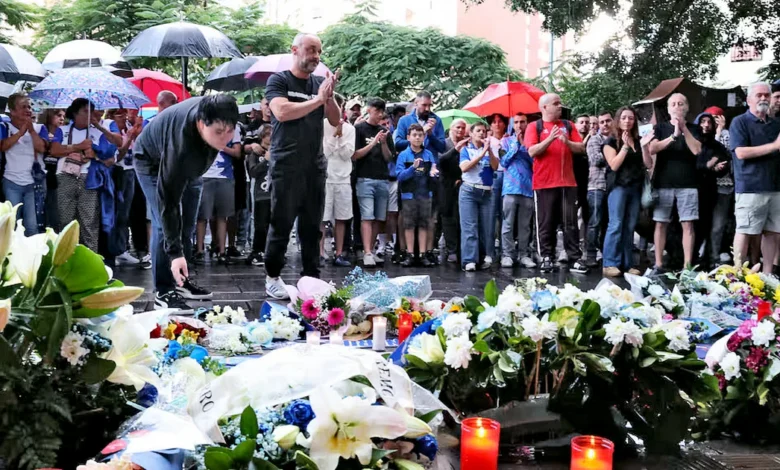
The global football community has been plunged into mourning following the tragic death of 30-year-old Spanish striker Jesus de Miguel, who passed away after suffering a catastrophic cardiac arrest triggered by a severe on-field collision. De Miguel’s untimely demise has sent shockwaves through the sporting world, reigniting urgent conversations regarding emergency medical protocols, the hidden dangers of undiagnosed cardiovascular conditions among elite athletes, and the devastating mechanics of brain hypoxia during prolonged cardiac events.
The incident, which occurred during a high-stakes competitive match, highlights the razor-thin margin between life and death when sudden cardiac arrest strikes outside the controlled environment of a modern medical facility. As thousands of fans and sports figures continue to pay tribute to the late forward, medical experts have stepped forward to dissect the physiological catastrophe that unfolded on the pitch, emphasizing that a restarted heart does not automatically guarantee a patient’s survival or neurological recovery.
Chronology of a Tragedy: From On-Field Collision to Hospital Demise
The sequence of events leading to Jesus de Miguel’s passing began with what initially appeared to be a routine, albeit heavy, physical challenge during a match. According to reports from international news agencies, the 30-year-old forward suffered a direct and forceful impact to the chest area, specifically targeting the region directly over the heart. The blunt force trauma instantly disrupted the heart’s delicate electrical conduction system, plunging the player into sudden cardiac arrest and causing him to lose both circulation and respiration almost instantaneously.
Immediate response measures were initiated on the pitch, where first responders performed urgent resuscitation efforts before transferring the unconscious player to a hospital via ambulance. Initial reports provided a brief glimmer of hope; Spanish club Tenerife announced that De Miguel had been admitted to the intensive care unit and was listed in a relatively stable, though undeniably serious, condition.
However, the situation took a heartbreaking turn. In the early morning hours, the club issued a deeply concerning update indicating that the striker’s neurological condition had drastically deteriorated. Despite the tireless efforts of medical personnel, De Miguel succumbed to his injuries and drew his final breath just hours later, leaving teammates, family members, and fans devastated by the sudden loss.
The Mechanics of Brain Hypoxia Following Cardiac Arrest
To understand the severity of De Miguel’s condition, medical professionals have pointed to the critical danger of anoxia—the total deprivation of oxygen to the brain—following prolonged circulatory arrest. ThS.BS Đoàn Dư Mạnh, a prominent cardiovascular expert at the International Cardiology and Stroke Center, Phuong Dong General Hospital, explained that brain tissue is exceptionally sensitive to oxygen deprivation.
"Brain cells begin to face the severe risk of damage just about five minutes after being deprived of an adequate oxygen supply," Dr. Mạnh stated. "If the state of circulatory arrest persists for approximately 20 minutes without effective blood perfusion being maintained, the risk of irreversible brain damage becomes exceedingly high."
Dr. Mạnh further noted that the actual duration of oxygen deprivation is often significantly longer than the officially recorded period of cardiac arrest. From the exact moment of the physical impact until emergency medical personnel can arrive, assess the scene, and initiate primary life support, a substantial amount of time elapses. Consequently, the total window during which the brain goes without oxygen can easily far exceed the 20-minute threshold, compounding the severity of the neurological trauma.
Beyond the immediate consequences of oxygen deprivation, blunt thoracic trauma can unmask latent, pre-existing cardiovascular pathologies. A powerful blow to the chest is capable of triggering dormant electrical abnormalities within the heart muscle, such as inherited or congenital arrhythmias like Brugada syndrome or Wolff-Parkinson-White syndrome. Furthermore, severe chest trauma can induce secondary injuries including fractured ribs, pulmonary contusions, and vascular damage to the aorta and major chest blood vessels. When these physical injuries are combined with prolonged cerebral hypoxia, the overall prognosis for the patient becomes extraordinarily grave.
Restored Heartbeat Does Not Equal Recovery: The Medical Reality
A critical educational point emphasized by cardiovascular specialists in the wake of this tragedy is the fundamental difference between cardiac arrest occurring inside a hospital versus an out-of-hospital emergency, particularly during a sporting event.
In a clinical setting, patients experiencing cardiac arrest benefit from immediate detection, rapid chest compressions, immediate defibrillation, and the administration of emergency pharmaceuticals such as adrenaline to restore circulation swiftly. Conversely, when cardiac arrest strikes outdoors on a sports field, access to specialized equipment, trained personnel, and rapid intervention is inherently constrained. These logistical barriers exert a direct and profound impact on the body’s ability to maintain systemic circulation and protect vital organs.
"The fact that a heart starts beating again after cardiac arrest does not mean the patient will definitely wake up and recover completely," Dr. Mạnh emphasized.
The ultimate prognosis depends heavily on a multitude of interrelated factors: the underlying cause of the cardiac arrest, the exact duration of interrupted circulation, the degree of primary brain injury, and the presence of any concurrent physical trauma. If the brain has already suffered irreversible damage from severe oxygen starvation, a patient may ultimately pass away even if medical staff successfully manage to re-establish a stable heart rhythm.
The Imperative of Pre-Participation Screening and Rapid On-Field Response
In light of the lessons learned from De Miguel’s case, medical experts are calling for a renewed emphasis on comprehensive cardiovascular screening prior to athletic participation, particularly for professional athletes. Thorough evaluations can help detect congenital heart defects, structural abnormalities, valvular diseases, coronary anomalies, and hereditary rhythm disorders before they manifest catastrophically on the field.
Importantly, these preventative health recommendations are not limited to professional football players; they apply equally to individuals participating in high-intensity endurance sports and amateur fitness activities. Across the globe, numerous cases have been documented where seemingly healthy individuals engaging in running, tennis, or high-intensity recreational training suffer sudden cardiac events, sometimes with fatal outcomes.
Equally vital is the widespread dissemination of knowledge regarding immediate on-field resuscitation. When a person suffers a sudden collapse and experiences a stoppage in blood circulation, immediate cardiopulmonary resuscitation (CPR)—specifically chest compressions delivered right on the spot—is critical. Bystanders and venue staff must be mobilized immediately, utilizing automated external defibrillators (AEDs) and preparing respiratory support equipment and emergency medications without delay.
"In emergency care for cardiac arrest, every single minute counts," Dr. Mạnh concluded. "Early detection, immediate chest compressions, and prompt on-field emergency deployment can decisively determine a patient’s chances of survival and neurological recovery."
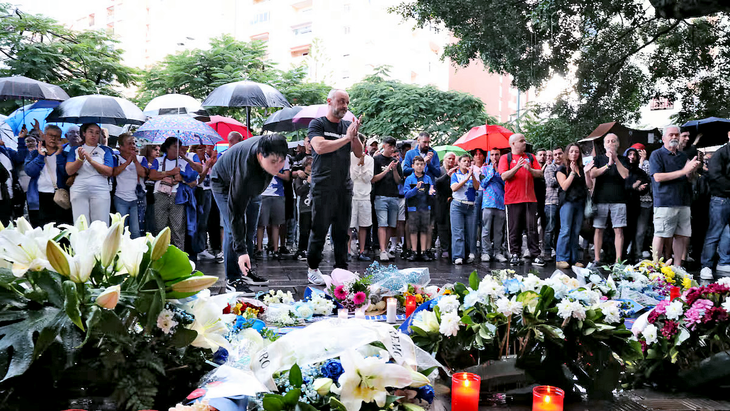
As the sports world continues to mourn the loss of Jesus de Miguel, his legacy must serve as a solemn reminder of the delicate fragility of human life and the critical necessity of robust medical preparedness at every level of athletic competition.