Reimagining Vietnam’s Urban Future: Beyond Metrics to True Quality of Life and Sustainable Growth

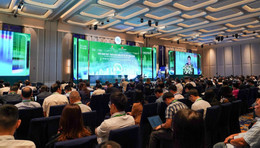
Urbanization in Vietnam has reached a pivotal juncture, shifting the national discourse away from superficial physical expansion toward deep structural reforms aimed at improving the fundamental quality of life for millions of citizens. On November 6, during the Vietnam Sustainable Urban Development Forum 2026 in Hanoi—jointly organized by the Ministry of Construction and the Central Policy and Strategy Commission under the theme “Urban Development Models Contributing to National Growth”—senior officials, international organizations, and technology experts converged to debate the future trajectory of the nation’s cities.
While four decades of Doi Moi (Economic Renovation) have successfully transformed Vietnam’s geographic and economic landscape, rapid and sometimes chaotic urbanization has laid bare critical infrastructure bottlenecks. Today, the core challenge facing Vietnamese metropolitan areas is no longer simply about building more structures or extending city boundaries, but about enhancing governance efficiency, optimizing resource allocation, and resolving persistent systemic challenges such as traffic congestion, severe urban flooding, and environmental degradation.
The Current State of Urbanization: Achievements and Structural Bottlenecks
Opening the high-level forum, Nguyen Ngoc Tuan, Deputy Head of the Central Policy and Strategy Commission, provided a comprehensive overview of Vietnam’s urban footprint. According to recent data, the country currently encompasses 910 urban areas, categorized into two special-class cities, seven Type-I cities, and 901 cities spanning Types II through V. The national urbanization rate has climbed to 53.3%, while average urban housing floor space has surpassed 30 square meters per person.
This expanding urban network serves as the backbone of Vietnam’s national economy, acting as primary hubs for commerce, culture, science, technology, and higher education. Major metropolitan centers like Hanoi and Ho Chi Minh City not only drive regional productivity but also function as vital connectivity nodes, supplying advanced services to neighboring localities.
Despite these impressive quantitative milestones, Tuan emphasized that policymakers must adopt a clear-eyed perspective regarding persistent structural vulnerabilities. In numerous regions, infrastructure development remains uncoordinated and fragmented. Chronic traffic bottlenecks, recurring inundation during heavy downpours, environmental pollution, dwindling green spaces, and immense pressure on aging municipal facilities continue to degrade the urban experience.
Furthermore, urban redevelopment efficiency remains suboptimal, hampered by rigid mechanisms for resource mobilization and allocation. Economic potential within coastal urban zones remains underutilized, with weak linkages between cities, deep-water ports, economic zones, and logistics centers, ultimately limiting the global competitiveness of Vietnam’s coastal economic engines.
Echoing these concerns, Deputy Minister of Construction Nguyen Tuong Van noted that global urban development models are undergoing profound structural transformations. International experiences clearly demonstrate that a city’s true value cannot be measured merely by its territorial expanse, demographic scale, or the sheer volume of concrete poured. Instead, long-term viability hinges upon planning quality, governance efficiency, resource productivity, and the capacity to forge an enabling environment for citizens and enterprises alike.
Van stressed that transforming Vietnam’s urban models goes beyond altering spatial layouts. It requires reorganizing economic activity, unlocking new forms of productivity, and generating growth impulses with powerful spillover effects. Too often, local authorities continue to rely on sprawling land-conversion models and extensive capital investments that fail to maximize resource efficiency while leaving systemic infrastructural deficits unaddressed.
Redefining Smart Cities: Moving Beyond Vanity Metrics and Surveillance Hardware
A central theme dominating panel discussions at the 2026 forum was the evolution of data-driven urban governance. As cities grow increasingly complex, municipal leaders are recognizing that technology must serve human-centric objectives rather than functioning as mere administrative decoration.
Kiu Viet Cuong, Acting Head of Office for UN-Habitat Vietnam, pointed out that while foundational databases and shared digital platforms are gradually taking shape across the country, the true challenge lies in leveraging this information effectively. Data must be utilized to accurately identify societal needs, establish clear investment priorities, coordinate public service delivery, and evaluate policy outcomes rigorously. Municipal data initiatives must align directly with tangible urban objectives, transparent accountability frameworks, and flexible operational structures capable of real-time adjustment.
Crucially, technology must walk hand in hand with inclusive social implementation. Cuong cautioned that the success of a smart city cannot be gauged solely through aggregate urban improvements. Instead, policymakers must meticulously analyze how economic and social benefits are distributed across different neighborhoods and demographic groups, with particular attention dedicated to vulnerable communities.
Industry leaders echoed these sentiments from a technological standpoint. Nguyen Anh Tuan, Government Affairs Director at Huawei Vietnam, acknowledged the remarkable strides Vietnam has made in telecommunications and digital infrastructure. However, he noted that everyday urban residents often fail to perceive these high-tech advancements in their daily routines.
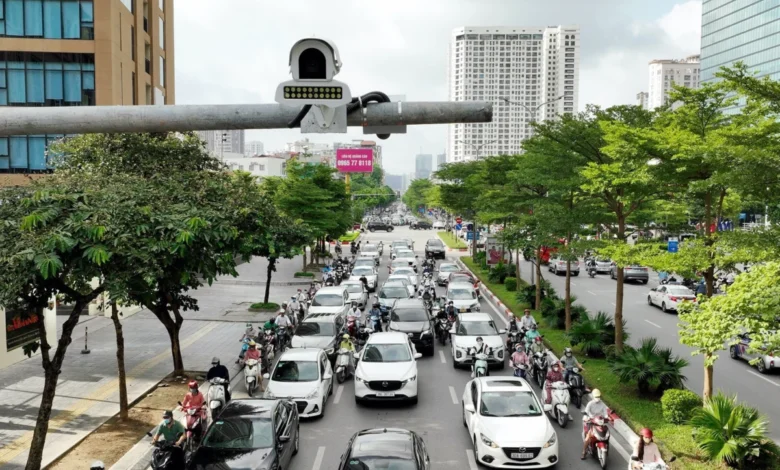
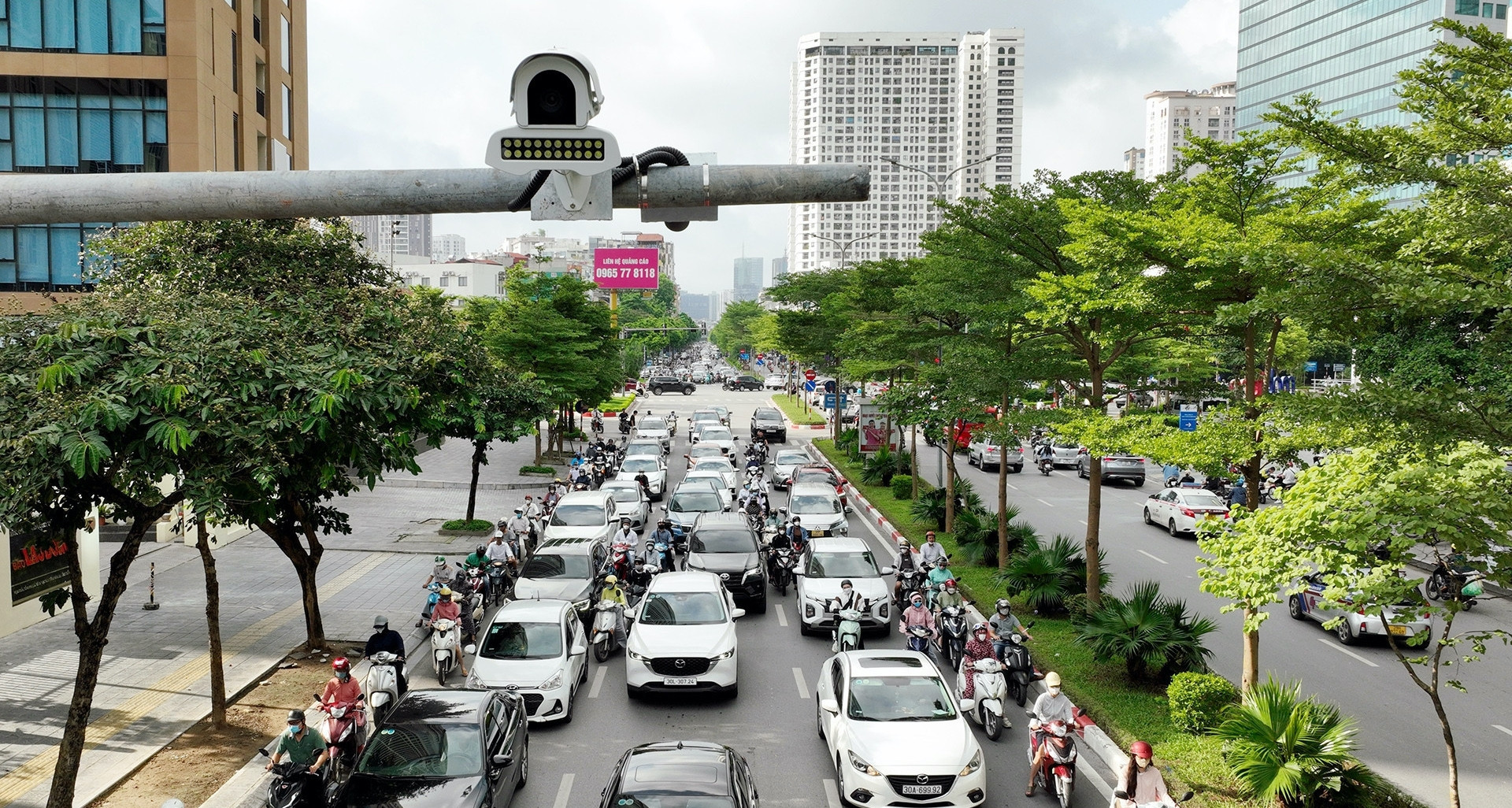
According to Tuan, citizens do not evaluate a city’s "smartness" based on the volume of closed-circuit television (CCTV) cameras installed or the size of digital control screens deployed in municipal headquarters. Rather, they judge urban intelligence through lived experiences: whether they are trapped in daily traffic congestion, whether their neighborhoods remain vulnerable to flash floods, and how efficiently they can navigate bureaucratic administrative procedures.
A city achieves genuine intelligence only when it integrates three foundational layers: robust physical infrastructure, unified data architecture, and advanced artificial intelligence (AI). Shared digital infrastructure acts as the prerequisite for large-scale smart application deployment. Meanwhile, the value of urban data lies not in sheer volume, but in interoperability, cross-sector sharing, and analytical depth.
The Human Dimension: Prioritizing Citizen Well-Being and Sustainable ESG Frameworks
Addressing the multifaceted challenges of flooding and congestion requires moving beyond reactive engineering fixes toward holistic, sustainable urban planning paradigms. Recent climate events, such as heavy downpours during major seasonal storms, have repeatedly paralyzed transport networks in Hanoi and Ho Chi Minh City, serving as stark reminders of structural vulnerabilities embedded in historical urban expansion.
Experts at the forum highlighted emerging policy directions, notably discussions within municipal party congresses centering on the progressive concept of “citizen happiness.” Achieving this ambitious standard requires integrating Environmental, Social, and Governance (ESG) principles directly into urban development strategies.
Assoc. Prof. Dr. Bui Thi An noted that modern urban planning must transition from a top-down, purely economic growth model toward a framework that internalizes environmental resilience and social equity. When residential areas are repeatedly submerged by seasonal rainfall or choked by particulate matter, the psychological and economic toll undermines the very foundation of urban prosperity.

To counteract these vulnerabilities, municipal authorities are being urged to prioritize nature-based solutions, expand permeable urban surfaces, revitalize natural drainage basins, and drastically increase public green space quotas per capita. Sustainable urban drainage systems (SUDS), sponge-city architectures, and decentralized water management networks are increasingly viewed as mandatory prerequisites rather than optional amenities for future Vietnamese metropolises.
Strategic Roadmap for Future Urban Growth
To bridge the gap between ambitious national growth targets and the lived reality of urban residents, the Vietnam Sustainable Urban Development Forum 2026 outlined several strategic imperatives for policymakers, urban planners, and private sector stakeholders:
- Decentralization and Resource Mobilization Reform: Empowering local authorities with flexible financial mechanisms to attract private capital, deploy public-private partnerships (PPPs) transparently, and allocate resources based on performance-driven metrics rather than administrative quotas.
- Integrated Regional Connectivity: Strengthening multi-modal transport corridors linking major urban centers with industrial clusters, international ports, and agricultural hinterlands to optimize domestic supply chains and boost national economic competitiveness.
- Data Governance and Interoperability Standards: Establishing unified national data standards that break down departmental silos, enabling seamless information exchange between transportation, environmental, and administrative agencies for predictive urban management.
- Climate-Resilient Infrastructure Investment: Mainstreaming climate adaptation strategies into master planning documents, ensuring that drainage infrastructure, coastal defenses, and energy grids are engineered to withstand extreme weather phenomena driven by global climate change.
- Equitable Social Development: Ensuring that urban renewal projects incorporate affordable housing initiatives, public transit accessibility, and equitable access to social services, preventing displacement and safeguarding marginalized communities from the adverse impacts of rapid gentrification.
As Vietnam continues its march toward higher-income status, the success of its urban transition will depend heavily on the quality of its institutions and the strategic foresight of its leaders. By replacing superficial metrics with deep, human-centric innovations, Vietnamese cities can evolve into vibrant, resilient, and inclusive engines of sustainable national prosperity.