Navigating Land Use Legality: Challenges in First-Time Red Book Issuance for Properties with Historical Gaps

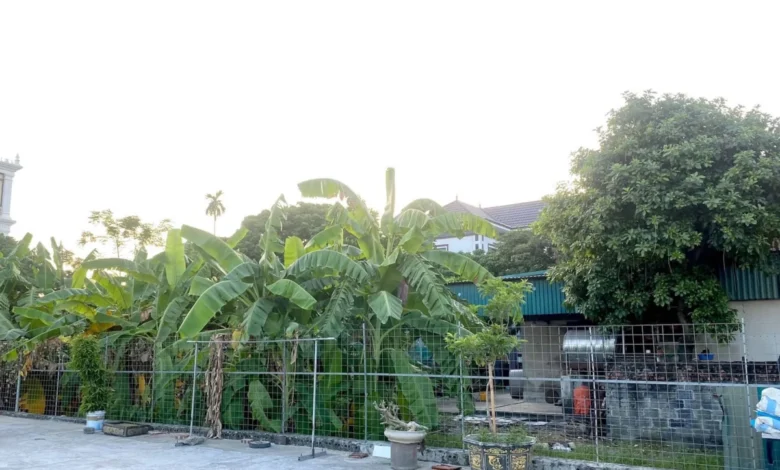
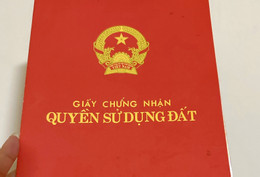
The complex landscape of Vietnamese land administration often presents multifaceted challenges for citizens seeking legal recognition of long-held properties, particularly when historical usage continuity has been interrupted by economic hardship or structural decay. A recent inquiry submitted to the Ministry of Agriculture and Environment has brought to light a common yet intricate predicament: a citizen’s application for a first-time Certificate of Land Use Rights—commonly known as a "Red Book"—was met with a local municipal requirement to furnish documentation spanning a specific historical window (2003–2014) during which the residential structure on the property was abandoned due to severe degradation and poverty.
This administrative hurdle has ignited a broader discussion regarding the interpretation of "stable land use" under the Land Law, the adaptability of municipal guidelines, and the fundamental rights of property owners who have maintained a generational connection to their land despite periods of physical absence. As local authorities and national agencies grapple with the harmonization of statutory frameworks, this case serves as a critical lens through which to examine land registration practices, evidentiary standards, and the legal protections afforded to citizens navigating historical land use transitions.
Chronology of a Family Land Holding: From 1979 to the Present
The roots of the property dispute trace back to the late 1970s, a period marked by post-reunification economic restructuring and localized land allocations. According to the citizen’s submission, the family acquired a parcel of residential land and garden space in 1979, substantiated at the time by handwritten documentation—a standard practice for transactions during that era.
As administrative structures formalized throughout the subsequent decade, the family integrated into the local registry. In 1982, records indicate they received official notifications to pay land-use taxes. Furthermore, their presence and residency within the locality were officially authenticated through household registration records spanning a twelve-year period from 1986 to 1998. During these formative years, the land functioned as both a homestead and a productive garden, aligning with the socio-economic activities typical of suburban and rural households of the period.
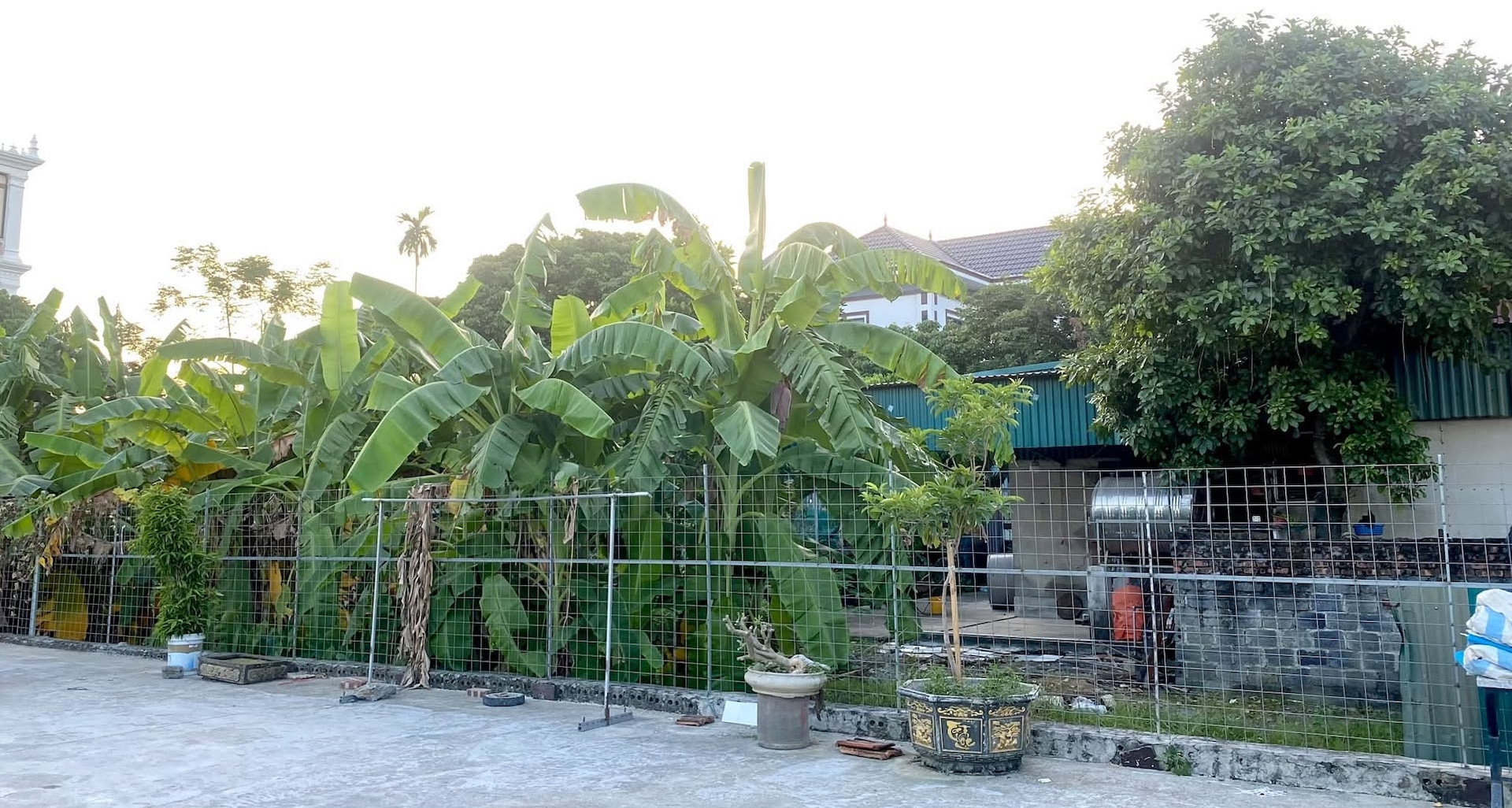
However, the trajectory of continuous habitation was disrupted at the close of the 20th century. By 1998, the original dwelling constructed on the plot had fallen into severe disrepair, becoming structurally unsafe and ultimately collapsing. Compounded by acute financial hardship, the family lacked the capital necessary to clear the debris and rebuild the structure. Consequently, they were forced to relocate temporarily to another area to secure stable housing.
Despite the physical absence of a residential structure, the family maintained a de facto connection to the land. From 1998 until 2017, family members periodically visited the plot to tend the garden, preserve the original boundaries, and safeguard the physical integrity of the site without altering its designated agricultural or residential classification. Because they lacked a habitable dwelling, however, they did not register permanent residency at the location between 1999 and 2017. During this multi-year gap, they accrued no utility bills for electricity or water, nor did they receive public tax notices that explicitly tied them to an active residential presence on the property.
The turning point arrived in 2017 when the family’s economic circumstances improved sufficiently to permit construction. Capitalizing on these newfound resources, they rebuilt a house on the historical parcel, re-establishing physical residency and active cultivation. When they subsequently filed their initial application for a Certificate of Land Use Rights, the Commune People’s Committee requested supplementary evidentiary documentation detailing the period between 2003 and 2014 to verify the criterion of "stable land use." Confronted with the impossibility of producing residential utility bills or tax receipts for a timeframe when no house stood on the plot, the citizen questioned whether the local authority’s demands aligned with equitable legal standards and statutory regulations.
Statutory Frameworks and the Evolution of "Stable Land Use"
In response to the citizen’s grievances, the Ministry of Agriculture and Environment clarified that the adjudication of first-time land registration falls primarily under the jurisdiction of local administrative bodies. These entities are mandated to evaluate applications based on archived records, local statutory execution frameworks, and national land laws. To assist citizens in understanding their rights and evaluating their positions against current legislation, the Ministry highlighted several foundational principles derived from the Land Law of 2024 and its accompanying implementation decrees.
A critical element in resolving disputes of this nature is the statutory definition of "stable land use." Under Article 3, Clause 38 of the 2024 Land Law, stable land use is defined as the continuous utilization of land for a primary purpose starting from the time the land was first used for that specific purpose up to the moment a competent state agency reviews the status of stability.

This formulation represents a notable evolution from previous regulatory definitions. Under the framework established by Decree No. 43/2014/ND-CP, stable land use was construed as continuous utilization from the commencement date up to the exact time of Red Book issuance. The modern phrasing under the 2024 legislation provides a more nuanced temporal benchmark, allowing reviewing bodies to anchor stability to the point of administrative evaluation rather than the administrative completion date of certificate issuance.
Furthermore, the Ministry noted that detailed guidelines for verifying stable land use are operationalized through Government Decree No. 151/2025/ND-CP. According to these provisions, if an applicant possesses valid historical land-use papers as specified under Article 137 of the 2024 Land Law, the verification of stability proceeds directly in accordance with the statutory definitions. In the absence of such formal title documents, authorities must reconstruct the historical chain of custody by examining the origin of land use alongside the temporal stability criteria.
Evidentiary Standards for Properties Lacking Continuous Records
When historical paperwork is incomplete or interrupted—as frequently occurs in long-standing familial holdings spanning decades of social and economic transition—Vietnamese land administration law provides a hierarchy of alternative evidentiary proofs. The verification of stable land use does not rely solely on uninterrupted household registration or continuous utility consumption; rather, it accommodates a wide array of secondary documentation.
According to Ministry guidelines, administrative bodies may substantiate the duration and purpose of land use through alternative records, including:
- Receipts for agricultural land-use taxes or historical housing and land taxes;
- Administrative decisions or records regarding the settlement of past land-related administrative infractions;
- Finalized judicial rulings, judgments, or decisions issued by courts of law that have legally taken effect;
- Historical receipts for electricity, water, or other municipal services bearing an address closely linked to the disputed parcel;
- Historical allocation records, purchase agreements, liquidation documents, or housing distribution invoices associated with structures on the land;
- Historical contracts for the purchase, sale, or transfer of real estate or land use rights;
- Historical cadastral maps, land surveying materials, tax registry books, or electrical census documentation;
- Historical declarations or property registrations bearing the explicit verification of commune, district, or provincial people’s committees from October 15, 1993, or earlier;
- Historical residency registration papers, such as permanent or temporary residence registries tied to the housing structure on the land.
In scenarios where these formal records are absent, or where existing papers fail to clearly demarcate the timeline and purpose of use, the law permits a fallback mechanism. Authorities are authorized to base their determinations on the formal declarations provided by the land user, corroborated by the actual current status and physical inspection of the property. Moreover, if conflicting documents present divergent starting dates for land utilization, the law mandates that stability be recognized based on the earliest verifiable date supported by documentation or reliable data.
Administrative Procedures and Local Discretion
The overarching architecture for issuing a first-time Certificate of Land Use Rights is codified across Articles 137, 138, 139, and 140 of the Land Law. These statutes establish the substantive conditions under which land occupied without complete historical documentation may still be regularized, balancing the state’s need for orderly cadastral management against the legitimate expectations of citizens who have historically maintained ties to the soil.
Regarding procedural workflows, the administrative steps for land registration and first-time certificate issuance are directed by provincial-level People’s Committees. These localized instructions draw authority from Article 15 of Government Decree No. 49/2026/ND-CP, which operationalizes Resolution No. 254/2025/QH15 passed by the National Assembly. This legislative resolution was specifically crafted to introduce mechanisms and policy instruments aimed at unblocking bottlenecks and resolving practical difficulties encountered during the implementation of the Land Law.
Legal analysts point out that while local authorities possess the administrative discretion to request evidentiary files, such demands must be balanced against the realities of historical gaps, such as the destruction of a residential structure due to economic destitution. Insisting on continuous utility bills or residency certificates during a period when a home was uninhabitable due to poverty risks imposing an impossible evidentiary burden—known in legal doctrine as probatio diabolica—upon the applicant.
Broader Implications for Land Administration and Citizen Rights
The interaction between rigid bureaucratic requirements and the flexible provisions of the 2024 Land Law underscores an ongoing challenge in Vietnam’s administrative reform: ensuring that grassroots officials correctly interpret and apply newly enacted statutory flexibilities.
As urban and suburban land values escalate nationwide, the regularization of historical land holdings has become a matter of profound socio-economic significance for millions of families. Cases involving property abandoned during periods of national economic hardship in the late 1990s are not isolated incidents; they reflect a transitional era during which housing standards, administrative tracking, and economic stability underwent profound transformations.
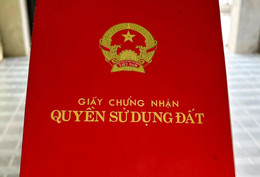
The clarification provided by the Ministry of Agriculture and Environment reinforces the principle that administrative bodies must adopt a holistic view of evidentiary documentation. Rather than relying on a single missing window of utility records, local committees are encouraged to synthesize all available collateral evidence—ranging from historical tax records and boundary descriptions to neighbor testimonies and municipal maps—to establish the continuity of land intent.
Ultimately, the successful resolution of such disputes relies on a collaborative approach between local administrative agencies and property owners. By leveraging the updated mechanisms provided under the 2024 Land Law and its subsidiary decrees, municipal authorities are better equipped to navigate historical anomalies, ensuring that the legal rights of citizens are protected while maintaining the integrity of the national land registry.