Bringing Quality Healthcare Closer to the People of the Mekong Delta: Insights, Challenges, and Solutions from the Tu


oi Tre Expert Panel
The healthcare landscape of the Mekong Delta—officially known as the Mekong River Delta or Cuu Long Delta—has long been defined by a persistent paradox: despite significant advancements in regional medical infrastructure, thousands of residents continue to travel hundreds of kilometers to Ho Chi Minh City for routine and advanced medical care. This phenomenon incurs substantial financial costs, consumes valuable time, and places an undue burden on both patients and major metropolitan hospitals. To dissect this complex issue, identify structural bottlenecks, and propose actionable solutions, Tuoi Tre Newspaper, in collaboration with Hoa Hao-Medic Can Tho General Hospital, recently organized a high-level talk show titled "Bringing High-Quality Healthcare Closer to the People of the Mekong Delta."
The event served as a multi-dimensional dialogue platform, bringing together health department leaders, hospital directors, leading medical experts, and private healthcare providers. Discussions centered on the readiness of local medical facilities, the psychological barriers preventing residents from trusting local doctors, and strategic initiatives required to transform the Mekong Delta into a robust regional healthcare hub.

Unpacking the Paradox: High Travel Volumes vs. Improving Local Capabilities
The impetus for the forum stemmed from a four-part investigative series published by Tuoi Tre starting November 1, which shed light on the reality of healthcare accessibility in Vietnam’s southwestern region. Opening the discussion, Mr. Nguyen Thai Binh, Deputy Editor-in-Chief of Tuoi Tre Online, raised a fundamental question: Why do patients continue to flock to Ho Chi Minh City when numerous local medical facilities have made remarkable strides in professional expertise, diagnostic equipment, and treatment capacity?
Mr. Binh noted that the narrative of Mekong Delta healthcare is no longer solely one of hardship and deficiency. Over the past decade, regional healthcare institutions have significantly narrowed the gap in clinical capabilities. Yet, psychological inertia and deep-rooted habits drive patients past capable local facilities in favor of legendary tier-one hospitals in Ho Chi Minh City, such as Cho Ray Hospital and the University Medical Center HCMC.
The core objective of the forum was to bridge this gap by diagnosing the underlying bottlenecks and offering practical recommendations to the Ministry of Health, the Government, and relevant regulatory bodies. The ultimate goal is twofold: to enhance the therapeutic capacity of local hospitals and to systematically rebuild public trust so that residents can receive world-class healthcare close to their hometowns.
Comparative Medical Metrics: The Mekong Delta is Not Lacking in Numbers
Addressing the common misconception that the Mekong Delta suffers from a severe shortage of medical infrastructure, Prof. Dr. Sc. Nguyen Duc Cong, former Director of Thong Nhat Hospital and Chairman of the Vietnam Association of Internal Medicine, presented compelling statistical data challenging this assumption.

According to Prof. Cong, the healthcare system in the western region—particularly in Can Tho City—has developed at a remarkable pace, in some metrics rivaling or even surpassing Ho Chi Minh City. Specifically, Can Tho boasts approximately 14.8 doctors per 10,000 residents, outperforming Ho Chi Minh City’s ratio of 13.08 per 10,000. Furthermore, the number of hospital beds in Can Tho reaches an impressive 43.9 per 10,000 residents, compared to approximately 34 to 35 beds in Ho Chi Minh City.
"The issue today does not purely lie in the raw quantity of doctors or hospital beds," Prof. Cong emphasized. "Rather, the critical factors are professional quality, advanced treatment capacity, and the level of trust patients place in local hospitals."
Prof. Cong argued that the psychological drive to seek treatment at major centers in Ho Chi Minh City is a natural byproduct of decades-long brand building by those institutions. To alter this deep-seated habit, Mekong Delta healthcare providers must elevate their clinical proficiency, master complex treatment protocols, and transparently publicize their capabilities. He suggested that local hospitals should not rely solely on new machinery or announcements of pioneering techniques; rather, they must validate their expertise through consistent, high-quality clinical outcomes. Additionally, regular multidisciplinary telemedicine consultations and data-sharing initiatives with Ho Chi Minh City experts can bolster local confidence in managing severe and complex cases.
The Scale of Patient Migration: Statistics from University Medical Center HCMC
Providing concrete empirical evidence of patient migration from the southwestern provinces, Assoc. Prof. Dr. Ou Thanh Tung, Head of the General Planning Department at the University Medical Center HCMC, shared eye-opening figures regarding patient intake.

Every year, the University Medical Center HCMC records nearly 2.5 million outpatient visits, with patients hailing from the Mekong Delta accounting for nearly 40%—equivalent to approximately one million visits annually. Regarding inpatient care, out of roughly 120,000 patients treated each year, residents from the western region comprise 30%, translating to about 36,000 admissions.
Dr. Tung attributed this migration trend to three primary drivers: uneven capacity and positioning of local health systems, limited public trust in provincial facilities, and entrenched historical habits of seeking care in Ho Chi Minh City. While investments in infrastructure have grown, disparities in specialized training between metropolitan and regional facilities continue to impact local treatment capabilities.
Highlighting ongoing efforts to reverse this trend, Dr. Tung pointed out that University Medical Center HCMC has actively transferred advanced medical technologies to several Mekong Delta provinces, notably Ca Mau. Several local hospitals have successfully mastered these techniques, enabling them to perform critical emergency interventions and specialized treatments locally. Ongoing technology transfers include advanced cerebral aneurysm interventions in Ca Mau, Bac Lieu, and neighboring areas. Furthermore, the Can Tho Central General Hospital is scheduled to complete training and perform its first successful liver transplant by the first quarter of 2027.
Dr. Tung advocated for structured regional networking, where each hospital identifies its core specialties to support one another. Standardizing telemedicine, remote follow-up care for stable chronic patients, and streamlined referral pathways will reduce financial burdens on patients while alleviating overcrowding in Ho Chi Minh City’s premier facilities.

Local Administrative Perspectives: Ca Mau and Can Tho
Representing regional regulatory bodies, health officials from Ca Mau and Can Tho offered nuanced insights into the administrative and logistical challenges facing local healthcare management.
Pharmacist CKII Nguyen Tan Luc, Acting Director of the Ca Mau Department of Health, acknowledged that the province’s high rate of patient migration—where approximately 70% of local patients still travel to upper-tier cities—stems from shortages of specialized human resources, advanced technology, and effective public communication. Despite Ca Mau boasting a favorable doctor-to-population ratio of approximately 13 doctors per 10,000 residents (second only to Can Tho in the region), specialized medical gaps persist.
"Ca Mau currently has modern diagnostic tools such as a 128-slice CT scanner, but our MRI system is limited to 0.3 Tesla, which extends scanning times to around 30 minutes per patient," Mr. Luc explained. He also admitted that local health authorities have fallen short in communicating their evolving treatment capabilities. Even though Ca Mau hospitals routinely collaborate with premier Ho Chi Minh City institutions like Cho Ray, University Medical Center HCMC, Tu Du, Hung Vuong, and Children’s Hospital 1 to receive technical transfers, the general public remains largely unaware of these locally available specialized services.
Echoing these sentiments, Dr. CKII Nguyen Ngoc Viet Nga, Deputy Director of the Can Tho City Department of Health, outlined the city’s strategic vision to evolve into the premier medical hub of the Mekong Delta. Can Tho has made significant strides in specialized medicine, ranging from advanced cardiovascular interventions and stroke management to organ transplantation. Notably, several Can Tho medical units have achieved global "gold standard" benchmarks in stroke care, while others have successfully performed kidney transplants and expanded into liver transplantation.

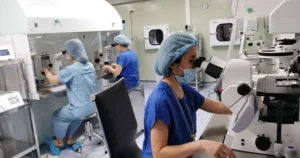
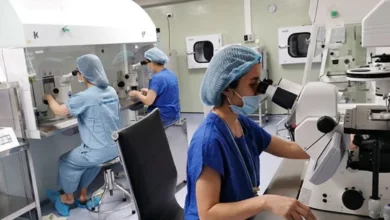
Furthermore, specialized institutions such as the Can Tho Oncology Hospital, the Can Tho City Children’s Hospital, and the Can Tho Obstetrics and Pediatrics Hospital (which operates under international ISO standards and performs thousands of in-vitro fertilization procedures annually) demonstrate the region’s expanding clinical capacity. Can Tho currently houses six specialized medical centers, serving as a solid foundation for the city’s regional medical center ambitions.
The Growing Role of Private Healthcare in Regional Integration
Private healthcare providers are increasingly playing a pivotal role in bridging the healthcare delivery gap in the Mekong Delta. Dr. CKII Chu Van Vinh, Director of Hoa Hao-Medic Can Tho General Hospital, emphasized that private medical institutions possess the flexibility and capital to introduce advanced technology directly to local populations. With 14 private hospitals operating in Can Tho alone, harnessing these resources alongside the public sector is essential to curbing patient outflow.
Since its inception, Hoa Hao-Medic Can Tho General Hospital has prioritized advanced diagnostic imaging and clinical laboratory testing, investing in high-throughput testing systems that comply with Ministry of Health quality criteria, ISO 15189, and rigorous U.S. laboratory quality standards. By linking its diagnostic imaging systems directly with the Medic Medical Center in Ho Chi Minh City, the hospital enables rapid expert consultations, drastically shortening turnaround times for local patients.
Dr. Vinh cautioned against fragmented investments, noting that individual provincial facilities should avoid trying to equip every department across all specialties, which leads to resource dilution and uneven quality. Instead, regional hospitals should practice functional specialization and networking, positioning Can Tho as a central node for specialized medical care across the entire delta.

Technological Integration, Telemedicine, and Data Interoperability
As digital transformation reshapes modern medicine, experts at the forum underscored that regional telemedicine and electronic health record (EHR) interoperability are critical to optimizing healthcare delivery. However, significant technical and administrative hurdles must be overcome.
Dr. CKII Ngo Hoang Vien, Deputy Head of the General Planning Department and an orthopedic trauma surgeon at Thong Nhat Hospital, pointed out that while telemedicine holds immense promise, its success hinges on dismantling regulatory bottlenecks, streamlining inter-hospital workflows, and safeguarding patient data. Currently, different hospitals utilize disparate software systems and electronic medical record platforms, hindering seamless data sharing.
"Effective remote consultations require standardized protocols, clearly defined responsibilities for treating versus consulting physicians, secure financial compensation mechanisms, and stringent data privacy safeguards," Dr. Vien noted. He highlighted Thong Nhat Hospital’s ongoing efforts to promote Project 1816, supporting grassroots and provincial health facilities through structured, step-by-step technical training and direct clinical supervision.
Conclusion and Future Outlook
The comprehensive discussions at the Tuoi Tre expert panel underscore a shared consensus: transforming the Mekong Delta into a high-quality regional healthcare hub is an achievable and urgent goal, but it requires synchronized efforts from government regulators, public hospital administrators, private healthcare providers, and the media.

By continuing to invest in specialized human resources, upgrading diagnostic and therapeutic technologies, fostering inter-hospital technical transfers, and proactively communicating local clinical achievements to the public, the Mekong Delta can systematically restore trust in its local healthcare system. Ultimately, ensuring that residents can access safe, timely, and advanced medical care close to home will not only alleviate the congestion plaguing Ho Chi Minh City’s major hospitals but also significantly enhance the overall quality of life throughout Vietnam’s southwestern breadbasket.