CEO Nvidia Jensen Huang admits to infidelity amidst public scrutiny over his personal life and high-end car collection

The recent public admission of infidelity by Jensen Huang, the Chief Executive Officer of Nvidia, has sent shockwaves through the global technology sector and captured the attention of investors and the public alike. Known as the face of the artificial intelligence revolution, Huang has spent decades cultivating an image of stability and unwavering focus. However, as the news of his personal transgressions broke on November 8, 2026, the spotlight shifted from his professional achievements to the private life of one of the world’s most influential business leaders. Beyond the personal controversy, public interest has also turned toward the lifestyle of the Nvidia patriarch, specifically his extensive and highly valuable collection of luxury automobiles, which has become a focal point of discussion in both Taiwanese media and global business circles.
A Public Admission and the Fallout
On November 8, 2026, Jensen Huang issued a formal statement addressing reports of an extramarital affair. In a message directed at his employees and stakeholders, Huang expressed deep remorse, acknowledging that his actions had caused pain to his family—who he noted had provided him with love and support throughout his entire career.
"I have failed the trust of those I hold most dear," Huang wrote in his statement. He requested that the public respect the privacy of his wife, Lori Huang, and their children, while simultaneously signaling his intention to cooperate fully with any independent investigations that might arise regarding corporate governance or potential conflicts of interest. The admission has sparked intense debate regarding the intersection of a CEO’s private conduct and their professional obligations, particularly for a company with the market capitalization and global strategic importance of Nvidia.
The Spotlight on a Luxury Fleet
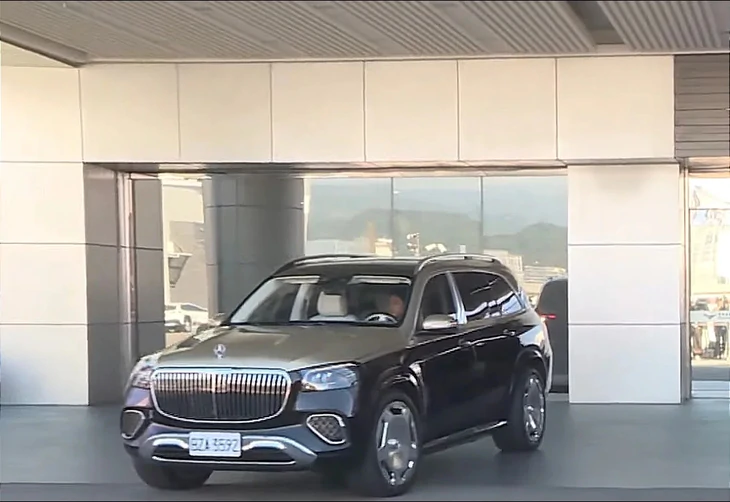
While the scandal has dominated headlines, the media in Taiwan—where Huang maintains deep cultural and familial ties—has also fixated on the visible symbols of his wealth, particularly his penchant for high-performance and luxury vehicles. In early 2026, during a high-profile visit to Taiwan, observers noted a significant shift in his transportation choices. Huang, who previously favored the understated elegance of the Mercedes-Benz S-Class, was spotted utilizing a Mercedes-Maybach GLS 600, a pinnacle of luxury SUV design.
The Maybach GLS 600, featuring a distinct two-tone black-and-gold exterior, is a symbol of status and engineering excellence. According to automotive industry experts in Taipei, the vehicle carries a base price exceeding 11 million New Taiwan Dollars (approximately 9 billion VND), with customized interiors pushing the valuation even higher. The sight of the Nvidia CEO arriving in such a vehicle has fueled social media commentary, with some observers contrasting the opulence of his transit with the broader economic environment. For many, the vehicle serves as a tangible metric of the immense wealth generated by the AI chip boom, a trend for which Nvidia has been the primary architect.

A History of Automotive Passion
Jensen Huang’s interest in automobiles is far from a recent development. Long before he was a household name, he displayed a fascination with high-performance machines. His garage is reportedly a reflection of his engineering sensibilities, spanning from cutting-edge electric vehicles to rare, internal-combustion supercars.
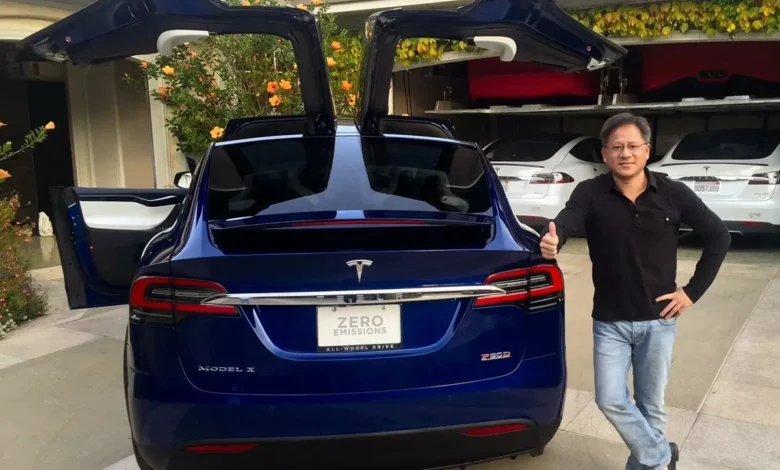
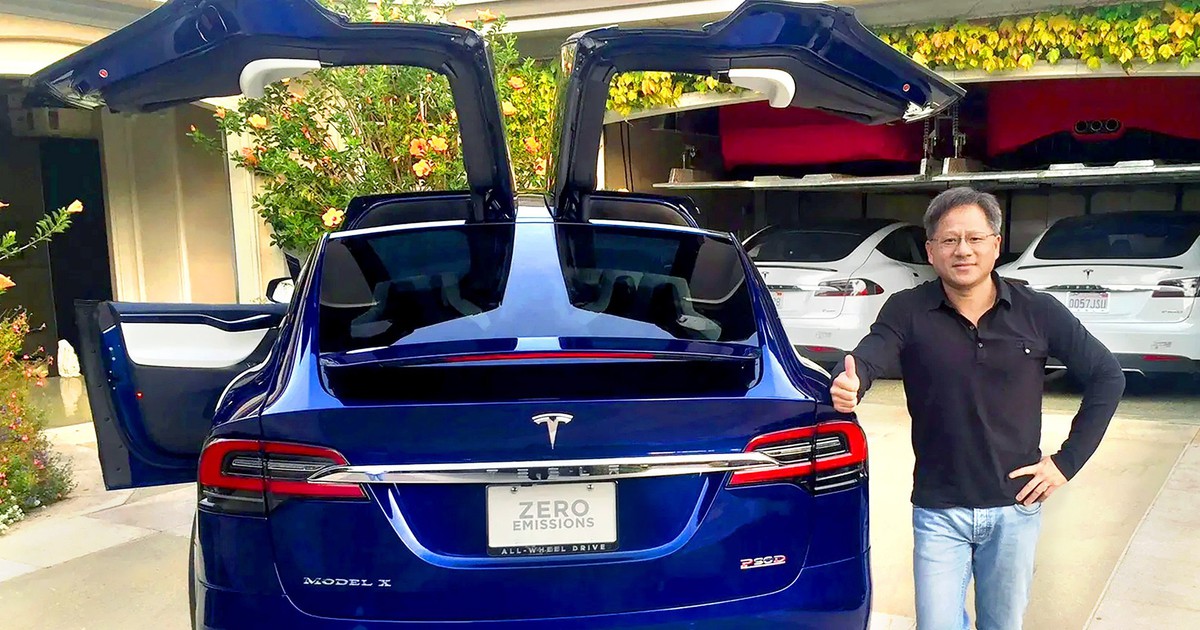
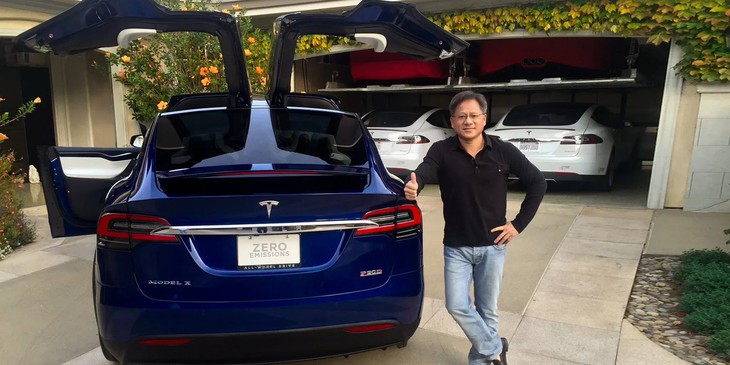
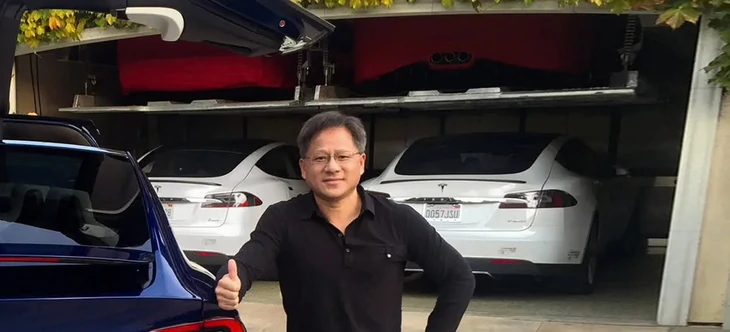
His relationship with Tesla is particularly notable. In October 2015, Huang became one of the first owners of the Tesla Model X P90D in the "Founder Series," a limited edition reserved for key investors and partners. At the time, the acquisition highlighted the symbiotic relationship between Nvidia and Tesla; Nvidia’s Tegra processing units were foundational to the infotainment and digital instrument clusters in early Tesla models. Photographs from the time of the handover revealed a glimpse into his personal garage, which also housed multiple Tesla Model S sedans, suggesting a long-standing commitment to the integration of silicon and automotive performance.
The collection does not stop at electric vehicles. According to reports from financial and lifestyle publications including Money Inc. and NDTV, Huang’s stable has included some of the most iconic names in automotive history, such as the Ferrari F430, Ferrari 599, Ferrari 458 Italia, Porsche 911 Turbo, the Lamborghini Urus, and the Koenigsegg CCX. These vehicles are characterized by their precision engineering and extreme power-to-weight ratios, traits that mirror the competitive intensity Huang has applied to his career in the semiconductor industry.
The "Most Expensive Car" in the World
Among the many stories surrounding Huang’s car collection, one stands out for its financial irony. Shortly after Nvidia’s initial public offering (IPO) in 1999, Huang decided to purchase a Mercedes-Benz S-Class for his parents. At the time, Nvidia was valued at approximately $300 million, and the S-Class carried a price tag of roughly $80,000.
While the purchase seemed modest relative to the company’s nascent success, the "cost" of the car has evolved significantly in the eyes of market analysts. Had Huang retained the shares he sold to finance that vehicle, those same shares would be worth nearly $1.2 billion today based on current market valuations. Huang has frequently recounted this story in interviews, often referring to it jokingly—or perhaps with a touch of melancholy—as the most expensive car in the world. It serves as a reminder of the exponential growth Nvidia has experienced, transforming from a graphic card manufacturer into the backbone of the global AI infrastructure.
Implications and Corporate Governance
The juxtaposition of Huang’s personal scandal with the immense scale of his automotive collection presents a complex narrative for stakeholders. While his taste in cars is a matter of personal preference, the context of his admission of infidelity raises questions about leadership accountability.
In the corporate world, moral character is often viewed as a proxy for decision-making reliability. Nvidia’s board of directors is now faced with the task of navigating the aftermath of this revelation. While there is no evidence that corporate funds were used in any way related to his personal conduct, the reputational risk to a firm that relies on government contracts, international partnerships, and massive institutional investment cannot be ignored.
Furthermore, the public nature of his transportation and the media’s focus on his spending habits create a challenging public relations landscape. In a world where transparency is increasingly demanded from the C-suite, the visibility of such extreme wealth—especially when coupled with a personal scandal—can create friction between the company’s leadership and its wider base of retail and institutional investors.
Looking Ahead: The Road to Stability
As of late 2026, the tech industry is waiting to see how Nvidia will address the long-term implications of these events. Huang has signaled his desire to remain focused on his role, emphasizing that his commitment to the company remains absolute. However, the path forward is complicated. He has requested that the public allow his family space to heal, but the intensity of the media coverage suggests that the scrutiny will not dissipate quickly.
For Nvidia, the focus remains on its upcoming product cycles and maintaining its dominance in the AI hardware market. Yet, for the man at the helm, the luxury cars in his garage and the headlines in the global press have become inseparable from his identity. The story of Jensen Huang is currently a tale of two realities: one of a visionary leader who helped define the modern computing era, and another of a public figure navigating the turbulent personal consequences of his own choices. Whether this chapter leads to a restructuring of leadership or merely a temporary PR challenge remains to be seen, but one thing is certain: the world is watching the CEO of the most valuable tech company in history with renewed, and perhaps more critical, eyes.
As the investigation into his conduct continues, the business world will be looking for signs of how the company intends to separate these personal matters from its strategic trajectory. In the volatile world of high-stakes technology, stability is the most valuable commodity of all, and it is precisely that which is now in question.