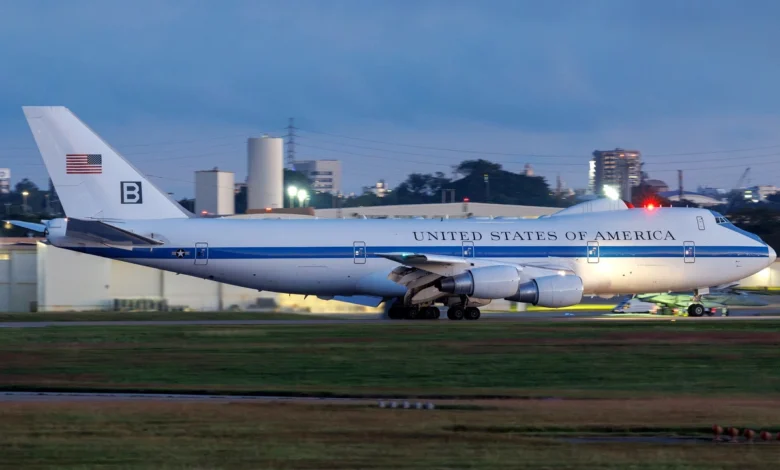
The deployment of the E-4B Nightwatch alongside the United States presidential fleet during President Donald Trump’s recent diplomatic tour of Asia has highlighted the intricate layers of security and command-and-control protocols that define modern American executive travel. While the sight of the President’s iconic Air Force One—typically a modified Boeing 747 known as the VC-25A—is a hallmark of global diplomacy, the constant, silent presence of the E-4B provides a critical, survivable link to the nation’s nuclear and conventional military command structure.
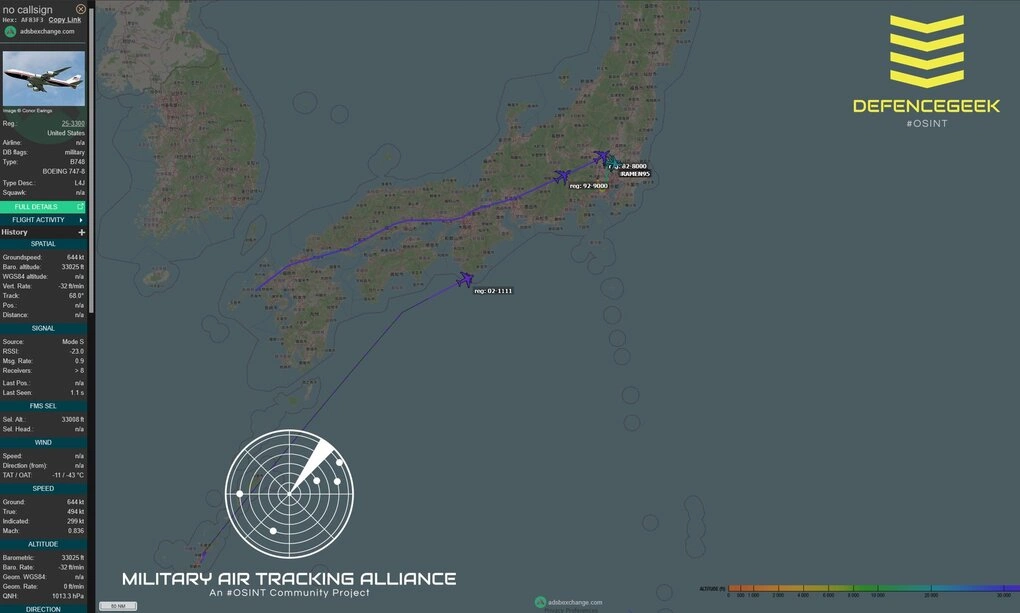
On November 20, defense analyst Joseph Trevithick, writing for the specialized publication The War Zone, noted that the U.S. Air Force mobilized an extensive logistical and defensive tail for the President’s Asian tour. This "air wing" consisted of a mix of aircraft, including two aging VC-25A presidential transports and the newer VC-25B, accompanied by at least one Boeing 747-200 variant known as the E-4B Nightwatch, often referred to in defense circles as the "Doomsday Plane." Flight tracking data identified the E-4B, bearing registration number 73-1676, shadowing the presidential formation throughout the return journey to the United States. During the President’s visits to the Philippines and China, the Nightwatch remained stationed at Kadena Air Base on Okinawa, Japan, ready to serve as a command center in the event of an emergency.
The National Airborne Operations Center: A Flying Fortress
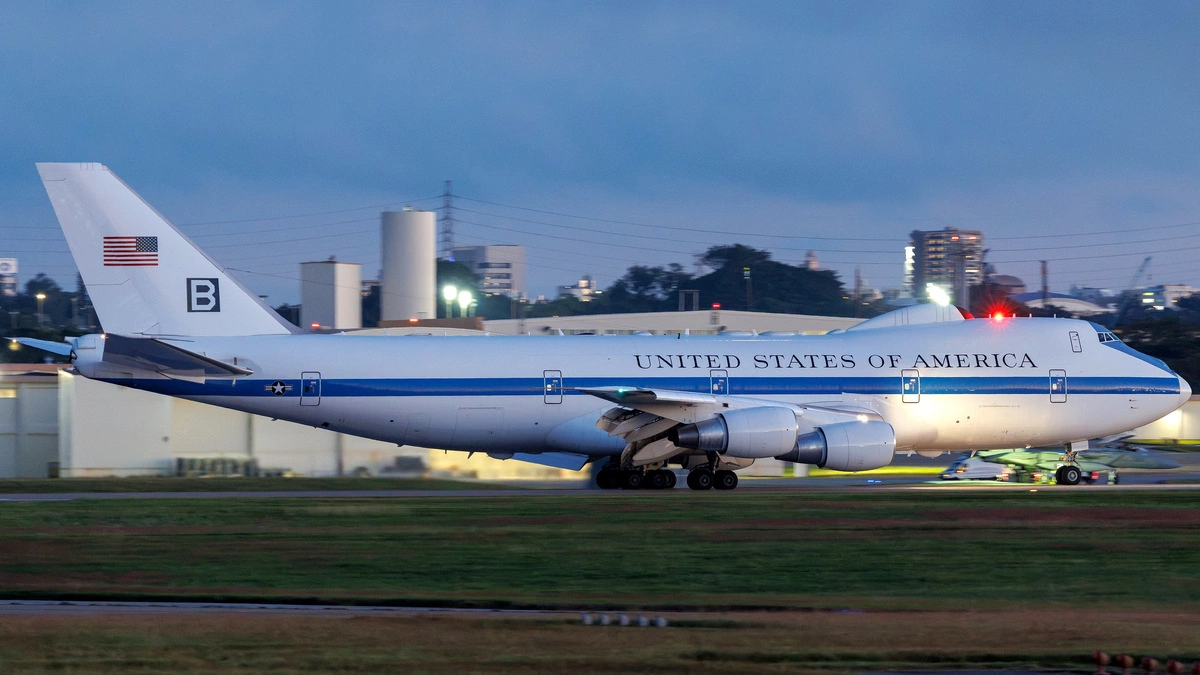
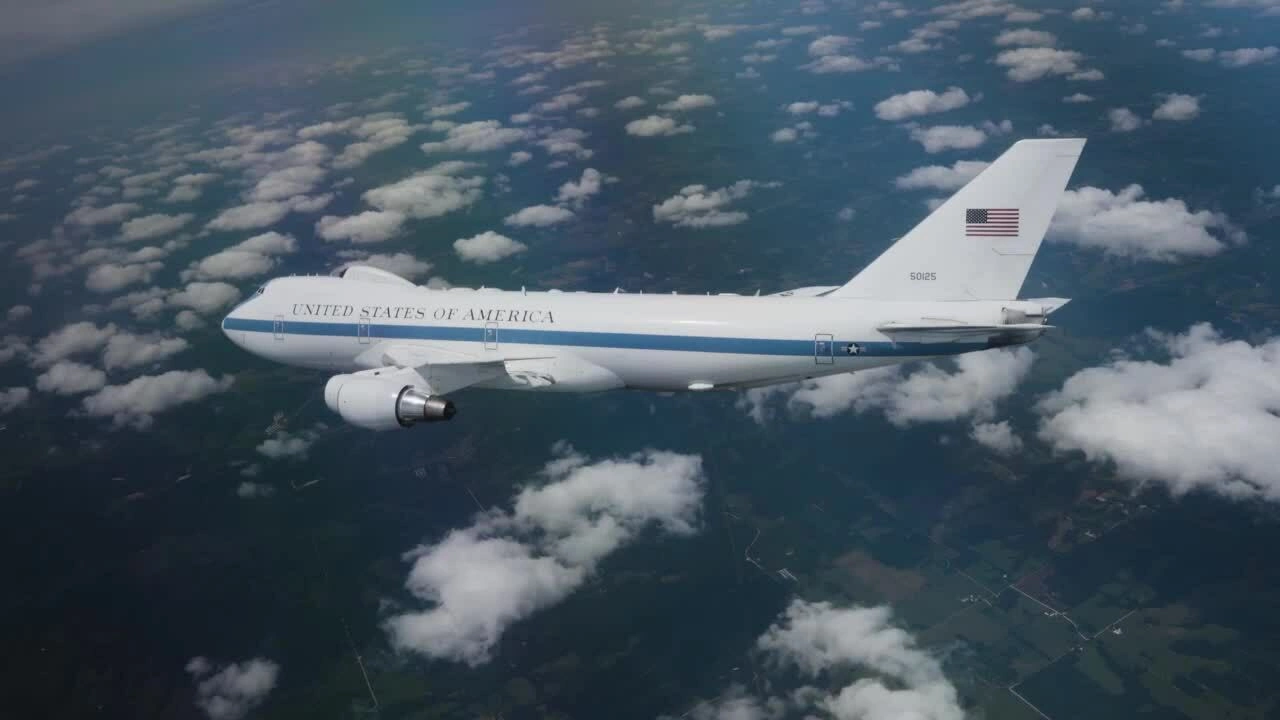
The E-4B Nightwatch serves as the National Airborne Operations Center (NAOC). Unlike the Air Force One aircraft, which are primarily configured for executive transport and communication, the E-4B is a military command-and-control platform designed to withstand the most catastrophic scenarios, including a full-scale nuclear exchange. It is essentially a flying command post, capable of managing global military operations when ground-based infrastructure is compromised or destroyed.
The aircraft is designed to accommodate up to 112 personnel, with a standard crew of approximately 60 individuals drawn from 15 different specialties. At its core is the command battle staff, a team of high-ranking military officers and technical experts responsible for developing, monitoring, and executing strategic options under the most extreme conditions of national crisis.
Engineering for Survivability and Resilience
The engineering of the E-4B is a marvel of Cold War-era design, updated with modern communications technology. Each of the four aircraft in the fleet is equipped with 67 satellite dishes and antennas, many housed within a distinctive "hump" located behind the flight deck. These antennas provide a level of link resilience far exceeding that of standard commercial or even traditional military transport aircraft.
Perhaps the most iconic feature of the Nightwatch is its trailing wire antenna, which can be deployed up to eight kilometers in length. This system allows the aircraft to maintain communication with the U.S. Navy’s submarine fleet, even in the event of a total failure of terrestrial communication networks. Furthermore, all critical equipment on board is hardened against electromagnetic pulse (EMP) interference, and the controls utilize analog technology or shielded digital interfaces to prevent data corruption or system overrides during a high-altitude nuclear detonation.
Strategic Operational Capabilities
The E-4B is built for endurance. It can remain airborne for 12 hours without refueling, but its aerial refueling capability allows it to stay aloft for much longer. In theory, and given sufficient fuel tanker support, an E-4B could remain operational for up to a week. During one notable test, an E-4B maintained continuous flight for more than 35 hours.
The U.S. Air Force currently operates four E-4Bs, all based at Offutt Air Force Base in Nebraska. These aircraft are the descendants of the E-4A program, which originated in the 1970s before being upgraded to the E-4B standard in the 1980s. During the latter years of the Cold War, a "Nightwatch" aircraft was kept in a state of constant, immediate readiness at Andrews Air Force Base, capable of taking off within 15 minutes of an alert to evacuate the President. Today, the Air Force continues to maintain a "ground alert" status at Offutt, with engines kept ready 24/7 to ensure the leadership can be airborne at a moment’s notice.
The cost of maintaining these assets is substantial. According to Air Force estimates, each E-4B requires more than $223 million for maintenance and upgrades, with hourly operating costs hovering near $160,000. This makes them among the most expensive and specialized assets in the Department of Defense’s inventory.
Evolution of Presidential Logistics and Security
The presence of the E-4B during presidential travel is not merely for command, but also to provide a redundant layer of protection. Nightwatch rarely lands at the same location as Air Force One; instead, it is often deployed to a nearby facility, such as Kadena Air Base, where the President’s Marine One helicopter could theoretically reach it in an emergency. In high-risk environments, the distance between the two platforms is adjusted based on threat assessments and logistical feasibility.
The importance of the E-4B was brought into sharp focus following the September 11, 2001, terrorist attacks. While President George W. Bush utilized the VC-25A to move between locations, officials held intense discussions about whether to transfer him to the E-4B to ensure his absolute safety. While that transfer never occurred, the precedent was set for using the E-4B as a "shadow" for the President during periods of heightened global tension.
Modern Challenges and Future Upgrades
The logistical tail for the President is expansive, often including C-17 and C-5 strategic transports carrying the presidential motorcade, the Marine One helicopter, and various security details. As the fleet ages, the U.S. Air Force is looking toward the future. The E-4B’s successor, the Survivable Airborne Operations Center (SAOC), is currently in the procurement phase.
Simultaneously, the transition to the new VC-25B (the next generation of Air Force One) has raised questions regarding communication and survivability. It has been noted that the newer VC-25B models lack the aerial refueling capability of their predecessors. While the White House has confirmed that the aircraft are undergoing specialized modifications to include advanced defensive and communication systems, the inherent capability of the E-4B to refuel in mid-air remains a critical strategic advantage that planners are hesitant to abandon.
One strategy currently being explored to address potential communication gaps in the new VC-25B is the use of "data linking." By positioning an E-4B or another specialized communications platform in the vicinity of the presidential aircraft, the VC-25B can utilize the more robust, hardened communications suite of the support aircraft to transmit and receive secure data.
Conclusion: A Silent Guardian in the Skies
The visibility of the E-4B during President Trump’s return from China is a reminder that behind the veneer of diplomatic pageantry lies a constant, grim calculation of national security risks. Whether providing a secure command node during a crisis or acting as a redundant communications relay for the presidential fleet, the Nightwatch remains a vital instrument of American power. As the world becomes increasingly complex and the nature of threats evolves, the role of these "Doomsday Planes" in safeguarding the continuity of government remains as pertinent today as it was at the height of the Cold War. The seamless integration of these assets into the President’s travel itinerary ensures that, no matter the distance from Washington, the commander-in-chief is never truly out of touch with the nation’s strategic military apparatus.