The tragic early morning hours of July 21 witnessed a harrowing incident on National Highway 1 in Hung Thinh commune, Dong Nai province, where a sleeper bus fire claimed the lives of seven passengers. While the immediate cause of the fire remains under investigation, preliminary reports from the authorities highlighted a critical technical failure that prevented a swift evacuation: the vehicle’s pneumatic door system lost pressure following the initial impact, rendering the primary exit impassable through conventional means. This disaster has reignited a national conversation regarding the engineering choices behind heavy vehicle door systems, specifically why the industry remains committed to compressed air technology and the inherent risks associated with its failure during emergencies.
The Technical Rationale for Pneumatic Door Systems
Pneumatic doors, often identified by the distinct "hissing" sound of escaping air during operation, are the global standard for large-scale passenger transport, including city buses and long-distance coaches. Unlike smaller passenger vehicles or vans that utilize compact electric motors to slide or swing doors, heavy-duty buses require a mechanism capable of generating significant force repeatedly over a long operational lifespan.
The primary reason for selecting pneumatics over electric or hydraulic systems is the sheer weight and frequency of use. A standard coach door can weigh between 80 and 150 kilograms. In an urban transit environment, a bus may open and close its doors hundreds of times in a single shift. Electric motors capable of moving such mass at high speeds tend to overheat or suffer from brush wear when subjected to such high duty cycles. Conversely, pneumatic cylinders are remarkably durable, relying on simple seals and air pressure to move a piston. This simplicity translates to a high Mean Time Between Failures (MTBF), a critical metric for transport operators.
Furthermore, most heavy vehicles are already equipped with a robust compressed air system to power their air brakes. By tapping into this existing infrastructure, manufacturers can operate the doors without adding the weight and complexity of high-torque electric motors or heavy-duty wiring harnesses. This integration ensures that the vehicle uses a unified power source for its most critical mechanical functions, including braking, suspension leveling, and passenger access.
Anatomy of a Pneumatic Failure: The Dong Nai Case Study
The incident in Dong Nai underscores the vulnerability of pneumatic systems in high-impact scenarios. To understand why the doors failed to open, one must look at the chronology of the mechanical operation. In a standard setup, the engine drives a compressor that fills high-pressure air tanks, typically maintained at 8 to 12 bars (115 to 175 psi). When the driver activates a switch, a solenoid valve opens, directing air into a cylinder. The air pressure pushes a piston, which is connected to the door linkage, forcing the door to swing or slide open.
In the Dong Nai collision, the impact likely severed the air lines or ruptured the storage tanks. When the system loses pressure, the "holding force" that keeps the door in its current state or the "actuating force" required to move it vanishes. More importantly, in many designs, the mechanical linkage is held in a specific geometry by the air pressure; without that pressure, the door can become jammed against its frame, especially if the vehicle’s chassis has been slightly deformed by an accident.
Chronology of the July 21 Incident
- 04:00 AM: The sleeper bus was traveling through Hung Thinh, Dong Nai, when a collision occurred. The force of the impact caused immediate structural damage to the front and side sections of the vehicle.
- 04:05 AM: Witnesses reported the first signs of smoke and fire emanating from the engine or electrical compartment.
- 04:07 AM: Passengers attempted to exit through the main door. However, the loss of air pressure meant the driver’s control switch was unresponsive. The door remained sealed.
- 04:10 AM: The fire spread rapidly through the interior, fueled by the highly flammable upholstery and plastic components typical of sleeper bus cabins.
- 04:15 AM: Emergency services were alerted, but by the time they arrived, the cabin was fully engulfed. The inability to operate the pneumatic door in the first three minutes proved fatal for those unable to reach secondary exits.
The Emergency Override: A Hidden Lifeline
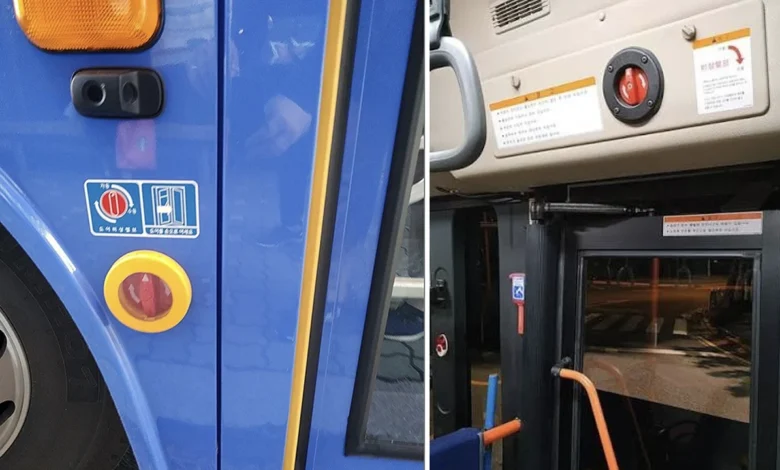
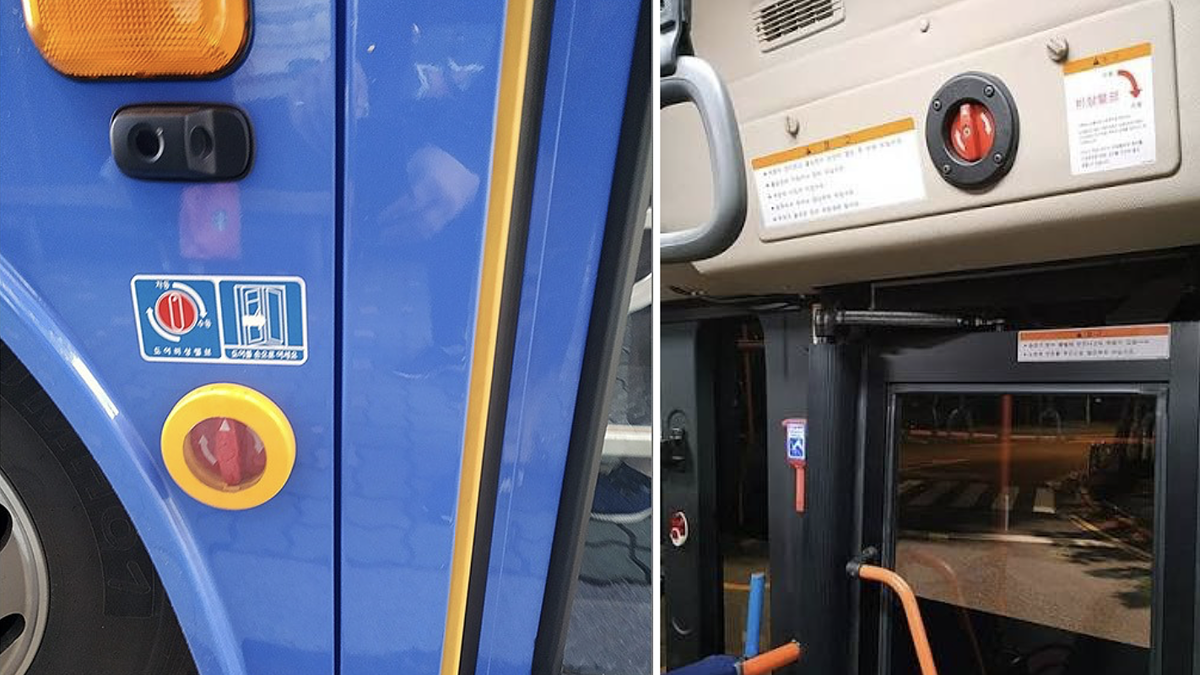
Despite the reliance on air pressure, pneumatic doors are required by international safety standards—such as the UN ECE Regulation 107—to have a manual override. This is the "Emergency Door Release" or "Emergency Valve" found near the door. In the Vietnamese context, these are often labeled with red instructions or housed under a glass cover.
The function of this valve is misunderstood by many passengers. It does not "power" the door open. Instead, it acts as an exhaust. When the valve is turned (usually clockwise, following the arrow), it cuts off the supply from the air tanks and vents any remaining air trapped in the cylinders to the atmosphere. This is the "hiss" one hears during an emergency release. Once the air is exhausted, the mechanical resistance of the piston is removed, allowing the door to be pushed or pulled open manually.
The tragedy in many accidents is that passengers, gripped by panic and blinded by smoke, are often unaware of the valve’s location or how to operate it. Furthermore, if the collision has warped the door frame by even a few millimeters, the manual force required to slide the door can exceed the strength of a panicked passenger, even after the air has been vented.
Supporting Data and Safety Standards
Data from transportation safety boards suggests that while pneumatic systems are 30% more reliable than electric systems for daily operations, they are significantly more prone to "total system lockout" during structural damage.
| Feature | Pneumatic System | Electric System |
|---|---|---|
| Operating Pressure | 8-12 Bar | N/A |
| Max Force | Very High (>2000N) | Moderate |
| Durability | High (500,000+ cycles) | Moderate (Heat sensitive) |
| Failure Mode | Pressure Leakage | Electrical Short/Burnout |
| Emergency Mode | Manual vent & push | Manual clutch release |
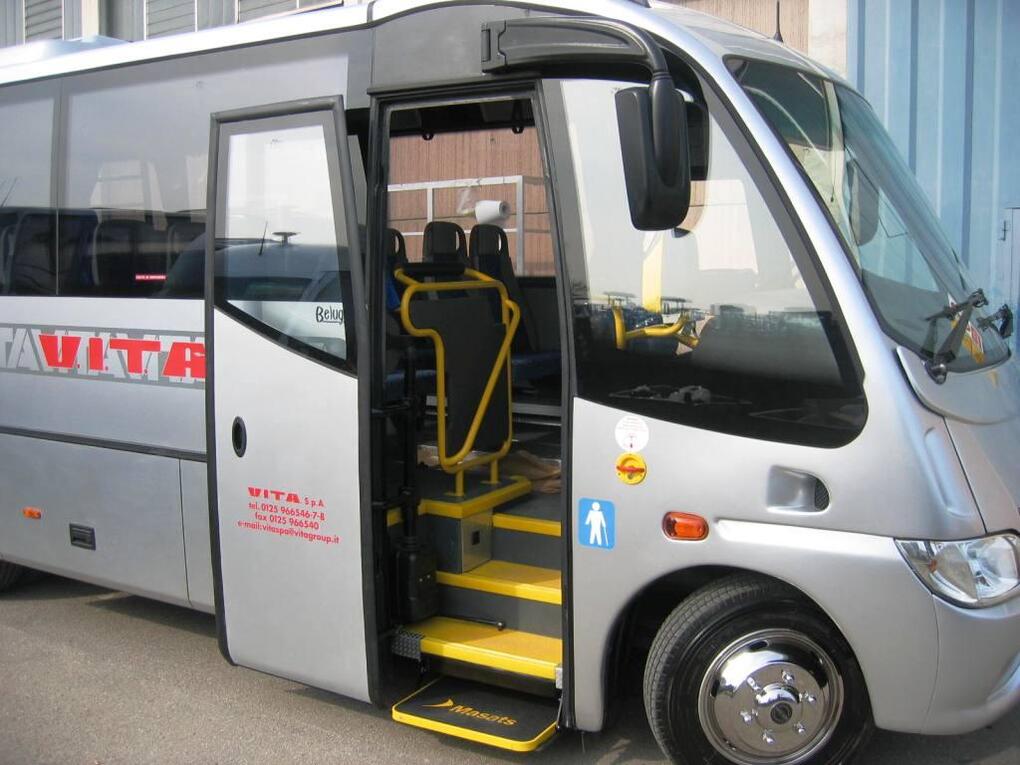
In Vietnam, the "Vietnam Register" (Cục Đăng kiểm Việt Nam) mandates that all passenger vehicles with more than 10 seats must have at least two ways to open the door: the driver’s control and the emergency valve. Additionally, vehicles must be equipped with safety hammers to break the side windows, which are made of tempered glass designed to shatter into small, non-edged fragments.
Broader Implications for Passenger Safety
The Dong Nai accident has led to calls for more stringent passenger briefings. Similar to pre-flight safety demonstrations on aircraft, some safety advocates suggest that long-distance bus operators should be required to demonstrate the use of the emergency door valve and the location of safety hammers before every journey.
There is also a growing debate regarding the design of sleeper buses. The narrow aisles and multi-tiered bedding structures in these vehicles make rapid movement difficult. When a pneumatic door fails, the bottleneck created at the front of the bus becomes a "death trap" in the event of a fire.
Analysis of Safety Improvements
- Redundant Power: Some modern luxury coaches are beginning to experiment with "Electro-Pneumatic" hybrids. These systems use air for daily use but have a small backup battery and electric actuator specifically for emergency opening.
- Exterior Access: The incident highlighted the need for rescue-side access. While many buses have an external emergency valve, they are often obscured by dirt or lack reflective signage, making them hard for first responders to find in the dark.
- Material Science: Beyond the door itself, the speed at which the fire consumed the Dong Nai bus suggests that the fire-retardant properties of the interior materials need stricter oversight. If the door is jammed, passengers need "survival time," which is currently cut short by toxic smoke.
Official Responses and Regulatory Outlook
Following the July 21 tragedy, the Ministry of Transport has ordered a comprehensive review of safety standards for sleeper buses. Officials have emphasized that while the pneumatic door technology is sound, the "human factor"—knowledge of how to bypass the system—is the weak link.
In statements released to the press, provincial authorities in Dong Nai noted that they are investigating whether the bus had undergone its required periodic maintenance. A leak in the pneumatic system that might have been ignored during a routine check could have exacerbated the pressure loss during the crash.
The broader impact of this event will likely be felt in the next round of vehicle inspections. There is a high probability that the Vietnam Register will implement stricter testing for emergency valves, requiring them to be tested under "simulated load" rather than just checking if the handle turns.
As the industry moves forward, the "hiss" of the bus door will remain a staple of public transport. However, the Dong Nai fire serves as a somber reminder that in the intersection of high-pressure engineering and human safety, there is no room for a lack of awareness. The pneumatic door is a marvel of durability, but without a passenger’s knowledge of the manual override, it remains a formidable barrier between life and death.