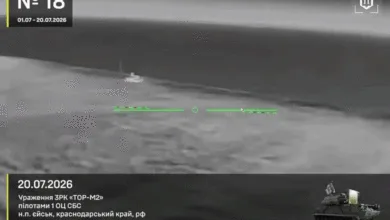
Ukraine Destroys Russian BM-27 Uragan Multiple Rocket Launcher on Frontline Using Precision FPV Kamikaze Drones

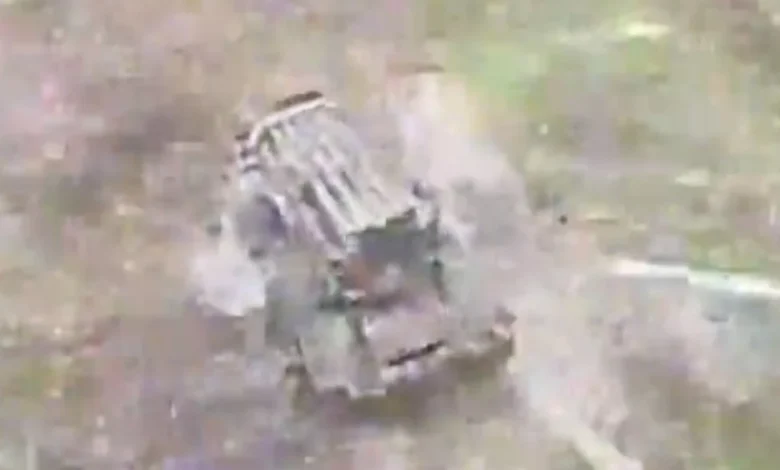
The ongoing conflict between Ukraine and Russia continues to demonstrate a profound tactical evolution, marked by the increasing dominance of unmanned aerial systems over traditional heavy weaponry. In a recent operation highlighting this shift, the Ukrainian Armed Forces successfully neutralized a Russian BM-27 Uragan 220mm multiple rocket launcher (MRL) operating near the active frontline. The engagement, which underscores the vulnerability of conventional artillery systems to modern loitering munitions, was officially documented and released by the Ukrainian Ministry of Defense.
Chronology and Execution of the Frontline Strike
According to reports published by military tracking outlet Defense Express, the successful engagement took place on November 20, following weeks of intensive aerial reconnaissance along the contested zones. The precision strike was executed by specialized drone operators belonging to the Unmanned Aerial Vehicle (UAV) units of Ukraine’s 3rd Assault Division and the 414th Separate Marine Strike Unmanned Aerial Systems Battalion.
Frontline aerial surveillance assets successfully identified the Russian BM-27 Uragan system positioned in an open, semi-rural tract near the forward edge of the battle area. The mobile artillery piece, which had likely been pulled into position to conduct fire missions against Ukrainian defensive lines, was stationary when spotted. Upon confirming the target coordinates, the Ukrainian forces launched a swarm of First-Person View (FPV) kamikaze drones.
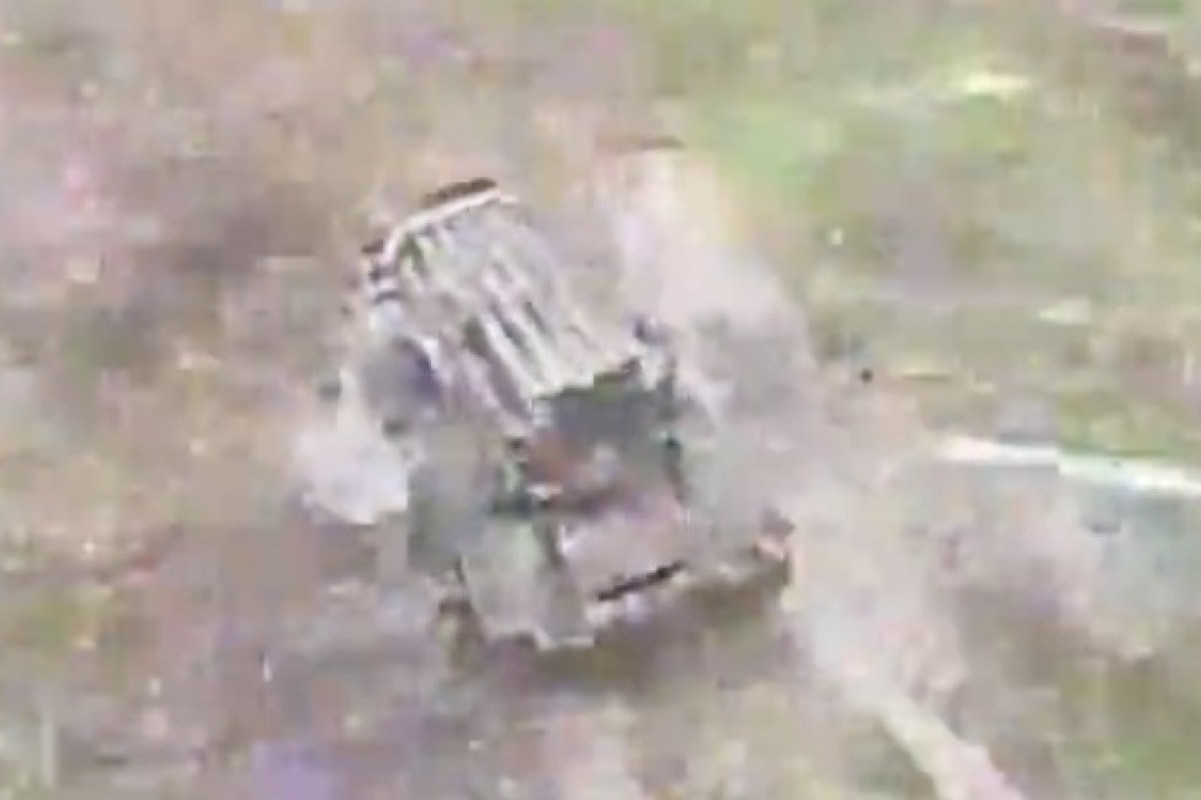
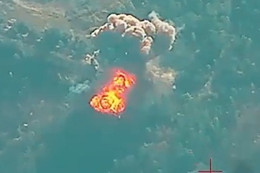
Subsequent battle damage assessment footage released by the Ukrainian military confirmed the direct hits. The impact of the explosive-laden drones triggered a catastrophic secondary detonation of the launcher’s 220mm rocket payload, resulting in the complete obliteration of the vehicle. Military analysts noted that the scale of the secondary explosion not only destroyed the million-dollar launcher but also effectively eliminated its four-man crew from active combat operations. While the exact geographic sector of the engagement was withheld for operational security reasons, the tactical profile mirrors a growing trend of high-value asset elimination across the eastern and southern operational theaters.
Technical Profile of the BM-27 Uragan
The BM-27 Uragan (designated as "Hurricane" in Russian) is a formidable self-propelled multiple rocket launcher system designed during the late 1970s and introduced into service with the Soviet Ground Forces in 1975. Engineered to deliver devastating saturation fire over wide areas, the system has remained a staple of Soviet-bloc and Russian artillery doctrines for nearly half a century.
Built on a robust ZIL-135 8×8 heavy military truck chassis, the complete system weighs approximately 20 metric tons and measures 9.63 meters in length, 2.8 meters in width, and 3.23 meters in height. The vehicle is operated by a crew of four personnel, consisting of a commander, a gunner, a driver, and a loader responsible for calculating firing trajectories and managing the complex reload procedures.
The primary firepower of the BM-27 stems from its 16 tubular launch rails capable of firing heavy 220mm caliber rockets. An individual rocket weighs roughly 280.4 kilograms, carrying high-explosive fragmentation (HE-FRAG), chemical, or cluster warheads ranging between 90 and 100 kilograms depending on the specific mission profile. The system boasts an effective firing range between 35 and 38 kilometers. Beyond conventional explosive strikes, the Uragan is particularly valued by commanders for its specialized anti-personnel and anti-vehicle mining capabilities; each rocket can disperse up to 312 submunitions or landmines over a targeted zone, creating instant denial-of-area barriers.
The Vulnerability of Heavy Artillery in Modern Warfare
The destruction of the BM-27 Uragan is part of a broader, systemic transformation in modern military tactics where traditional heavy assets—often romanticized as the "kings of the battlefield"—face unprecedented attrition rates. Historically, self-propelled howitzers and multiple rocket launchers like the American M109, French Caesar, Russian Msta-S, BM-21 Grad, and TOS-1A thermobaric systems operated safely beyond the immediate line of sight, shielded by layered air defenses and forward ground troops.
However, the proliferation of commercial reconnaissance drones coupled with military-grade FPV loitering munitions has fundamentally compressed the sensor-to-shooter kill chain. Modern artillery units can no longer rely solely on distance for protection. Once a heavy launcher fires, its radar signature, muzzle flash, or thermal footprint can be tracked within minutes. Low-cost FPV drones, costing only a few hundred to a few thousand dollars, are now routinely deployed to hunt down multimillion-dollar artillery systems, forcing military planners on both sides to rethink how they deploy, conceal, and protect mobile fire support assets.
Broader Strategic Implications and Context
The loss of specialized systems like the BM-27 Uragan represents a significant qualitative attrition for the Russian military. While Moscow retains vast stockpiles of Soviet-era weaponry, modernizing, refurbishing, and fielding heavy artillery systems requires substantial industrial capacity. Each destroyed launcher reduces the density of long-range fire support available for offensive maneuvers or defensive stabilization along the roughly 1,000-kilometer frontline.
Simultaneously, the event underscores Ukraine’s growing reliance on asymmetrical warfare and domestically integrated drone ecosystems. By developing specialized unmanned units and scaling up asymmetric strike capabilities, Kiev aims to offset numerical disadvantages in heavy armor and artillery ammunition through precision attrition. As the war of attrition grinds forward, the ability to protect high-value artillery assets from ubiquitous aerial surveillance will likely remain one of the defining operational challenges for both belligerents.