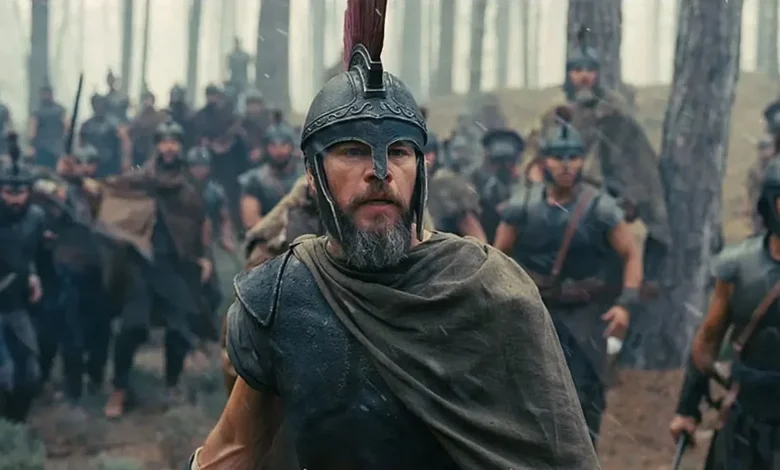
Christopher Nolan, a filmmaker renowned for his complex narratives and groundbreaking visual techniques, has once again pushed the boundaries of cinematic storytelling with his latest epic, "The Odyssey." This highly anticipated film, reportedly with a staggering production budget of $250 million, embarks on an ambitious journey across numerous global locations, aiming to redefine the classic Greek epic for a modern audience. The film boldly reimagines the tale of Odysseus’s arduous ten-year voyage home after the Trojan War, transforming a foundational work of Western literature into a visually spectacular and thematically resonant cinematic event.
A Modern Lens on an Ancient Struggle
"The Odyssey," a cornerstone of Western literature dating back over 3,000 years, has captivated imaginations for millennia. Nolan, whose academic background includes a deep appreciation for English literature before his directorial career, has approached this seminal work with a vision for an immersive, grand-scale production. However, rather than a direct retelling of the Homeric account of the Trojan War, Nolan’s adaptation pivots to interpret Odysseus’s homecoming as a profound journey through the battlefield of the human psyche, utilizing vast cinematic landscapes to explore deeper philosophical and psychological dimensions of the protagonist.
The original epic, comprising 24 books and over 12,000 lines, presents a formidable challenge for any screenwriter. Nolan and his team have navigated this challenge by selecting key narrative threads and translating them into a visual language that prioritizes imagery and character arc over literal exposition. This approach allows for a more dynamic portrayal of Odysseus’s internal struggles, enabling audiences to connect with the character’s evolution through his visual journey and the shifting emotional landscape of the film. This reimagining often involves intricate visual metaphors and symbolic representations, aiming to convey complex themes without relying solely on dialogue, thus allowing viewers to follow the narrative’s depth even without a prior familiarity with Homer’s text.
Reinterpreting Mythological Tropes for Contemporary Resonance
The film’s narrative begins by framing the famed Trojan War not just as a conflict for Helen, but as a strategic gambit by King Agamemnon to seize control of vital trade routes connecting the Aegean and the Black Sea. This interpretation aligns with modern scholarly perspectives that highlight economic and geopolitical motivations behind historical conflicts, suggesting that the pursuit of wealth and power played a significant role in fueling the ancient dispute. Within this framework, "The Odyssey" becomes more than a story of divine retribution; it poses profound questions about war, greed, and the pervasive impact of violence. Odysseus’s arduous journey is thus recontextualized as a quest not just to overcome external obstacles, but to confront the internal battles with greed, the allure of power, and the lingering consequences of his actions.

The iconic Trojan Horse, a symbol of cunning and ultimate victory in Homer’s epic, is also re-envisioned by Nolan. For Homer, it represented the pinnacle of strategic brilliance and military might. In Nolan’s "The Odyssey," however, this monumental construction becomes a more complex symbol of the enduring burden of war, representing the destructive triumph of a city and the profound questions it raises about the cost of conquest. The film probes the moral ambiguity of victory, suggesting that the spoils of war often come at a devastating price, leading to an unending cycle of conflict and introspection.
The Human Cost of Conflict
Nolan’s "The Odyssey" delves into the harrowing realities of war, portraying the experiences of soldiers as a prolonged struggle for survival and the arduous process of reintegration into society. The film opens by centering on the strategic importance of Troy, but quickly shifts focus to the lingering impact of conflict on the returning soldiers. The mythological figures of Polyphemus, the Laestrygonians, and the Sirens are not merely monsters to be overcome, but symbolic representations of the psychological toll of war. These encounters highlight the brutal realities of conflict, the exploitation of the weak by the strong, and the pervasive sense of loss and disorientation experienced by those who have witnessed widespread destruction.
The soldiers, once hailed as heroes fighting for a just cause, are depicted as becoming ensnared in a vortex of violence and self-destruction, their noble intentions eroded by the harsh realities of their experiences. The film explores how the quest for glory and the pursuit of conquest can lead to a profound loss of humanity, leaving individuals grappling with moral compromises and the haunting specters of their past actions.
Psychological Depths of Mythic Encounters
The sorceress Circe, a figure in Homer’s epic who transforms men into beasts, is presented in Nolan’s adaptation as a manifestation of human frailty and the seductive allure of escapism in the aftermath of prolonged conflict. Her magic symbolizes the potential for individuals to succumb to their baser instincts and desires, especially when faced with the psychological burdens of war. While many of Odysseus’s men fall prey to her enchantments, succumbing to hedonism and a loss of self, Odysseus himself remains tethered to his own sense of duty and the lingering pangs of guilt, a testament to his enduring humanity amidst the chaos.
Calypso, the nymph who detains Odysseus for seven years, embodies the concept of eternal longing and the yearning for a simpler existence. In Nolan’s interpretation, the lotus-eaters’ fruit offers not just forgetfulness, but a symbolic escape from the relentless cycle of violence and the weight of past deeds. It represents the desire for solace and peace in a world perpetually ravaged by conflict. Only by confronting and ultimately rejecting this allure can Odysseus continue his arduous journey towards home.

The Sirens, whose enchanting songs lure sailors to their doom in Homer’s epic, are re-envisioned as a representation of the seductive nature of regret and the pitfalls of repeating past mistakes. For Odysseus, their song compels him to confront his own errors and the consequences of his actions, pushing him to navigate the treacherous waters of self-reflection and the profound weight of his choices. The film also introduces the character of Sinon, borrowed from Virgil’s "Aeneid," as a manipulative figure who embodies the deceptive nature of warfare and the psychological games that can be played in the aftermath of conflict. Sinon’s deception of the Trojans, intended to lure them into a false sense of security, is recontextualized as a symbol of the moral compromises Odysseus is forced to make, highlighting the blurred lines between heroism and treachery in the pursuit of survival. The film poses critical questions about the nature of heroism and whether true victory can be achieved through deception and manipulation.
A Rich Tapestry of Character and Performance
The film boasts a stellar cast, with Matt Damon delivering a powerful performance as the weary yet resolute Odysseus. Damon navigates the complex emotional arc of the hero, transitioning from a hardened warrior to a man burdened by guilt and a profound longing for redemption. His performance is characterized by subtle yet impactful expressions, conveying a deep well of internal turmoil and resilience honed over a decade of conflict.
Anne Hathaway portrays Penelope with a commanding presence, embodying the resilience and strength of a queen defending her kingdom against ambitious suitors. Beyond her efforts to protect Ithaca from avaricious nobles, Hathaway’s Penelope navigates a tumultuous emotional landscape, exhibiting a spectrum of feelings from hope and despair to rage and profound longing. Her portrayal elevates Penelope to one of the film’s most compelling and dynamic characters.
Tom Holland shines as Telemachus, Odysseus’s son, who grapples with the absence of his father and the uncertainty of his own future. Holland captures the character’s journey from youthful vulnerability to a determined young man questioning whether he can inherit his father’s legacy and break free from the cycle of violence. Robert Pattinson delivers a memorable performance as Antinous, a scheming noble vying for the throne of Ithaca amidst the ensuing chaos. His portrayal of a calculating and ambitious figure creates a compelling antagonist, positioning him as a formidable rival to Odysseus in the film’s climactic confrontations. Supporting performances from esteemed actresses like Charlize Theron, Samantha Morton, and Lupita Nyong’o, though perhaps appearing in fewer scenes, add significant depth and nuance to the film’s exploration of power dynamics and the complexities of human ambition.
The Immersive Power of IMAX Cinematography
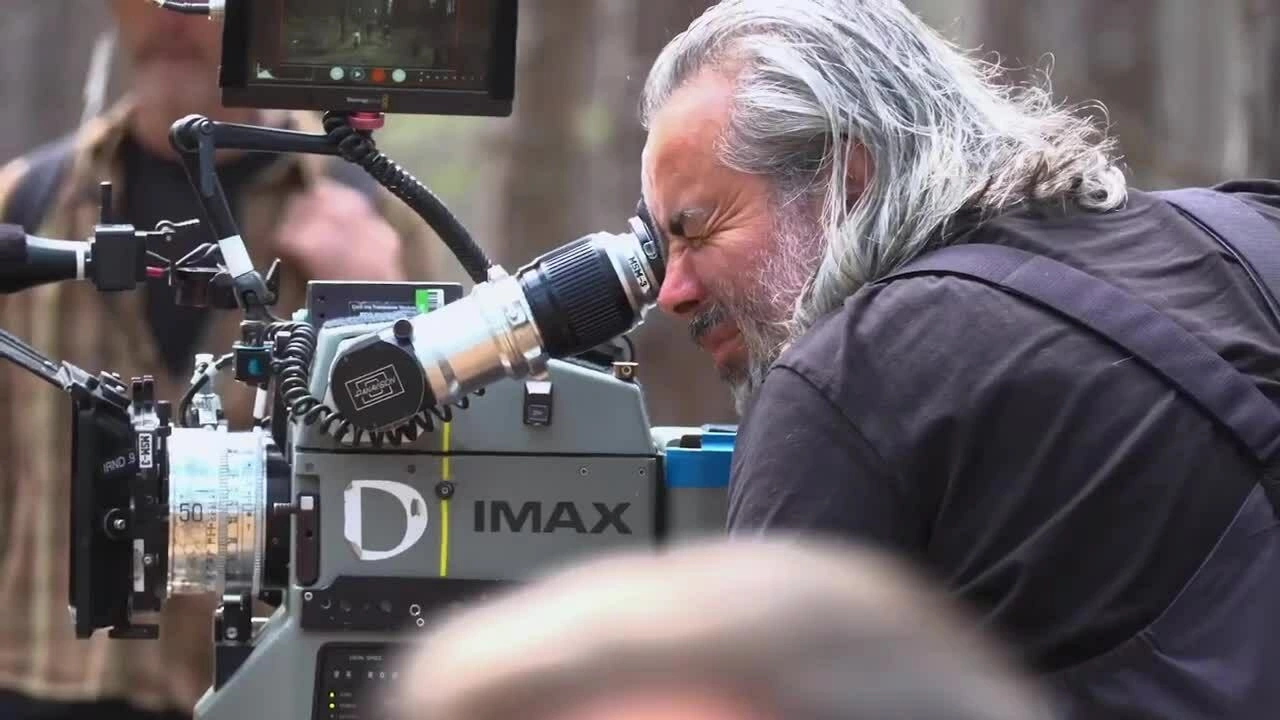
In "The Odyssey," Nolan further solidifies his reputation as a master of IMAX cinematography, utilizing the format to its fullest potential. Rather than merely creating a sense of overwhelming scale, Nolan employs the expansive canvas of IMAX to enhance the narrative’s emotional impact. The vast, immersive landscapes become an integral element of the storytelling, emphasizing the profound isolation and personal struggles of Odysseus. Scenes depicting encounters with the Cyclops, naval battles, and journeys into the underworld are rendered with breathtaking detail, drawing the audience into the raw emotional experience of the characters. The use of IMAX enhances the sense of vulnerability and insignificance of human beings against the formidable backdrop of nature and myth, underscoring Odysseus’s remarkable resilience.
Critical Acclaim and Enduring Significance
With an impressive critical reception, including a 96% rating on Rotten Tomatoes, "The Odyssey" has been widely lauded for its fresh and compelling reinterpretation of the Greek epic. Critics have praised Nolan’s ability to imbue the ancient narrative with a modern sensibility, transforming a foundational work of Western civilization into a contemporary blockbuster. Robbie Collin of The Telegraph described Nolan’s adaptation as a "modern war epic," noting that the film is "the film of the year." Publications like The Guardian and Empire have awarded the film five out of five stars, with Empire highlighting it as a "masterclass in visual storytelling," further cementing Christopher Nolan’s position as one of the most innovative and impactful filmmakers of the current era. Empire specifically lauded the film as "a magnificent translation of the ancient epic, continuing to affirm Christopher Nolan as one of the most audacious filmmakers of our time. The ambition of the film is its greatest strength."
Ultimately, Nolan’s "The Odyssey" transcends a simple adaptation. It is a profound exploration of the human condition, examining themes of war, loss, redemption, and the enduring quest for identity. By skillfully blending epic spectacle with intimate character study, Nolan has crafted a cinematic experience that is both breathtakingly grand and deeply resonant, ensuring the timeless relevance of Odysseus’s journey for generations to come. The film’s deliberate pacing and complex narrative structure, while perhaps challenging for some viewers, ultimately serve to deepen the audience’s engagement with the profound philosophical questions at its core, solidifying its place as a landmark achievement in modern filmmaking.