Vietnam Unveils Indigenous T-1 Light Tank Featuring High Amphibious Speed and Counter-UAV Capabilities at National Defense Exhibition

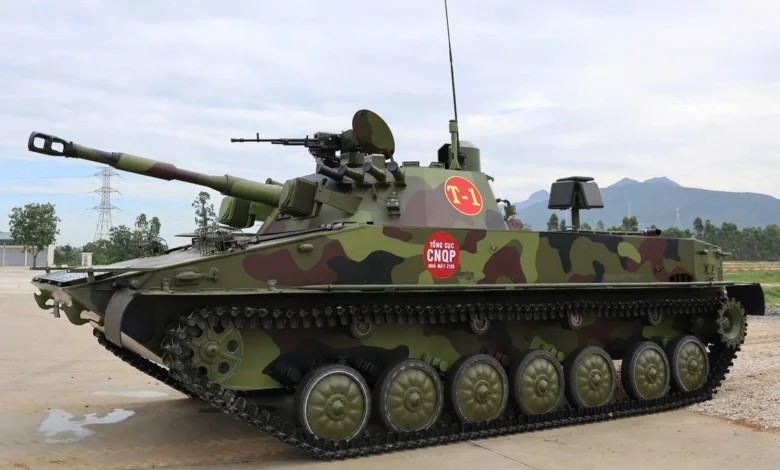
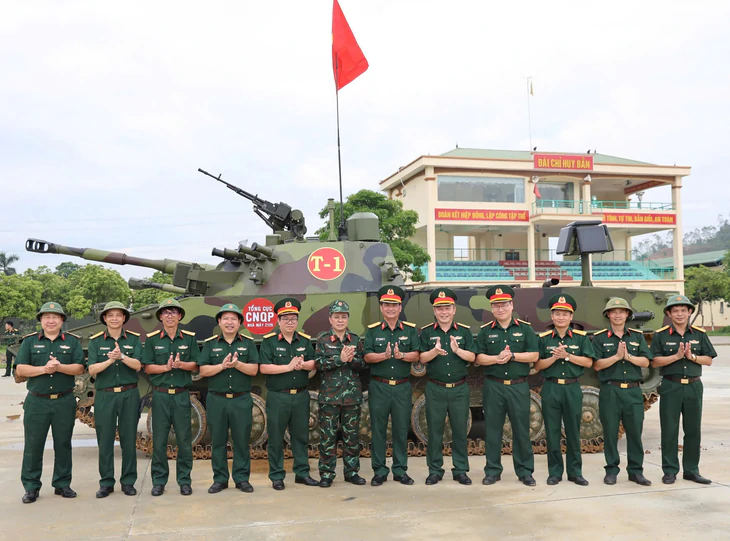
Vietnam’s defense manufacturing capabilities have achieved a significant milestone with the official introduction of the T-1 light tank. Developed entirely by engineers and technical personnel from the General Department of Defense Industry—specifically under the purview of Z125 Factory—the vehicle represents a major leap forward in the nation’s capacity to independently research, design, and manufacture complex military hardware without relying on pre-existing foreign prototypes.
The unveiling of the T-1 light tank marks a watershed moment for Vietnam’s domestic defense sector. Senior Lieutenant Colonel Tran Viet Binh, Deputy Director of Z125 Factory, formally confirmed the vehicle as a testament to the growing mastery of advanced core technologies within the country’s military-industrial complex. Designed to operate across
Vietnam’s diverse geographical terrain, the T-1 combines high amphibious mobility with modern combat systems tailored to address contemporary warfare threats, including unmanned aerial vehicles (UAVs).
Main Facts and Combat Specifications of the T-1 Light Tank
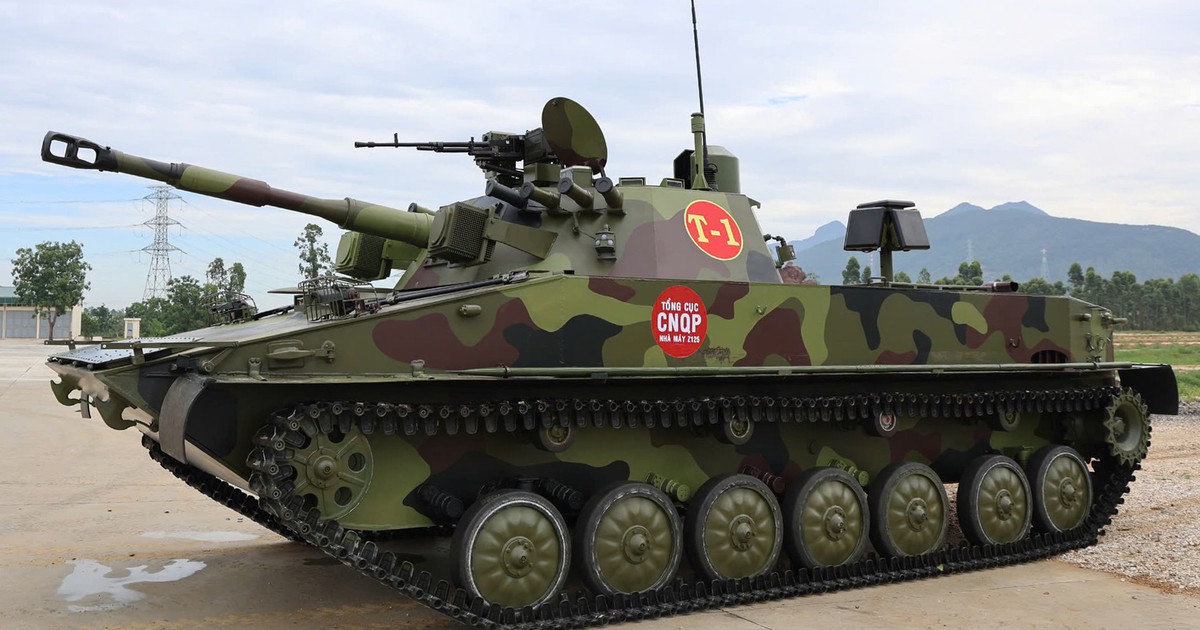
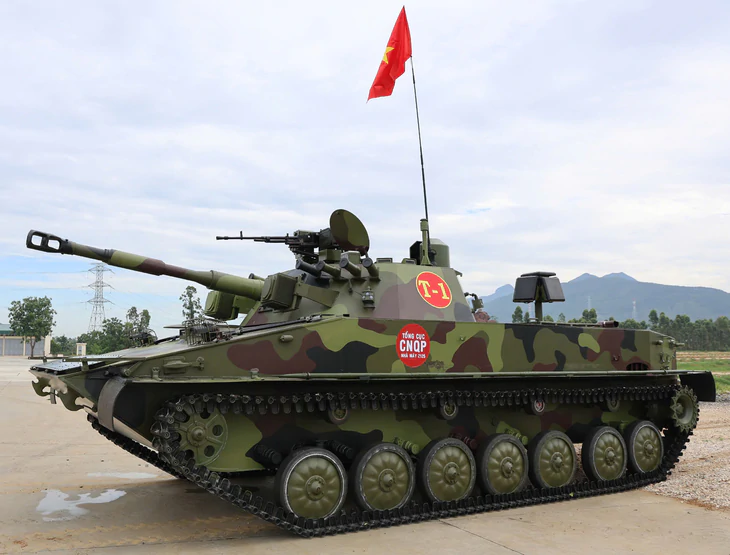
The T-1 has been engineered from a clean sheet, diverging from historical Soviet or Western armored designs to better suit the specific tactical doctrines and operational environments of the Vietnam People’s Army (VPA). Weighing significantly less than traditional main battle tanks, the light tank prioritizes agility, speed, and crew survivability.
Propulsion and Mobility:
The armored vehicle boasts exceptional mobility both on land and in water. On paved roads, the T-1 achieves a maximum speed of up to 70 kilometers per hour, allowing for rapid redeployment across strategic sectors. In amphibious mode—a critical requirement for operations in riverine and coastal environments—the tank can navigate water obstacles at speeds reaching 11.5 kilometers per hour. This amphibious high speed is a direct evolution from legacy platforms like the PT-76B light amphibious tank, providing modern Vietnamese armored units with superior tactical flexibility.
Armament and Fire Control Systems:
While retaining a 76.2mm main gun tailored for infantry support and direct fire engagements, the T-1 introduces a heavily upgraded weapon suite. Most notably, the vehicle is equipped with a remote-controlled 12.7mm anti-aircraft heavy machine gun system. The integration of an automated hatch-locking mechanism, digital stabilization, and advanced fire control architecture allows the crew to track targets dynamically and compute accurate ballistic trajectories on the move.
These enhancements enable the T-1 to engage not only traditional ground targets and light armor but also low-flying aerial threats, including modern reconnaissance and kamikaze UAVs that have redefined modern tactical combat. Furthermore, the tank features integrated smoke and multi-spectral aerosol screening systems to disrupt enemy targeting optics and infrared guidance mechanisms.
Crew Layout and Survivability:
The T-1 accommodates a reduced crew of three personnel. By optimizing internal space through automation and modular design principles, engineers minimized crew exposure while maximizing operational efficiency. Reducing the crew size to three helps mitigate potential personnel casualties in high-intensity combat scenarios, aligning with modern armored vehicle design philosophies.
Chronology and Exhibition Timeline
The public debut of the T-1 light tank is scheduled for the upcoming international defense exhibition held at Gia Lam Airport in Hanoi. Running from December 10 to December 13, the event will serve as the primary international platform for Z125 Factory to showcase its latest technological achievements to military delegations and defense contractors worldwide.
Although development milestones have been achieved progressively over recent years through intensive research and prototyping phases, the upcoming December exhibition marks the first time a domestically produced light tank of this caliber has been presented at an international defense exposition in Vietnam.
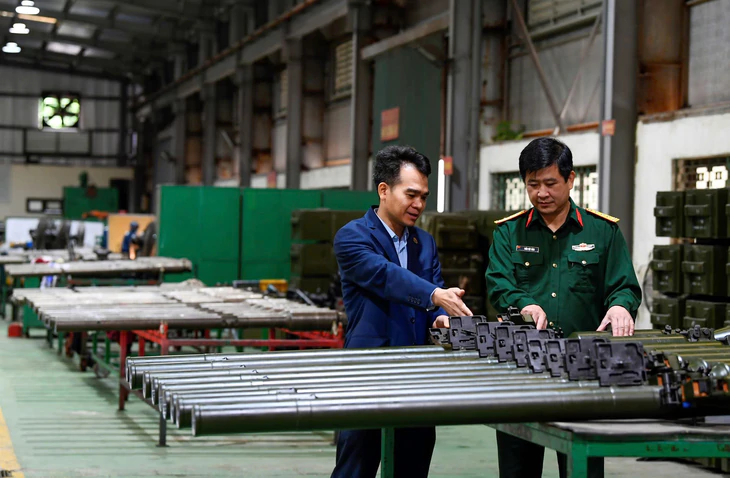
Preparations for the exhibition have involved extensive quality assurance checks and final integration trials supervised directly by factory leadership, including Senior Lieutenant Colonel Tran Viet Binh. Alongside the T-1 light tank, Z125 Factory plans to display a comprehensive portfolio of ten representative defense products manufactured entirely in-house. These include advanced grenade launchers (such as the SPL-40, SPL-79, and SPL-6), anti-tank rocket systems (such as the SCT-7/B41, SCT-9/SPG-9, SCT-73C, AKZ-82B10, and SCT-105M1), and the 100mm SC-100 mortar system.
Broader Integration within Vietnam’s Defense Industry
The development of the T-1 light tank does not occur in a vacuum; it is part of a broader, synchronized initiative by the General Department of Defense Industry to foster self-reliance, self-strengthening, and modernization under the guiding principle of "proactive, self-reliant, self-strengthening, dual-use, and modern."
In addition to leading the research and fabrication of the T-1, Z125 Factory has collaborated extensively with sister enterprises under the General Department of Defense Industry to co-produce major assemblies for other prominent national defense exhibits. Notable collaborative projects include the manufacturing of the 122mm artillery system integrated onto the PTH-01 self-propelled howitzer and the main hull assemblies for the PT-176 naval craft.
These collaborative milestones highlight a systematic transfer of core manufacturing knowledge across different branches of Vietnam’s military industry. By mastering foundational metallurgy, precision machining, digital system integration, and composite armor applications, domestic defense facilities are progressively reducing their reliance on foreign military imports.
Strategic Implications and Future Outlook
Military analysts note that the introduction of the T-1 light tank addresses a critical capability gap in Vietnam’s mechanized infantry forces. Traditional light tanks in regional inventories, while valuable for river-crossing operations and jungle warfare, often suffer from outdated fire control systems, manual turrets, and a lack of defense against modern asymmetric threats such as loitering munitions and small reconnaissance drones.
By incorporating modular architecture into the T-1, Z125 Factory has ensured that the platform can be easily upgraded with future technological insertions. The open-architecture combat management system allows for seamless integration with the VPA’s digitized command, control, communications, computers, cyber, and intelligence (C5I) networks. This connectivity ensures that light armor units can share real-time battlefield data with infantry squads, artillery batteries, and higher headquarters, thereby increasing overall combat synchronization.
Senior Lieutenant Colonel Tran Viet Binh emphasized the strategic significance of the project during pre-exhibition briefings, noting that participation in international defense expositions serves a dual purpose. It not only elevates the global profile and reputation of Vietnam’s defense manufacturing sector but also opens avenues for constructive international cooperation and potential defense trade partnerships.
As geopolitical dynamics in Southeast Asia and globally continue to evolve, nations are increasingly prioritizing supply chain security and indigenous defense production. Vietnam’s ability to conceptualize, design, prototype, and mass-produce advanced armored platforms like the T-1 light tank demonstrates a mature, resilient military-industrial base capable of safeguarding national sovereignty while contributing to regional stability through self-defense capabilities. The upcoming exhibition at Gia Lam Airport will provide domestic and international observers with a firsthand look at the tangible results of Vietnam’s long-term defense modernization strategy.