VietABank continues to resolve financial legacy issues linked to the high-profile Nguyen Thi Ha Thanh fraud case


VietABank has announced significant progress in the ongoing financial cleanup process related to a series of fraudulent activities uncovered at its Dong Da transaction office. The bank, which has been working to resolve these outstanding receivables for several years, recently confirmed the recovery of over 66.697 billion VND in accordance with a 2025 enforcement order. This development marks a critical step in the lender’s multi-year effort to address the fallout from a sophisticated "super-fraud" scheme that targeted several commercial banks between 2016 and 2018.
The Origins of the Fraudulent Scheme
The origins of the financial discrepancies trace back to mid-2018, when a group of individuals, spearheaded by Nguyen Thi Ha Thanh—a central figure later dubbed a "super-fraudster" by local media—began exploiting systemic vulnerabilities at various banks. Thanh, who possessed a history of failed business ventures and substantial personal debt, reportedly orchestrated a complex Ponzi-like scheme.
Between 2016 and 2018, Thanh engaged in high-interest borrowing to pay off previous lenders, a classic maneuver to maintain the appearance of financial stability and secure "VIP customer" status at multiple financial institutions. By cultivating relationships with bank staff and presenting herself as a high-net-worth individual, she was able to manipulate internal procedures.
The Mechanism of the Fraud
The fraud relied on a combination of collusion and procedural negligence. Thanh, along with 17 former bank employees, allegedly established fraudulent savings accounts. By forging signatures and colluding with internal staff, the group utilized the savings of other legitimate clients as collateral to secure massive loans.

The process typically followed a specific pattern:
- Collusion: Thanh collaborated with bank personnel who were willing to bypass standard verification protocols.
- Procedural Shortcuts: The involved staff ignored mandatory verification steps, such as meeting the owners of the collateral assets in person or conducting thorough credit appraisals.
- Asset Manipulation: Loans were approved against the savings accounts of innocent third parties without their knowledge. In some instances, the loan-to-value ratio reached as high as 98.5%.
- Circulation of Funds: The stolen funds were funneled through various accounts across different branches to obscure the trail, creating a discrepancy between the actual money deposited and the inflated transaction values reported on paper.
Chronology of the Recovery Process
VietABank first detected irregularities in late 2018 when it identified a pattern of suspicious activity involving the repeated opening and closing of savings accounts used as collateral for loans. Recognizing the potential for systemic risk, the bank proactively reported the matter to the Hanoi Police Department’s Security Investigation Agency in December 2018, requesting a formal investigation.
As the legal proceedings unfolded, the bank’s financial statements tracked the evolution of the resulting receivables:
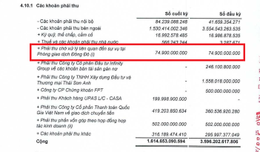
- January 1, 2024: The bank reported outstanding receivables related to the Dong Da transaction office totaling approximately 232.6 billion VND.
- December 31, 2024: This figure rose to 299.1 billion VND as the bank continued its internal audit and legal processing.
- June 3, 2025: Following directives from civil enforcement agencies, the bank began executing direct deductions from relevant accounts to offset the receivables.
- June 30, 2026: Through these enforcement measures, the outstanding balance was reduced to 74.9 billion VND.
- August 11, 2026: VietABank announced the recovery of an additional 66.697 billion VND under Enforcement Decision No. 1412/TD/2025, issued by the Hanoi Civil Judgment Enforcement Department.
Current Financial Standing and Lingering Liabilities
According to the bank’s semi-annual financial report for 2026, the remaining 15.437 billion VND is currently classified under "other payables" and is labeled as "payables awaiting resolution" related to the Dong Da incident. This amount represents the final remnants of the liabilities stemming from the fraudulent transactions that the bank is working to clear through ongoing court orders and civil enforcement processes.
The bank has emphasized that it has been diligently executing these adjustments in strict compliance with the rulings of the court and civil enforcement authorities. By systematically clearing these "payables," VietABank is effectively drawing a line under a chapter of its history that has required extensive legal and financial remediation.
The Broader Impact of the "Super-Fraud"
The case of Nguyen Thi Ha Thanh, who was sentenced in 2023 for orchestrating 27 distinct instances of fraud, serves as a sobering reminder of the risks associated with internal control failures in the banking sector. The total amount misappropriated by her group across various banks exceeded 433 billion VND, with VietABank alone accounting for approximately 273 billion VND of that total.
For the banking industry at large, the case triggered a comprehensive review of retail banking procedures. Banks across Vietnam implemented stricter biometric verification, mandatory multi-signature authorization for high-value transactions, and enhanced auditing of employee conduct to prevent a recurrence of such collusion.
Implications for VietABank and Stakeholders
The successful recovery of the majority of these funds is a positive indicator for VietABank’s balance sheet stability. By resolving these "zombie" receivables, the bank is cleaning up its financial reporting, which is essential for maintaining investor confidence and regulatory compliance.
The bank’s ability to navigate the legal process to recover these losses underscores a commitment to transparency and fiscal responsibility. As the bank moves toward the final settlement of the remaining 15.4 billion VND, analysts suggest that the completion of this process will allow the institution to focus its resources on its core lending and growth strategies rather than the management of legacy litigation.
In summary, the resolution of the Dong Da transaction office fraud is a multi-year effort that reflects the complexities of modern banking security and the rigorous nature of civil enforcement. While the financial impact was significant, the systematic recovery process has mitigated the long-term damage, demonstrating the effectiveness of the bank’s cooperation with law enforcement and regulatory bodies. As of the second half of 2026, the bank remains on track to finalize the resolution of these outstanding issues, signaling a move toward full financial normalization.
Related posts: