Understanding Traffic Sign I 424 Pedestrian Overpass and Its Vital Role in Urban Road Safety

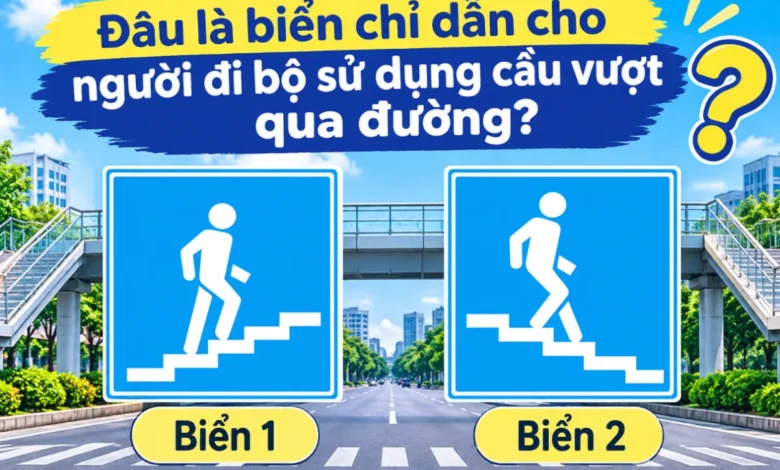
The continuous expansion of modern urban infrastructure requires a sophisticated system of regulatory, warning, and informative signage to manage the complex interplay between vehicular traffic and vulnerable road users. Among the diverse array of visual cues deployed across municipal and national road networks, informative signs play a foundational role in guiding commuters safely to their destinations. Specifically, within the framework of traffic regulation and infrastructure design, the implementation of designated pedestrian infrastructure relies heavily on standardized visual markers. According to the National Technical Regulation on Road Traffic Signs QCVN 41:2019, the specific sign designated for pedestrian overpasses—officially codified as Sign I.424—serves as an indispensable navigational aid for pedestrians. This sign not only directs foot traffic toward safe crossing points above busy thoroughfares but also contributes significantly to the overarching mission of reducing pedestrian-related traffic accidents, alleviating urban congestion, and fostering a culture of disciplined road usage.
Decoding Sign I.424 Technical Specifications and Visual Identity
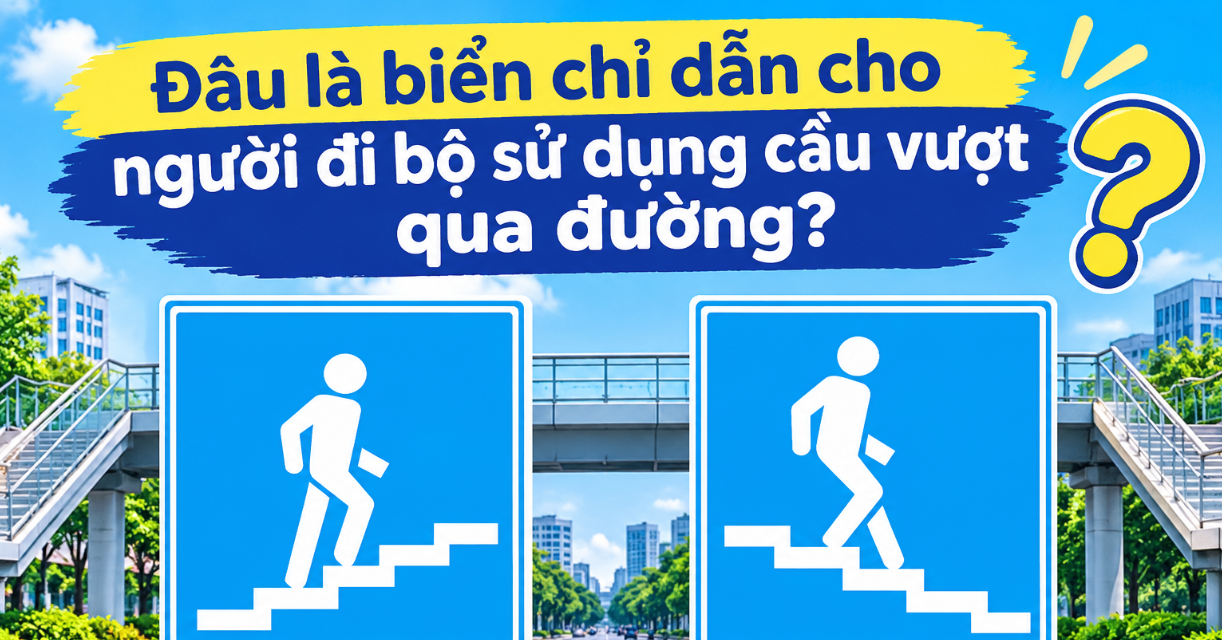
To maintain consistency and ensure rapid comprehension by the public, road traffic signs must adhere strictly to established national standards. Sign I.424, commonly referred to as the pedestrian overpass sign, is distinguished by specific geometric, chromatic, and iconographic parameters defined under QCVN 41:2019. Visually, the sign features a prominent square or rectangular shape, utilizing a striking blue background that serves as the universal chromatic standard for informative indicators within Vietnam’s regulatory framework. At the center of the blue field, a crisp white silhouette illustrates a human figure ascending or descending a set of stairs, symbolizing vertical movement and structural elevation.
This deliberate design choice is rooted in ergonomic and psychological principles of visual communication. The blue color provides high contrast against diverse urban backdrops—ranging from concrete overpasses to lush roadside vegetation and commercial signage—ensuring visibility under varying lighting and weather conditions. The silhouette offers an intuitive, language-agnostic representation that instantly communicates the function of the ahead structure to citizens of all ages, as well as international visitors who may not be fluent in local languages. By establishing a uniform visual standard, Sign I.424 eliminates ambiguity, enabling pedestrians to make swift, informed decisions regarding their crossing routes rather than attempting dangerous maneuvers across multi-lane arterial roadways.
The Historical Context of Urban Pedestrian Infrastructure
The evolution of pedestrian safety infrastructure reflects the broader historical transition of cities from pedestrian-centric spaces to automobile-dominated transit networks. During the early and mid-20th century, rapid urbanization and the mass production of motor vehicles led to a dramatic surge in traffic volume, particularly in growing metropolitan centers and developing economies. This vehicular boom brought unprecedented challenges, notably an alarming rise in pedestrian fatalities and severe injuries caused by conflicts between fast-moving automobiles and citizens attempting to cross busy streets.
In response to escalating pedestrian mortality rates, urban planners and traffic safety engineers began conceptualizing grade-separated pedestrian crossings—commonly known as footbridges or overpasses. These elevated structures effectively remove pedestrians from the path of vehicular traffic, creating a zero-conflict zone that protects vulnerable road users. However, the construction of physical infrastructure alone proved insufficient. Without clear, standardized guidance, pedestrians frequently chose the perceived convenience of at-grade street-level crossings over climbing stairs or ramps to use overpasses, especially if the access points were poorly marked or hidden among dense urban streetscapes.
To bridge this gap in user compliance, transportation authorities recognized the necessity of developing standardized informative signage. The codification of specific markers, such as Sign I.424 in contemporary technical regulations like QCVN 41:2019, represents the culmination of decades of traffic safety research. By officially standardizing the shape, color, symbol, and placement criteria of pedestrian overpass signs, regulatory bodies established a cohesive legal and visual language that bridges civil engineering and human behavior, ensuring that monumental investments in pedestrian bridges yield their intended safety dividends.
Strategic Placement and Regulatory Guidelines for Deployment
The efficacy of Sign I.424 depends not only on its standardized design but also on its strategic positioning along urban corridors. Traffic engineering guidelines mandate that informative signs pointing toward grade-separated crossings must be placed at optimal distances and angles to give pedestrians adequate reaction time and directional clarity. Typically, these signs are installed at approach points leading directly to the stairwells, escalators, or elevators of the pedestrian bridge, as well as along adjacent sidewalks where pedestrians might otherwise be tempted to cross at grade.
In densely populated metropolitan areas characterized by high traffic density and complex multi-lane roadways, the placement of Sign I.424 is coordinated with other complementary traffic management devices. These include pedestrian guardrails, directional pavement markings, and regulatory signs prohibiting jaywalking. By establishing a clear line of sight to the overpass entrance, the sign acts as a gentle yet authoritative prompt, guiding foot traffic away from high-risk zones. Furthermore, transportation departments regularly review the placement of these signs during routine infrastructure audits to ensure they remain unobstructed by overgrown tree branches, commercial billboards, or newly constructed street furniture, thereby maintaining uninterrupted visibility year-round.
Mitigating Vulnerable Road User Vulnerabilities in Modern Traffic
Vulnerable road users—encompassing pedestrians, cyclists, and motorcyclists—account for a disproportionate share of global traffic fatalities, particularly in developing urban centers experiencing rapid motorization. According to global traffic safety reports, pedestrians are among the most exposed participants in the traffic ecosystem, possessing no external physical protection against the kinetic force of moving vehicles. Factors such as driver distraction, excessive speed, poor lighting, and inadequate crossing infrastructure dramatically increase the probability of fatal collisions.
The integration of Sign I.424 into the urban landscape directly addresses these vulnerabilities by reinforcing the utilization of grade-separated infrastructure. When pedestrians heed the directions of Sign I.424 and utilize overpasses, the probability of vehicle-pedestrian conflict drops to zero at those specific locations. This separation of flows creates a dual benefit: pedestrians traverse busy arteries without the psychological stress and physical danger of dodging oncoming traffic, while motorists can maintain steady traffic flows without the constant, unpredictable hazard of sudden pedestrian incursions. Consequently, the humble blue square sign functions as a critical life-saving component within a comprehensive vision zero framework aimed at eliminating traffic-related deaths and severe injuries.
Economic and Societal Implications of Standardized Pedestrian Signage
While the primary justification for Sign I.424 is human safety, the broader implications of effective pedestrian infrastructure and clear signage extend deep into the socio-economic fabric of urban communities. Traffic accidents exact a devastating toll on society, encompassing immediate emergency medical costs, long-term rehabilitation expenses, lost economic productivity for victims and their families, and immense emotional trauma. By encouraging compliance with safe crossing structures, clear informative signage helps reduce the incidence of preventable accidents, thereby preserving human capital and alleviating the burden on national healthcare systems.
Moreover, efficient traffic flow directly influences urban productivity. When pedestrians attempt unauthorized at-grade crossings on major thoroughfares, motorists are forced to brake abruptly, triggering cascading traffic jams, increasing fuel consumption, and elevating vehicular carbon emissions. By channeling pedestrians safely onto overpasses, traffic movement becomes smoother and more predictable. This reduction in stop-and-go congestion contributes to lower urban air pollution levels and enhances the overall efficiency of public and private transportation networks.
From an urban planning perspective, the visible presence of well-marked pedestrian overpasses signals a city’s commitment to inclusive, human-centric design. It reassures citizens—particularly demographic groups with heightened vulnerability, such as children, the elderly, and individuals with mobility challenges—that public spaces are engineered with their safety and well-being as a paramount priority.
Public Awareness, Education, and Future Infrastructure Trends
Despite the clear regulatory definitions and life-saving benefits of traffic signs like I.424, challenges remain regarding public awareness and behavioral compliance. Sociological studies on traffic psychology often reveal a persistent gap between the availability of infrastructure and its actual utilization by the public. Factors such as the physical effort required to climb stairs, perceived personal security concerns in enclosed overpass structures during off-peak hours, and the sheer human tendency to seek the path of least resistance can lead individuals to bypass overpasses in favor of dangerous street-level crossings.
To counter these behavioral hurdles, transportation authorities and urban safety advocates are increasingly pairing traditional signage with comprehensive public education campaigns. Schools, community centers, and digital media platforms are utilized to educate citizens—especially younger generations—on the critical importance of adhering to pedestrian signs and utilizing designated crossing structures. Furthermore, modern urban engineering is evolving to make grade-separated crossings more accessible and user-friendly. Contemporary pedestrian overpass designs increasingly incorporate architectural enhancements such as automatic elevators, escalators, ramps for wheelchairs and bicycles, and enhanced LED lighting coupled with surveillance systems to address personal security concerns.
Looking toward the future, the integration of traditional static signage like Sign I.424 with smart city technologies represents the next frontier in urban mobility management. Concepts currently being explored include intelligent transportation systems (ITS) that combine standard informative signs with dynamic electronic displays, real-time pedestrian volume sensors, and smart crosswalk lighting that activates when pedestrians approach. As cities continue to densify and embrace technological innovation, the fundamental principles represented by Sign I.424—clarity, safety, and the protection of human life—will remain enduring cornerstones of sustainable urban transportation planning.