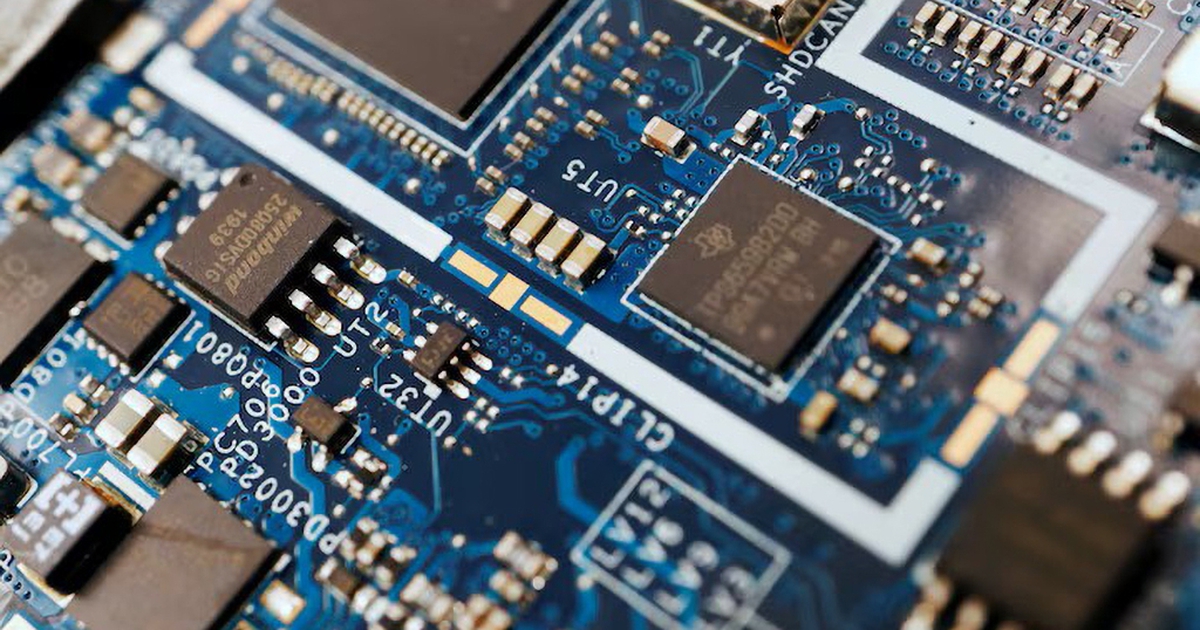
The intensifying geopolitical friction between Washington and Beijing has created a significant ripple effect across the global technology landscape, particularly impacting the operation of data centers throughout Asia. As the United States continues to tighten its export controls on high-end artificial intelligence (AI) chips, major financial institutions have begun a rigorous re-evaluation of the risks associated with lending to data center developers in the region. This shift in policy and market sentiment threatens to stall critical infrastructure growth and escalate operational costs for cloud service providers.
The latest regulatory maneuvers by the U.S. government aim to prevent Chinese firms from bypassing export restrictions by utilizing overseas data centers or independent third-party packaging services. These measures, designed to curtail China’s ability to train advanced AI models, have placed significant pressure on banks—including global giants like Citi and Standard Chartered, as well as regional powerhouses such as DBS, OCBC, and UOB—to scrutinize the clientele of the infrastructure projects they finance.
A Chronology of Escalation
The current tension is the culmination of years of escalating trade policy shifts. Since 2022, the U.S. Department of Commerce has systematically lowered the threshold for the performance metrics of chips that are permitted for export to China.
- October 2022: The Biden administration introduced sweeping controls on advanced computing and semiconductor manufacturing equipment to prevent the Chinese military from accessing high-end chips.
- October 2023: Washington updated these rules to close loopholes that allowed Chinese companies to procure advanced chips through subsidiaries or by utilizing cloud computing services to access the processing power of those chips remotely.
- November 2024: Recent reports indicate that the U.S. is now targeting the "packaging and testing" layer of the supply chain, as well as mandating that data center operators verify the end-users of their processing power to ensure compliance with export laws.
This systematic tightening has forced a paradigm shift in how international banks approach the data center sector in Southeast Asia, which has become a primary hub for AI infrastructure development.
The Vulnerability of Southeast Asian Data Centers
According to an analysis by S&P Global Ratings, data centers in the Asia-Pacific region are particularly vulnerable to these developments due to their reliance on Chinese clients and the complexity of the new licensing requirements. Singapore, Malaysia, Indonesia, and Thailand have emerged as key locations for high-density data centers, but these facilities often serve as gateways for large-scale Chinese tech companies looking to access global compute power.
Data from industry trackers suggests that the share of computing capacity leased by foreign entities—with Chinese firms accounting for a significant portion—could grow from approximately 23% in 2026 to as much as 32% by 2027. Southeast Asia alone accounts for nearly two-thirds of this foreign demand. As the U.S. imposes stricter mandates on how these chips are utilized, operators of these facilities face the daunting task of auditing their clients’ operations. Failure to comply with U.S. regulations risks not only legal penalties but also the loss of access to future generations of critical hardware.
Financial Implications and Risk Management
For the banking sector, the concern is twofold. First, there is the immediate risk of credit exposure. If a data center developer loses a significant portion of its client base due to regulatory pressure, their ability to service debt may be compromised. Second, there is the risk of "stranded assets." If a facility is optimized for specific, high-end GPU configurations that are later prohibited for use by the facility’s primary tenants, the infrastructure becomes obsolete or underutilized.
Consequently, financial institutions are now requiring more transparency from developers. Borrowers must provide detailed disclosures regarding who is utilizing the compute power and offer concrete evidence of compliance with the latest U.S. export controls. Since 2023, approximately $48 billion has been mobilized through syndicated loans for data centers in Southeast Asia, and lenders are now increasingly cautious about the terms of these agreements.
Clifford Kurz, a credit analyst at S&P Global Ratings, noted that the volatility of semiconductor policy makes long-term investment planning increasingly difficult. "The speed at which these regulations change is unprecedented," Kurz stated. "Companies that built their business models on the assumption of free access to global technology are now having to pivot their strategies in real-time, which creates a significant risk premium for investors."
The Potential for Supply Constraints
The long-term outlook for the sector is one of caution. The added administrative burden and the potential for legal complications are inflating the cost of capital. Furthermore, the delays caused by these compliance requirements are slowing down the deployment of new data centers. If the supply of available compute power fails to keep pace with the massive demand driven by the AI boom, the industry may face a period of significant price volatility.
For the end-users, this likely means higher prices for cloud services and a move toward regional "sovereign" clouds, where data processing is kept within jurisdictions that have fewer geopolitical entanglements.
The Broader Political Landscape: The Trump Factor
Market analysts are also keeping a close watch on potential shifts in U.S. trade policy under the incoming administration. Reports from The Wall Street Journal and other outlets have suggested that the transition team for President-elect Donald Trump may consider broad tariff increases on goods from China, citing the need to protect domestic industrial capacity.
While the Office of the U.S. Trade Representative (USTR) and the transition team have declined to comment on specific policy rumors, the mere anticipation of further protectionist measures is already affecting capital expenditure plans in the technology sector.
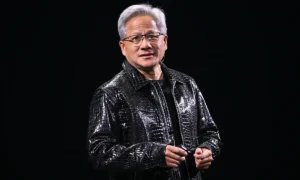
In parallel, there is significant interest in how a Trump administration might interact with key industry figures. Recent reports regarding the leadership at NVIDIA, a company at the center of the chip debate, highlight the interconnectedness of policy and private enterprise. CEO Jensen Huang, who was recently re-confirmed by his board, faces the challenge of navigating these complex export restrictions while maintaining his company’s dominance in the global market.
Conclusion: A New Era of Strategic Infrastructure
The era of unfettered global expansion for data centers is effectively over, replaced by a more fragmented and highly regulated environment. As the U.S. continues to view semiconductor technology as a matter of national security, the infrastructure that powers the AI revolution will be subject to increasingly intense scrutiny.
For investors and developers, the path forward requires a higher degree of caution, a deeper understanding of international trade law, and the agility to adapt to a landscape where the rules of the game can change in a matter of months. As the industry recalibrates, the focus will likely shift toward localizing supply chains and diversifying client portfolios to mitigate the risks of being caught in the middle of a deepening U.S.-China technological divide. The challenge for the next several years will be balancing the urgent need for AI infrastructure with the realities of a increasingly compartmentalized global economy.