The Central Committee Discusses the Establishment of Quang Ninh and Bac Ninh as Centrally-Governed Cities

The Central Committee of the Communist Party of Vietnam convened a significant session to deliberate on the elevation of Quang Ninh and Bac Ninh provinces to the status of centrally-governed cities, a move poised to reshape regional development and administrative structures. This pivotal discussion took place on the third working day of the ongoing 3rd Plenum of the 14th Central Committee, signaling a critical juncture in Vietnam’s administrative and economic planning.
Strategic Vision for National Development Underpinning the Discussions
The plenum’s agenda, as detailed by the Central Committee Office on July 22nd, encompassed a broad spectrum of national priorities. Presided over by National Assembly Chairman Tran Thanh Man, the discussions at the National Assembly’s meeting hall focused on two key resolutions. The first was Resolution 36-NQ/TW of the 12th Central Committee, adopted in 2018, which outlines the strategy for socio-economic development by sea until 2030, with a vision extending to 2045. This resolution underscores Vietnam’s commitment to leveraging its extensive coastline for sustainable growth, environmental protection, and enhanced national security.
The second resolution under consideration was Resolution 24-NQ/TW from the 11th Central Committee, enacted in 2013. This resolution addresses the critical need for strengthening leadership in the face of climate change and enhancing resource management and environmental protection. The inclusion of these foundational strategies highlights the government’s forward-thinking approach, ensuring that any administrative reclassifications are aligned with long-term national objectives concerning environmental sustainability and climate resilience.
The afternoon sessions of the plenum were dedicated to a series of crucial policy discussions. These included deliberations on building a progressive, secure, civilized, harmonious, and developing society. Furthermore, the Central Committee engaged in discussions on the National Security Strategy and, significantly, the proposed elevation of Quang Ninh and Bac Ninh provinces to centrally-governed cities, placing them directly under the central government’s purview.
Quang Ninh: Charting a Course for a Green and Smart Metropolis
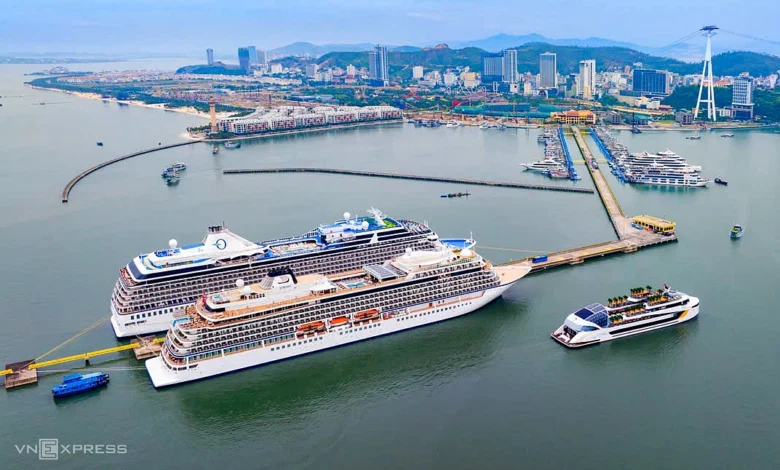
The proposal to establish Quang Ninh as a centrally-governed city stems from a comprehensive review conducted in the second quarter of the year. This review aimed to lay the groundwork for a new administrative and economic paradigm for the province. Quang Ninh is envisioned to transform into a green, smart urban center, optimizing its spatial development by integrating coastal, island, bay, and border regions, thereby capitalizing on its rich natural heritage for sustainable tourism.
The provincial development plan emphasizes scientific advancement, technological innovation, and creativity as key drivers for future growth. A significant focus will be placed on developing a robust green economy, alongside marine, heritage, border, and cultural industries, fostering a vibrant ecosystem of knowledge-based enterprises.
Projected Economic Growth and Development Targets for Quang Ninh:
- By 2025:
- Quang Ninh’s Gross Regional Domestic Product (GRDP) is projected to increase by 11.89%.
- The provincial economy is expected to reach a scale exceeding 368.445 trillion VND.
- State budget revenue is targeted at 84.500 trillion VND, with local budget revenue accounting for 68.150 trillion VND.
- The province anticipates welcoming 21.28 million tourists, generating an estimated revenue of 57.000 trillion VND.
- By 2026:
- GRDP growth is targeted at over 12.5%.
- Per capita GRDP is projected to reach 11.800 USD.
- State budget revenue is expected to climb to approximately 100.000 trillion VND.
These ambitious targets underscore Quang Ninh’s strategic importance as a gateway to the Northeast region and its potential to become a leading economic hub. The integration of advanced technologies and sustainable practices in its urban planning signifies a commitment to modernizing its infrastructure and economic model.
Bac Ninh: A Hub for High-Tech Industry and Cultural Heritage
Similarly, on June 20th, the Politburo reached a consensus on establishing Bac Ninh as a centrally-governed city. The province, with an area of approximately 4,700 km² and a population nearing 4 million, is strategically positioned to undergo significant administrative and economic transformation.
Bac Ninh is slated to develop into a green, smart, modern city that retains its distinctive Kinh Bac cultural heritage. The province’s development strategy prioritizes science, technology, and innovation as the primary engines of growth. It aims to foster a strong high-tech industrial sector, particularly focusing on electronics, semiconductors, and the production of high-value-added goods, thereby establishing itself as a leading center in the region and globally.
Bac Ninh’s Development Trajectory and Economic Projections:
- Post-Merger with Bac Giang (mid-2025):
- The administrative center of the merged entity is expected to be located in Bac Giang province.
- Bac Ninh’s GRDP is projected to grow by 10.27% in 2025, positioning it among the top five provinces in the country.
- The province is anticipated to attract 5.73 billion USD in Foreign Direct Investment (FDI), ranking second only to Ho Chi Minh City.
- Long-Term Vision:
- The establishment of Bac Ninh as a centrally-governed city is a key objective to be achieved before 2030.
This strategic realignment for Bac Ninh reflects a broader trend of administrative consolidation and economic specialization in Vietnam. The focus on high-tech industries aligns with the national agenda of moving up the value chain and enhancing competitiveness in the global market. The merger with Bac Giang suggests a coordinated approach to regional development, aiming to create a more potent economic and administrative unit.
Broader Implications: The Expanding Network of Centrally-Governed Cities
The proposed elevation of Quang Ninh and Bac Ninh marks a significant expansion of Vietnam’s network of centrally-governed cities. Currently, there are seven such cities: Hanoi, Hai Phong, Hue, Da Nang, Ho Chi Minh City, Can Tho, and Dong Nai. These cities enjoy a high degree of autonomy and receive direct funding and administrative support from the central government, allowing them to implement policies more efficiently and respond rapidly to economic and social changes.
The inclusion of Quang Ninh and Bac Ninh into this elite group will bring several key benefits:
- Enhanced Decision-Making Power: Centrally-governed cities typically have greater authority in planning, investment, and resource allocation, enabling more agile responses to local needs and opportunities.
- Increased Investment Appeal: The direct oversight and support from the central government can boost investor confidence, attracting both domestic and foreign investment.
- Streamlined Administration: Direct reporting to the central government can reduce bureaucratic layers, leading to more efficient governance and service delivery.
- Strategic Regional Development: The elevation of these cities will likely stimulate economic growth and development in their respective regions, potentially creating spillover effects for neighboring areas.
- Alignment with National Goals: The central government can more effectively integrate the development plans of these cities into overarching national strategies for economic growth, security, and environmental protection.
The ongoing plenum is expected to conclude with further deliberations and potentially the adoption of resolutions that will formalize these significant administrative changes. The discussions reflect Vietnam’s dynamic approach to governance and its continuous efforts to optimize its administrative framework to foster sustainable and inclusive national development. The commitment to green development, technological advancement, and cultural preservation, as evidenced in the plans for Quang Ninh and Bac Ninh, signals a strategic vision for Vietnam’s future.
The plenum’s proceedings on July 23rd will see the continuation of these critical discussions, with the Central Committee set to engage in further work on the second day of the 3rd Plenum of the 14th Central Committee. The outcomes of these deliberations will undoubtedly shape the trajectory of Vietnam’s socio-economic landscape for years to come.