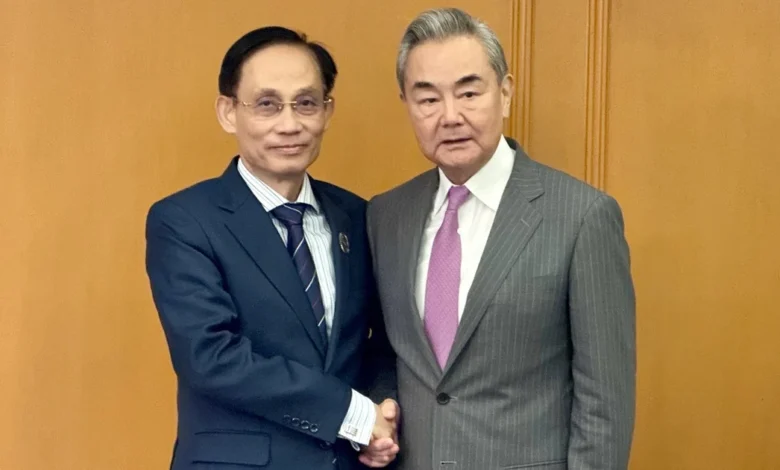
Hanoi, Vietnam – On July 22, amidst the ASEAN Foreign Ministers’ meeting in the Philippines, Vietnamese Foreign Minister Lê Hoài Trung held a significant bilateral meeting with his Chinese counterpart, Wang Yi. The discussions, described as taking place in a "warm and sincere atmosphere" by the Vietnamese Ministry of Foreign Affairs, underscored a mutual commitment to strengthening bilateral ties and fostering closer cooperation. Both ministers reiterated their profound respect for each other’s nations and their respective leaderships.
A Shared Vision for Development and Cooperation
During the high-level exchange, Chinese Foreign Minister Wang Yi emphasized the imperative for Vietnam and China to continuously deepen their political trust and enhance practical cooperation. He highlighted the importance of this collaboration against the backdrop of complex geopolitical shifts and the need to safeguard the core interests of developing nations. Minister Wang articulated a shared vision, characterizing both Vietnam and China as socialist countries that adhere to the principles of modernization and represent the path of developing nations. This shared ideological alignment, he suggested, forms a robust foundation for enhanced collaboration.
Minister Lê Hoài Trung, in turn, expressed Vietnam’s keen interest in intensifying exchanges and sharing experiences with China. He specifically sought to leverage China’s expertise in modernizing its growth model, advancing science and technology, and driving innovation and green transformation. This desire for knowledge transfer signals Vietnam’s strategic focus on sustainable and forward-looking development.
Beyond reinforcing the common understanding reached by the highest leaders of both nations, the ministers agreed to bolster cooperation across various sectors. This includes joint efforts in strategic development planning, economic and trade partnerships, investment, and scientific and technological advancements. The overarching goal is to deepen the comprehensive strategic cooperative partnership between Vietnam and China.
Expanding Trade Horizons: The "Sharing Market Size – Exporting to China" Initiative
A central theme of the meeting was Vietnam’s ambition to become a leading force in the "Sharing Market Size – Exporting to China" initiative. Minister Lê Hoài Trung explicitly requested China’s continued support in expanding the market for Vietnamese agricultural products. He also called for facilitating the operations of Vietnamese businesses in China and creating a conducive environment for Vietnam to play a pivotal role in this significant trade initiative. This initiative represents a strategic effort by Vietnam to tap into the vast Chinese market and elevate its export capabilities.
In response, Chinese Foreign Minister Wang Yi extended an invitation to Vietnamese leadership to attend the 2026 APEC Summit in China. This gesture signifies China’s commitment to inclusive regional dialogue and its recognition of Vietnam’s growing influence in the Asia-Pacific economic landscape.
Minister Lê Hoài Trung conveyed Vietnam’s sincere gratitude for China’s commitment and expressed confidence in the successful hosting of the 2026 APEC Summit. He also extended well wishes for the summit’s success in shaping global economic narratives and fostering a more equitable international order. Both ministers underscored the significance of promoting inclusive and mutually beneficial international cooperation, aiming to bridge development gaps and ensure that developing nations can effectively access and benefit from scientific and technological advancements.
A History of Bilateral Engagement and Trade
The concept of "Sharing Market Size – Exporting to China" gained significant traction following Vietnamese Party General Secretary Tô Lâm’s visit to China in April 2026. During that high-profile visit, Vietnamese Minister of Public Security Tô Lâm met with Chinese Politburo member and Minister of Commerce Wang Wentao.
In the context of the trade initiative, Minister Wang Wentao invited Vietnam to participate in five key activities related to the "Sharing Market Size – Exporting to China" initiative in 2026. He also warmly welcomed Vietnam’s role as the lead country for this initiative in 2027. Furthermore, Minister Wang set an ambitious target of reaching $500 billion in bilateral trade within the near future.
China currently stands as Vietnam’s largest trading partner. Official customs data reveals that in 2025, bilateral trade between Vietnam and China reached a record $256.5 billion, marking a substantial 24.8% increase compared to 2024. This robust growth trajectory underscores the deepening economic interdependence between the two nations.
The joint statement issued during Party General Secretary Tô Lâm’s visit further elaborated on China’s support for Vietnam’s trade promotion efforts. China welcomed Vietnam’s initiatives to accelerate trade promotion and expand the brand recognition of Vietnamese goods within the Chinese market. This includes China’s commitment to further facilitating the establishment of Vietnamese trade promotion offices in China, following the successful establishment of offices in Chongqing, Chengdu, and Hanoi.
The joint statement also affirmed: "The Chinese side supports and facilitates Vietnam’s participation in the ‘Sharing Market Size – Exporting to China’ initiative." This commitment signals a strategic alignment between the two countries to jointly expand trade and economic opportunities.
Deepening Economic Ties and Future Prospects
The discussions between Ministers Lê Hoài Trung and Wang Yi are emblematic of a broader trend of intensified engagement between Vietnam and China. The Vietnamese government has consistently prioritized strengthening its economic ties with its northern neighbor, recognizing China’s immense market potential and its role as a critical supply chain partner.
The "Sharing Market Size – Exporting to China" initiative is not merely a trade agreement; it represents a strategic vision for Vietnam to leverage its production capabilities and agricultural strengths to gain a more significant foothold in the world’s second-largest economy. The initiative aims to move beyond traditional trade patterns and foster a more integrated approach to market access, branding, and supply chain development.
Key Areas of Cooperation and Mutual Benefit
The ministerial meeting highlighted several key areas where enhanced cooperation is expected to yield significant mutual benefits:
- Agricultural Exports: Vietnam’s rich agricultural sector, known for products like rice, coffee, seafood, and fruits, stands to gain considerably from streamlined access to the Chinese market. China’s commitment to facilitating these exports is crucial for Vietnamese farmers and the broader agricultural economy.
- Investment and Business Facilitation: Creating a more favorable environment for businesses from both nations is a shared objective. This includes addressing regulatory hurdles, promoting investment, and fostering joint ventures that can drive economic growth and technological exchange.
- Science, Technology, and Innovation: Vietnam’s aspiration to modernize its growth model and embrace innovation aligns with China’s advancements in these fields. Collaborative efforts in research and development, technology transfer, and the adoption of green technologies can accelerate Vietnam’s development trajectory.
- Infrastructure and Logistics: Improving logistics and infrastructure, particularly in border trade and transportation networks, is essential for efficient and cost-effective movement of goods. Both countries have recognized the importance of intelligent ports and high-speed rail corridors to facilitate trade.
Looking Ahead: APEC 2026 and Beyond
The invitation to Vietnam to attend the 2026 APEC Summit in China is a significant diplomatic gesture. It underscores Vietnam’s growing role in regional economic architecture and its capacity to contribute to discussions on global economic governance. The summit will serve as a platform for Vietnam to further articulate its economic vision and strengthen its partnerships within the Asia-Pacific region.
The ambitious trade target of $500 billion set by China signals a long-term commitment to deepening economic ties. While this is an ambitious goal, the existing trade volume and the renewed focus on cooperation suggest that it is an achievable objective. The success of initiatives like "Sharing Market Size – Exporting to China" will be critical in realizing this vision.
Broader Implications and Analysis
The strengthened dialogue and concrete commitments between Vietnam and China have broader implications for regional economic stability and development. As major players in the global economy, their collaborative efforts can contribute to robust supply chains, foster innovation, and promote sustainable growth.
For Vietnam, this enhanced partnership offers a vital opportunity to diversify its export markets, upgrade its industrial capabilities, and achieve its development goals. By strategically leveraging its strengths and collaborating with its largest trading partner, Vietnam aims to position itself as a significant player in regional and global trade.
The emphasis on "inclusive and mutually beneficial cooperation" and bridging development gaps reflects a shared understanding of the challenges faced by developing nations in the current global economic landscape. The commitment to ensuring developing countries can access and benefit from scientific and technological advancements is a crucial aspect of fostering a more equitable and sustainable global economic order.
The strategic importance of the "Sharing Market Size – Exporting to China" initiative cannot be overstated. It represents a proactive approach by Vietnam to actively shape its trade relationships and maximize its economic potential. As both nations continue to navigate a complex global environment, their commitment to strengthening bilateral ties and fostering economic cooperation will undoubtedly play a pivotal role in their respective development paths and in the broader regional economic landscape.