VinFast achieves significant sales growth in the Indian electric vehicle market amid a broader industry downturn

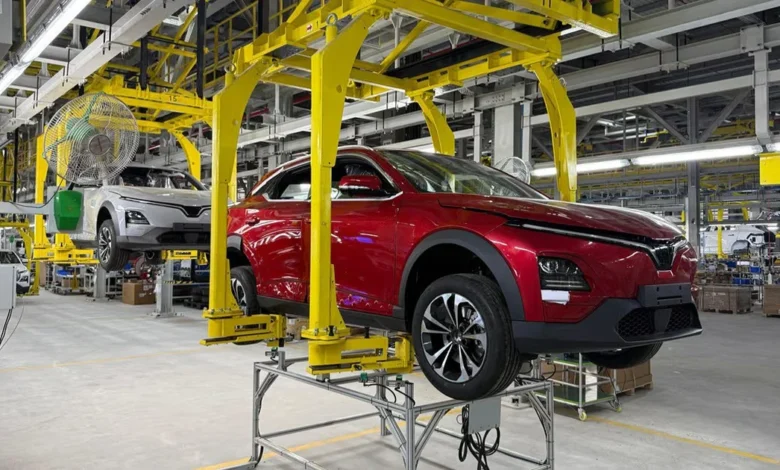
In a surprising shift for the Indian automotive landscape, VinFast has reported a remarkable 48.38% month-on-month increase in electric vehicle (EV) sales for August 2026. This performance stands in stark contrast to the broader automotive market in India, which saw an overall decline in registrations, and specifically contradicts the performance of the three dominant domestic and international brands currently leading the segment. While established players struggled with softening demand, the Vietnamese manufacturer has demonstrated that strategic market entry and product alignment can catalyze growth even in a cooling economic environment.
According to official registration data, the total Indian automotive market recorded 30,696 new vehicle registrations in August 2026. This figure represents a 6.78% decline compared to the previous month, highlighting a period of contraction across the sector. However, the EV segment continues to capture an increasing share of the total market, rising to 7.63% in August, up from 5.83% during the same period in 2025. This uptick underscores the persistent, albeit shifting, consumer appetite for electrified mobility despite macroeconomic headwinds.
Performance Analysis: Breaking the Market Trend
VinFast’s performance in August 2026 was defined by a robust delivery of 2,199 electric vehicles. This surge of 717 units over the 1,482 vehicles sold in July marks a substantial 48.38% increase. Consequently, VinFast has successfully climbed to the fourth position in the Indian electric vehicle market, a rapid ascent that has caught the attention of industry analysts.
The broader market dynamics present a challenging picture for the incumbent leaders. Tata, which has long dominated the Indian EV space, saw its sales drop by 3.80% in August, moving from 13,678 to 13,158 units. Mahindra, another key player, experienced a steeper decline of 16.51%, with sales falling from 7,742 to 6,464. Similarly, JSW MG reported a contraction of 18.76%, delivering 4,622 vehicles compared to 5,689 in the preceding month.
While other manufacturers such as Hyundai, Kia, and Toyota also reported growth in their respective niches, their volumes remain significantly lower than the top-tier competitors, often failing to impact the aggregate market trend in the same way VinFast has managed to do this month.
Strategic Context and Regional Expansion
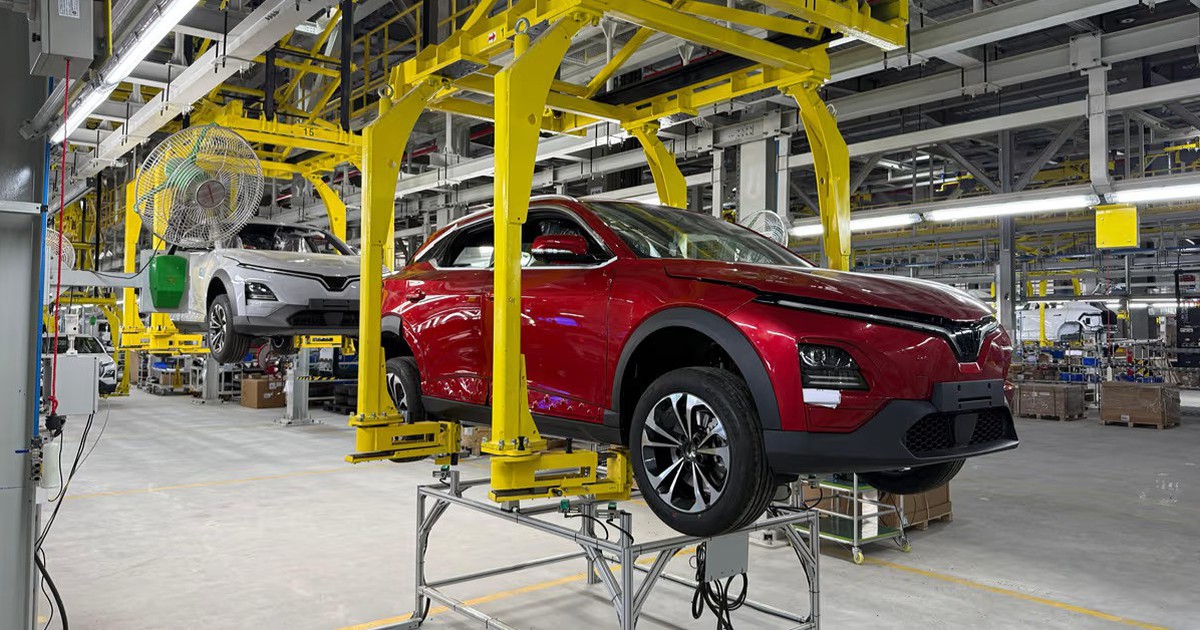
The surge in VinFast’s sales is not an isolated event but rather the result of a calculated, multi-phase expansion strategy into the Indian subcontinent. Central to this growth is the localization of production. Industry reports from RushLane indicate that VinFast has successfully initiated the production of its VF 6 and VF 7 models at its newly established facility in Tamil Nadu. By anchoring its operations in one of India’s most critical industrial hubs, the company has not only mitigated supply chain volatility but has also demonstrated its long-term commitment to the ‘Make in India’ initiative.
Furthermore, there is mounting evidence that the company is preparing to refresh its entry-level portfolio. Spotted during high-speed testing, the upcoming VF 5 facelift features a revamped front fascia, upgraded lighting clusters, and a significantly overhauled interior. These design refinements suggest a move toward more aggressive styling and enhanced cabin comfort, features that are highly prioritized by the Indian middle-class demographic.
Intellectual Property and Future Pipeline
Beyond current production capabilities, VinFast has been active in securing its intellectual property within the Indian market. The company has filed multiple industrial design patents, which industry experts speculate cover the aesthetic architecture of the refreshed VF 6 and the Lạc Hồng 900 LX—a model that has already seen its initial deliveries to customers.
While the filing of design patents does not serve as a guarantee of immediate commercialization, it provides a clear roadmap of the company’s design philosophy and product intent. At the local level in Vietnam, the purported VF 6 facelift has already been observed within the factory premises, signaling that the manufacturer is utilizing its global supply chain to synchronize product launches across multiple territories.

Broader Implications for the Indian EV Market
The divergence between VinFast’s growth and the decline of the industry leaders indicates a structural change in how consumers perceive new-age EV brands. Analysts suggest that the market is moving past the phase of early adoption, where only a few established names dominated, into a phase of feature-led competition.
For the incumbent leaders like Tata and Mahindra, the pressure is now two-fold: they must defend their existing market share while simultaneously accelerating the refresh cycles of their core products to compete with the feature-rich, technologically advanced offerings now entering the fray. The fact that VinFast—a relative newcomer to the Indian market—could achieve nearly 50% growth during a month where the top three manufacturers saw a collective decline serves as a bellwether for the future of the segment.
Economic and Regulatory Environment
The Indian EV market is currently navigating a complex transition period. Government policies, including the continuation of various FAME (Faster Adoption and Manufacturing of Electric Vehicles) schemes and state-level incentives, have provided a necessary tailwind. However, as the industry matures, the focus is shifting from simple electrification to the viability of the charging ecosystem and the price-to-value proposition of individual models.
VinFast’s ability to maintain high growth rates during a market contraction suggests that its pricing and model variety are effectively capturing the attention of the mid-market consumer. As the company continues to scale its Tamil Nadu operations, its cost structure is expected to become even more competitive, potentially leading to further pressure on traditional OEMs.
Looking Ahead
As we look toward the final quarter of 2026, the industry will be watching closely to see if VinFast can maintain its current momentum. The company’s climb to the fourth position is a significant milestone, but sustaining that growth will require navigating the inherent challenges of the Indian market: the diversity of consumer requirements, the necessity for robust service infrastructure, and the volatility of raw material costs.

Moreover, the competitive response from Tata and Mahindra will be critical. Should these giants initiate aggressive price reductions or launch major product refreshes, the competitive landscape will intensify, likely benefiting the consumer through lower prices and better technology.
In conclusion, August 2026 will likely be viewed as a pivotal month in the evolution of the Indian electric vehicle industry. VinFast’s defiance of the general market trend is a testament to the power of targeted investment, local manufacturing, and product agility. While the gap between the market leaders and the challengers remains, the narrowing of that distance is accelerating, setting the stage for a highly competitive and dynamic future for electric mobility in India. The success of the VF series and the upcoming facelifts will be the primary indicators of whether this trend is merely a short-term anomaly or the beginning of a sustained challenge to the established order of the Indian automotive industry.