FV Hospital Surgeons Perform Dual Sided Lung Cancer Surgery and Lymph Node Dissection Using da Vinci Xi Robotic System

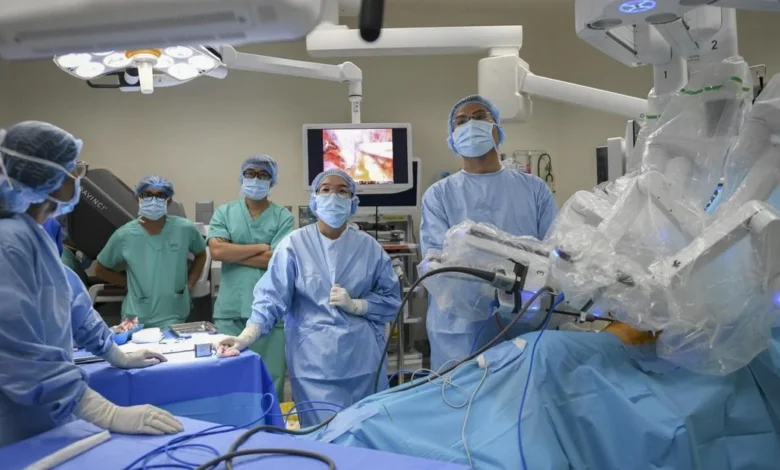
In a landmark achievement for thoracic surgery in Vietnam, a surgical team at FV Hospital in Ho Chi Minh City has successfully utilized the advanced da Vinci Xi robotic system to perform a highly complex, dual-intervention procedure on a 62-year-old patient. The surgery involved the simultaneous removal of malignant lung tumors and a comprehensive lymph node dissection across both sides of the chest cavity—a feat that traditionally requires multiple surgeries or highly invasive open-chest procedures. This case highlights the rapidly advancing capabilities of robotic-assisted surgery in treating early-stage lung cancer with unprecedented precision and significantly reduced recovery times.
The Patient’s Journey: From Sepsis to Cancer Diagnosis
The patient, identified as Mrs. N.T. Them, a 62-year-old resident of Ho Chi Minh City, initially sought medical attention for a severe blood infection (sepsis). During her treatment for this unrelated condition at a local hospital, she frequently complained of persistent shortness of breath and a sensation of being "out of breath" even during minimal exertion. While these symptoms can often be dismissed as post-infectious fatigue or age-related decline, the medical team ordered a computed tomography (CT) scan to investigate the pulmonary cause of her respiratory distress.
The diagnostic imaging revealed a concerning development: two distinct nodules located in the lower lobe of her left lung. Given the morphology of the nodules, doctors performed a percutaneous transthoracic needle biopsy. The pathological results confirmed the clinical suspicion of lung cancer. Following her recovery from sepsis, Mrs. Them was discharged but remained in urgent need of specialized oncological intervention. Seeking a treatment plan that would offer the highest chance of success with the least physical trauma, her family brought her to FV Hospital.
Assessing the Surgical Complexity
At FV Hospital, Mrs. Them’s case was reviewed by Dr. Dang Dinh Minh Thanh, Head of the Thoracic Surgery Department and Director of the FV da Vinci Robotic Surgery Center. Dr. Thanh observed that while the tumors were relatively small, their anatomical positioning presented a significant risk. The nodules were situated in close proximity to major blood vessels and the trachea, making traditional surgical approaches risky.
"If we had opted for traditional drug therapy or radiation alone, the risk of complications would be high, and the likelihood of a successful salvage surgery later would be drastically reduced," Dr. Thanh explained. "The objective was clear: we needed a radical surgical resection to remove the primary tumors and a thorough cleaning of the mediastinal lymph nodes to ensure the cancer had not spread. However, the patient had enlarged lymph nodes on both the left and right sides of the mediastinum."
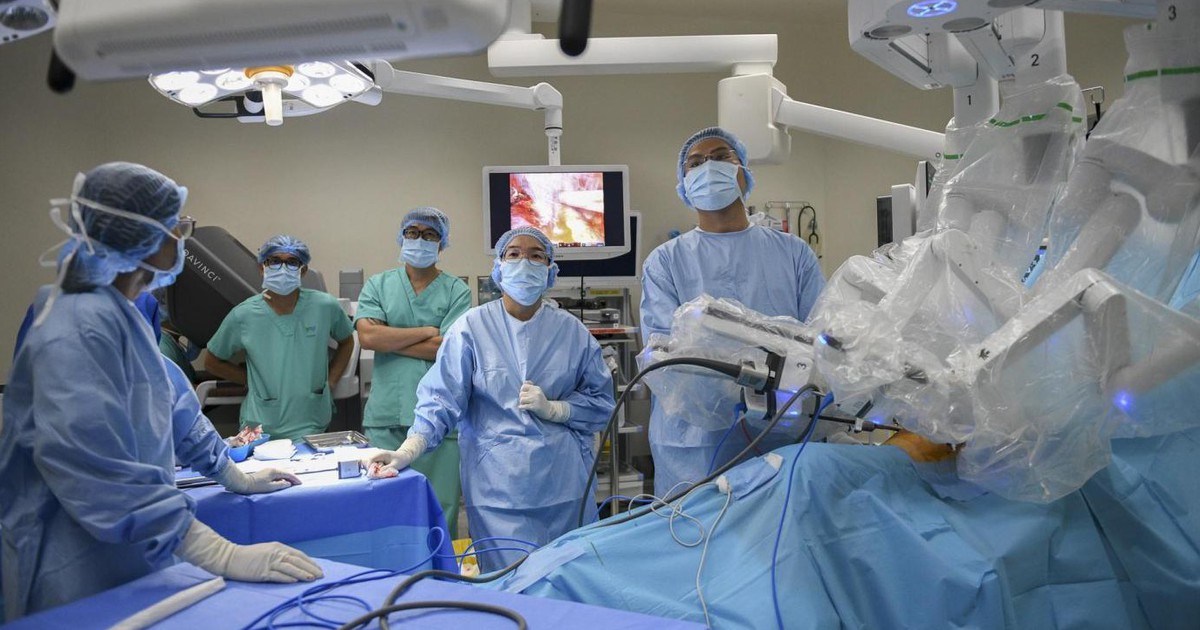
The mediastinum is the central compartment of the thoracic cavity, located between the two lungs. In traditional Video-Assisted Thoracoscopic Surgery (VATS) or open surgery, accessing both sides of the mediastinum usually necessitates either two separate operations or a sternotomy—a highly invasive procedure where the breastbone is split open. Given Mrs. Them’s recent history of sepsis and her age, the medical team sought a more refined solution.
The da Vinci Xi Advantage: Precision in the Mediastinum
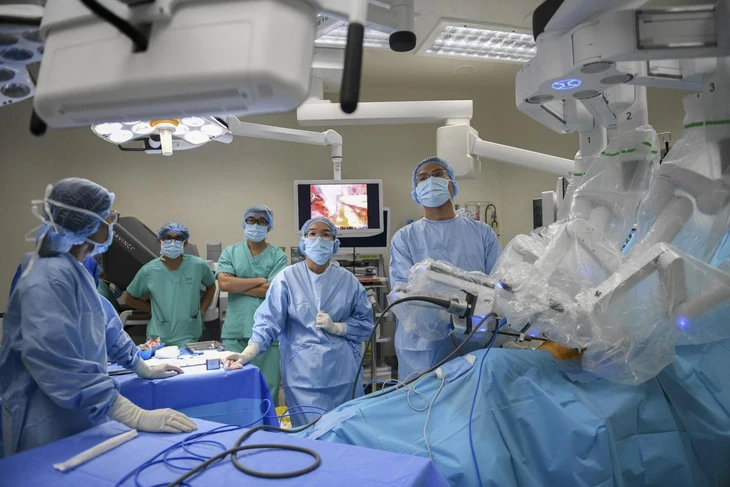
The decision was made to utilize the da Vinci Xi robotic system, the most advanced iteration of robotic surgical technology currently available in Vietnam. Unlike traditional laparoscopy or thoracoscopy, which uses rigid instruments, the da Vinci Xi provides surgeons with "EndoWrist" technology. These instruments possess seven degrees of freedom, mimicking the human hand’s range of motion but with greater dexterity and the ability to operate in much smaller spaces without the risk of tremors.
Furthermore, the system provides a 3D, high-definition magnified view of the surgical field. For Dr. Thanh and his team, this meant they could visualize the delicate nerves and vessels surrounding the lung nodules with extreme clarity. The robotic arms were able to navigate the narrow confines of the chest cavity to reach the lymph nodes on the contralateral (opposite) side of the primary tumor site without requiring a second major incision.
During the single surgical session, the team successfully performed a left lower lobectomy and a bilateral mediastinal lymph node dissection. This "one-stop" approach is a significant clinical milestone, as it reduces the total time the patient is under anesthesia and eliminates the physiological stress of a second surgery.
Clinical Outcomes and Rapid Recovery
The efficacy of the robotic approach was immediately evident in the patient’s post-operative phase. One of the primary concerns with thoracic surgery is the management of post-operative pain, which often hinders the patient’s ability to breathe deeply and clear their lungs, potentially leading to pneumonia.
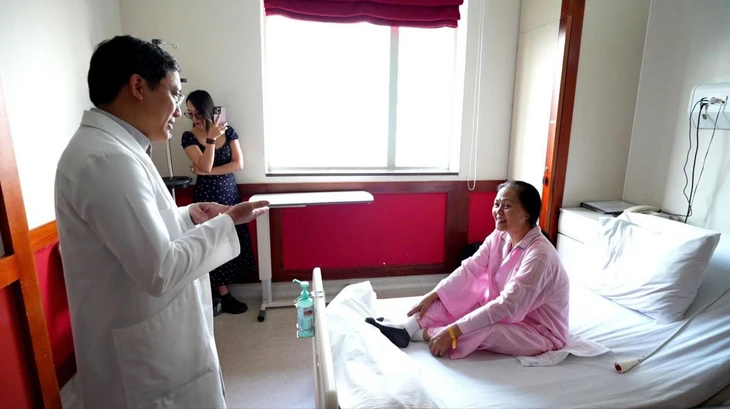
Remarkably, by the second day following the major surgery, Mrs. Them was able to sit up unaided, walk around her room, and consume a normal diet with minimal assistance from the nursing staff. She reported experiencing significantly less pain than she had anticipated.
"I was surprised because after such a big surgery, I didn’t feel much pain at all," Mrs. Them shared during her recovery. "My health recovered much faster than I thought, and I have been sleeping better than I did even before the surgery."
This rapid transition from a major oncological resection to functional mobility is a hallmark of Robotic-Assisted Thoracoscopic Surgery (RATS). By using small "keyhole" ports rather than a large thoracotomy incision, the integrity of the chest wall muscles is preserved, and the trauma to the intercostal nerves is minimized.
Expert Analysis: The Importance of the "Golden Time"
Dr. Dang Dinh Minh Thanh emphasized that Mrs. Them’s success was largely due to the early detection of her lung nodules. In the field of oncology, the "Golden Time" refers to the period where a tumor is localized and small enough to be completely excised with curative intent.
"For lung nodules larger than 6mm, patients should not be subjective," Dr. Thanh warned. "They require regular monitoring and evaluation by specialists. Catching lung cancer at an early stage allows for radical surgery with an excellent prognosis. Even for tumors around 4cm, if the patient meets specific health criteria, surgery can still be the primary and most effective treatment."
According to the Global Cancer Observatory (GLOBOCAN), lung cancer remains one of the most common and deadliest cancers in Vietnam. Many patients only seek medical help when symptoms like chronic cough, hemoptysis (coughing up blood), or significant weight loss appear, by which time the cancer has often progressed to a stage where surgery is no longer an option. The integration of robotic technology like the da Vinci Xi into Vietnamese hospitals provides a powerful new tool to improve survival rates for those diagnosed early.
Broader Implications for Healthcare in Vietnam
The successful execution of this dual-sided robotic surgery at FV Hospital signifies a maturing of the high-tech medical landscape in Southeast Asia. As hospitals invest in robotic platforms, they are not only improving patient outcomes but also positioning Vietnam as a hub for advanced medical care.
Robotic surgery offers several systemic benefits to the healthcare model:
- Reduced Hospital Stay: Patients recover faster, freeing up hospital beds and resources.
- Reduced Blood Loss: The precision of the robot minimizes accidental vascular damage, reducing the need for blood transfusions.
- Accuracy in Staging: A more thorough lymph node dissection allows pathologists to more accurately stage the cancer, which dictates the necessity of follow-up treatments like chemotherapy or immunotherapy.
The case of Mrs. N.T. Them serves as a powerful case study for the benefits of early screening and the adoption of cutting-edge technology. For patients facing a diagnosis of lung cancer, the availability of robotic-assisted procedures offers a less daunting path to recovery, turning what was once a life-altering, traumatic surgery into a manageable, minimally invasive procedure.
FV Hospital, located in District 7 of Ho Chi Minh City, continues to expand its robotic surgery program across various specialties, including urology, gynecology, and gastrointestinal surgery. The institution’s commitment to JCI (Joint Commission International) standards ensures that these high-tech interventions are delivered within a framework of international patient safety and quality.
As medical technology continues to evolve, the focus remains on the "human element"—the ability of skilled surgeons like Dr. Thanh to leverage these tools to save lives. For Mrs. Them, the combination of a routine CT scan and a state-of-the-art robot provided a second lease on life, proving that even a diagnosis as fearsome as lung cancer can be met with a triumphant response when science and expertise converge.