Vietnam Ministry of Information and Communications reaffirms commitment to supporting digital technology enterprises in global market expansion


On March 26, the Ministry of Information and Communications (MIC) of Vietnam hosted the second global cooperation conference in Hanoi, themed "Opportunities for Vietnamese Digital Technology Enterprises in Overseas Markets." This strategic event represents a continuation of the government’s robust initiative launched in February 2023 to transform Vietnam into a significant player in the global technology ecosystem. By facilitating international market entry, the Ministry aims to elevate the "Make in Vietnam" brand, ensuring that domestic firms contribute significantly to the nation’s high-income development goals.
The Strategic Imperative for Global Integration
During the inaugural conference of this campaign, Minister of Information and Communications Nguyen Manh Hung delivered a clarion call to domestic technology leaders. He emphasized that the path to a high-income, developed nation is intrinsically linked to the ability of domestic firms to compete on the international stage. "Without venturing abroad, without facing global competition, and without securing revenue from international markets, Vietnam cannot hope to achieve the status of a high-income, developed country," Minister Hung stated.

This directive serves as the cornerstone of the Ministry’s policy framework. The MIC is encouraging Vietnamese firms to adopt a "Vietnamese way" of solving global problems, leveraging unique local ingenuity while adhering to international standards. The Ministry has positioned itself as a facilitator, providing a bridge between domestic enterprises and global opportunities through policy guidance, diplomatic support, and trade promotion.
Chronology of the "Make in Vietnam" Global Expansion
The government’s systematic push into global markets began in earnest in early 2023. Since then, the MIC has orchestrated a series of forums, business matching events, and international exhibitions focused on Information and Communications Technology (ICT).
- February 2023: Launch of the official support program for digital enterprises going global.
- Late 2023: Initial assessment of market penetration, identifying key regions for growth, including Japan, the United States, and Europe.
- March 2024: The second global cooperation conference, shifting focus from general awareness to practical, country-specific market entry strategies and regulatory compliance.
The progression of these events demonstrates a shift from high-level encouragement to granular, actionable support for businesses navigating complex foreign legal and commercial landscapes.
Supporting Data and Market Performance
The economic impact of this initiative is already being quantified. By the end of 2023, approximately 1,500 Vietnamese digital technology enterprises had successfully generated revenue from overseas markets. This represents a growth of 7% compared to 2022. The total revenue accrued from these international operations reached USD 7.5 billion, marking a 4% year-on-year increase.
Data from the Foreign Investment Agency (under the Ministry of Planning and Investment) provides further insight into the nature of these investments. There are currently over 200 active projects related to ICT and telecommunications in foreign territories. A clear pattern has emerged: telecommunications projects tend to be larger in scale and are frequently concentrated in emerging markets, particularly within Africa. Conversely, IT services and software projects are characterized by smaller, more agile investments, with significant clusters located in technologically advanced hubs such as Singapore, the United States, and Japan.
Expert Perspectives and International Collaboration
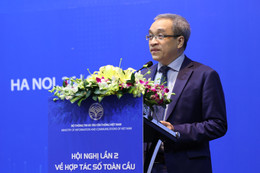
The March 26 conference featured high-level representatives from several nations, including Australia, India, the United States, South Korea, Japan, the United Kingdom, and the European Union. These delegates provided crucial insights into the regulatory environments and market needs of their respective regions.

Deputy Minister of Information and Communications Phan Tam underscored the importance of this multi-agency cooperation. "The path to global expansion is not without risks. Success requires a profound understanding of foreign markets, combined with an honest assessment of one’s own core competencies," Tam noted. He emphasized that the Ministry is working in close coordination with the Ministry of Foreign Affairs, the Ministry of Planning and Investment, and the Ministry of Industry and Trade to create a unified support ecosystem for Vietnamese companies.
The European Union: A Focus on "Digital Europe"
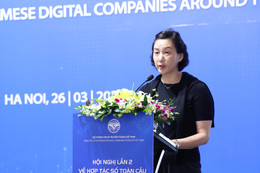
Eunjung Han, Vice Chair of the Digital Subcommittee at the European Chamber of Commerce in Vietnam (EuroCham), shared detailed insights into the European market’s commitment to supporting digital transformation. The "Digital Europe" program, which is slated to continue through 2027, represents the first major funding initiative dedicated to fostering digital transitions across the continent.
"The program provides strategic funding for projects in five critical domains: supercomputing, artificial intelligence, cybersecurity, advanced technical skills, and the widespread deployment of digital technologies across the socio-economic landscape," Han explained. She advised Vietnamese firms looking to enter the European market to prioritize a deep understanding of the EU’s legal framework, particularly regarding investment management and local incentive programs.

Insights from the Japanese Market
Takeo Nakajima, representing the Japan External Trade Organization (JETRO), highlighted the success of Vietnamese firms like FPT in the Japanese market. He clarified that while the Japanese government does not typically provide direct financial subsidies to foreign firms, it offers substantial "soft" support. This includes assistance with business registration, networking, legal consultation, and the facilitation of R&D collaborations. Nakajima’s remarks suggest that for Vietnamese firms, success in Japan is predicated on building long-term, trust-based partnerships rather than relying on government-backed financial incentives.
Implications and Future Outlook
The broader implications of this government-led push are significant. By encouraging firms to go global, the Vietnamese government is effectively testing the competitiveness of its digital sector against established international benchmarks. The strategy has several long-term benefits:
- Innovation Spillover: Exposure to foreign market demands forces local firms to innovate faster, improving the quality of products used domestically.
- Economic Diversification: Reducing reliance on the domestic market provides a buffer against local economic downturns.
- Human Capital Development: Working in international markets necessitates the adoption of global management practices, which in turn upgrades the local workforce’s skill set.
However, challenges remain. The discrepancy between the scale of telecommunications projects in emerging markets and the agility required for software services in developed markets highlights the need for a nuanced policy approach. The Ministry of Information and Communications, by organizing these conferences, is positioning itself to be a primary source of market intelligence for the private sector.
As the program moves into its next phase, the focus will likely shift toward helping enterprises navigate the complexities of data privacy, intellectual property rights, and cross-border regulatory compliance. The ultimate goal remains clear: to transform Vietnamese digital technology firms from local providers into global entities that can provide value-added services, thereby cementing Vietnam’s role as a vital node in the global digital economy. The sustained growth in overseas revenue serves as a strong indicator that the "Make in Vietnam" initiative is gaining traction, setting the stage for an era of increased digital integration and international collaboration.