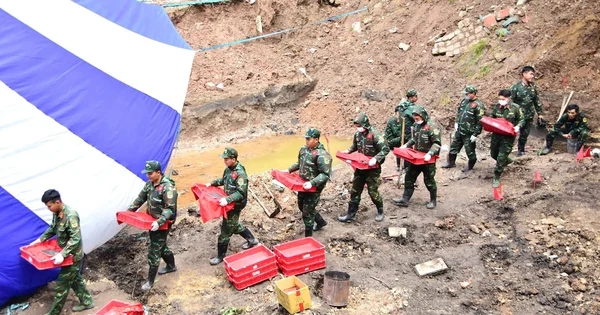
The ongoing excavation and recovery project at Le Thi Rieng Park in District 10, Ho Chi Minh City, reached a significant milestone on September 16, as military units successfully recovered an additional 14 sets of remains belonging to fallen soldiers. This latest finding brings the total number of remains discovered at this specific site to 646 since the operation commenced in late June. The meticulous search, conducted by the Ho Chi Minh City High Command, underscores the nation’s enduring commitment to the "Gratitude and Nghia Tinh" (Gratitude and Reciprocity) policy, ensuring that those who sacrificed their lives for national independence are brought to their final resting place with the dignity they deserve.
The Chronology of the Search and Recovery Operation
The current operation, which began on June 23, 2026, has been characterized by careful, methodical excavation. The project was initiated following historical research and intelligence indicating that several burial sites associated with the conflict period remained within the premises of Le Thi Rieng Park—a site that historically served as a significant location during the Vietnam War.
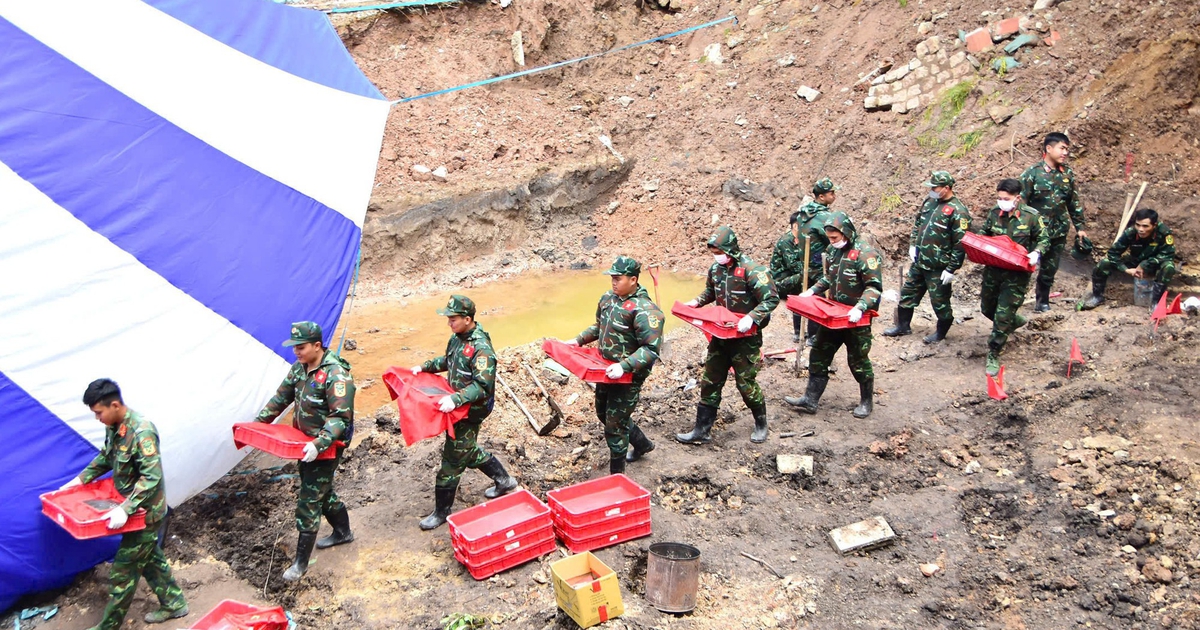
Throughout the months of July and August, teams worked through complex terrain, utilizing both manual labor and specialized heavy machinery, including three excavators, one dump truck, and two 3.5-ton transport trucks. The primary objective has been the careful extraction of soil to reach historical strata where remains and associated artifacts were buried.
As of September 16, the teams have processed over 500 cubic meters of earth. The search has been concentrated in two primary sectors, designated as Area A and Area B. To date, 613 sets of remains have been recovered from individual locations, while 33 sets were found in eight mass grave sites (two in Area A and six in Area B). The discovery of 297 sets of remains accompanied by personal artifacts—such as canteen parts, fragments of clothing, and personal identification items—has provided crucial leads for forensic teams tasked with the eventual identification of the individuals.
Technical Methodology and Forensic Preservation
The recovery process at Le Thi Rieng Park is far more than a simple excavation; it is a systematic forensic operation managed by the Department of Politics under the Ho Chi Minh City High Command. Each discovery involves a multi-step protocol:
- Grid Mapping: Before any soil is removed, the area is divided into precise grids. Each find is documented with high-resolution photography and GPS coordinates.
- Archaeological Extraction: Utilizing hand tools for the final layers of soil ensures that fragile bone structures and small personal effects remain intact.
- Documentation: Every set of remains is cataloged with a unique identifier. Associated items, even those that seem trivial, are carefully cleaned and preserved, as they often hold the key to linking a set of remains to a specific unit or individual soldier.
- Forensic Analysis: Once extracted, the remains are transported to specialized facilities for further analysis. This involves comparing findings against historical records, unit rosters, and reports of missing-in-action (MIA) personnel from the period.
The decision to expand the search scope in Area A, specifically targeting "Trench No. 2," reflects the military’s adaptive strategy. As new artifacts are unearthed, the perimeter of the search is adjusted to ensure that no part of the historical site is overlooked.
Historical Context and National Significance
Le Thi Rieng Park stands as a site of profound historical weight. During the war, the area served as a strategic point, and the burial of fallen soldiers in this vicinity occurred under the chaotic circumstances of active combat. The recovery effort is deeply tied to the broader national policy of searching for and repatriating the remains of martyrs.
For decades, the Vietnamese government has prioritized the identification of those who perished during the conflict. The efforts in Ho Chi Minh City are a microcosm of a nationwide endeavor. The recovery of 646 individuals in one location is one of the largest such operations in the city’s post-war history. It serves as a reminder of the immense human cost of the struggle for national reunification and the government’s vow to leave no soldier behind.
Official Responses and Commemorative Acts
On the same day as the discovery of the latest 14 sets of remains, representatives from the Department of Politics of the Ho Chi Minh City High Command visited the temporary mortuary facility where the recovered remains are being held. The delegation participated in a formal ceremony of incense offering and silent reflection.
In an atmosphere of deep solemnity, the delegation honored the memory of the soldiers. Such acts are central to the mission; they bridge the gap between the logistical task of excavation and the moral imperative of remembrance. For the soldiers tasked with the excavation, the work is not merely professional; it is a form of service. Many of the personnel involved have expressed that their participation in this operation is the highest form of duty they can perform for those who paved the way for current peace.
The Impact on National Reconciliation and Education
The recovery of these remains carries significant implications for both current society and future generations. Beyond the immediate act of finding the lost, the project serves as a cornerstone for:
- Historical Education: By documenting and publicizing these findings, the government is ensuring that the history of the conflict is kept alive, teaching younger generations about the realities of war and the price of peace.
- Family Closure: While identification is a long and arduous process, every recovery increases the probability that a family will finally receive closure. The artifacts found alongside the remains are vital pieces of a puzzle that, when solved, brings peace to the descendants of the fallen.
- National Unity: The "Gratitude" programs foster a sense of national unity, reminding the citizenry of the collective sacrifice that founded the modern state.
Looking Ahead: The Path to Final Burial
With the search operation still ongoing, the Ho Chi Minh City High Command is preparing for the next phase of the process. Reports indicate that plans are underway for a formal memorial service and reburial ceremony, likely to be held in early October. This ceremony will represent the final transition for these 646 individuals from the battlefield to a place of permanent honor.
The commitment of resources—including heavy machinery and the deployment of specialized military units—demonstrates that the government views this as a top-tier priority. Despite the challenges of weather, urban density, and the passage of time, the search at Le Thi Rieng Park will continue until the area is fully surveyed.
As the nation moves forward, the work performed at this park stands as a testament to the idea that memory is a living entity. Through the systematic recovery and documentation of these remains, the sacrifice of the past is integrated into the narrative of the present, ensuring that the legacy of those who gave their lives is never forgotten. The operation at Le Thi Rieng Park remains a poignant reminder of the enduring nature of national duty, transcending decades to bring heroes home.