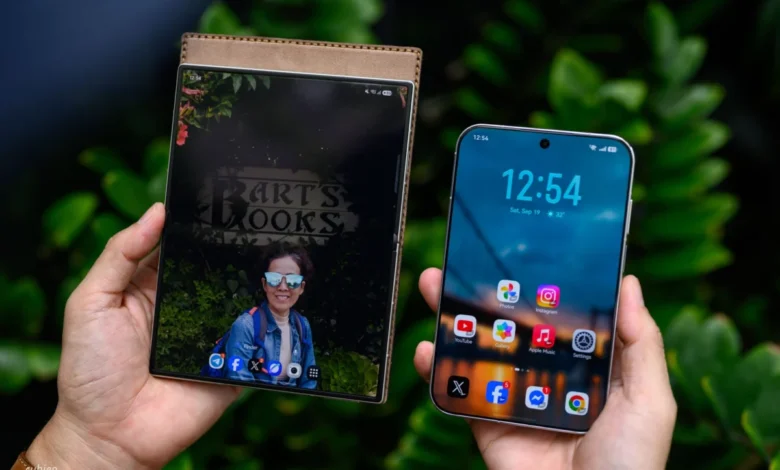
In the modern digital ecosystem, the average smartphone user’s screen-time habits reveal a stark dichotomy. Routine administrative tasks—such as transferring funds via banking applications, verifying identity through national digital portals like VNeID, or booking ride-hailing services—consume only a fraction of daily device interaction, typically requiring no more than three minutes per session. Conversely, the vast majority of active screen time is dedicated to immersive content consumption: browsing news feeds, navigating social media platforms, managing professional communications via messaging clients, and streaming multimedia entertainment. This fundamental shift in usage patterns has prompted a growing segment of power users to rethink their hardware strategies, moving away from the traditional all-in-one device model toward a dual-device ecosystem separating primary entertainment flagships from secure financial utilities.

The Friction of Modern Smartphone Migration
The friction associated with upgrading or switching primary mobile devices has increased exponentially over the past decade. Five to seven years ago, transitioning personal data and accounts from one handset to another was a relatively seamless, automated process. Today, however, swapping primary devices involves navigating a complex gauntlet of security protocols. Re-authenticating banking applications, scanning facial biometrics for identity verification, reactivating state digital identification systems, and occasionally visiting physical bank branches to reset hardware security tokens can turn a routine hardware upgrade into an exercise in frustration.
Security analysts note that while these stringent protocols are necessary to combat rising rates of digital fraud and unauthorized access, they create significant friction for consumers who frequently test new hardware. The implementation of biometric locks, device-binding regulations, and localized encryption keys means that wiping a phone or switching operating systems is no longer a trivial task. For technology enthusiasts and early adopters who frequently evaluate cutting-edge form factors—such as foldable devices or experimental camera flagships—this administrative overhead has become a major deterrent to frequent device switching.

The Dual-Device Strategy: Isolating Financial Utilities
To circumvent the complexities of continuous device migration, a growing number of tech-savvy consumers are adopting a compartmentalized approach to mobile hardware: the designated "main" and "secondary" device strategy. In this framework, high-end foldable phones, experimental multi-lens camera flagships, and devices with cutting-edge displays serve purely as primary entertainment and productivity portals. These devices are reserved for social media, mobile gaming, content creation, and web browsing.
Meanwhile, critical financial applications, identity verification documents, and sensitive communications are consolidated onto a single, highly secure, and compact secondary device—often a premium, lightweight smartphone built from durable materials like titanium, housed safely in a pocket or bag. By anchoring sensitive assets, banking portals, and government identification tools to a dedicated hardware wallet that rarely changes, users effectively create an isolated digital vault.

This approach offers significant psychological and operational relief. When users decouple their financial infrastructure from their primary entertainment devices, the pressure to maintain application continuity across frequent hardware upgrades vanishes. Whether transitioning between foldable displays or testing emerging operating systems, users no longer need to worry about whether a secondary ecosystem fully supports specific regional banking applications or Google Mobile Services natively. They simply log into social networks and productivity apps on their primary device, leaving their financial footprint undisturbed on a trusted secondary handset.
Industry Implications and the Future of Mobile Security
The emergence of the dual-device trend highlights a broader tension within the consumer electronics market: the trade-off between absolute security and user convenience. As regulatory bodies and financial institutions mandate increasingly robust multi-factor authentication and device-binding measures, the burden on the consumer grows heavier.

Mobile operating system developers, including Apple and Google, have attempted to ease this friction through advanced cloud-based keychain synchronization and decentralized identity frameworks. However, hardware fragmentation and rigorous local banking compliance standards often create hurdles that software alone cannot resolve. Consequently, hardware compartmentalization has emerged as an organic, user-driven solution to a systemic design challenge.
Industry observers suggest that as foldable displays, rollable screens, and specialized camera architectures continue to evolve at a rapid pace, the division between lifestyle devices and utilitarian communication tools will become even more pronounced. For the average consumer, an all-in-one smartphone will remain the standard; however, for power users and frequent upgraders, the multi-device paradigm is rapidly solidifying as the most efficient way to navigate the complexities of the modern digital landscape.