Vietnam compact family car market shows signs of recovery in September 2026 but remains dominated by electric vehicle dominance


The Vietnamese automotive market witnessed a significant shift in dynamics during September 2026 as the compact family car segment, primarily composed of Multi-Purpose Vehicles (MPVs), emerged from a period of stagnation. After a lackluster performance throughout August, the industry reported a robust rebound in consumer interest and purchasing activity. According to the latest sales data consolidated from the Vietnam Automobile Manufacturers’ Association (VAMA), Hyundai Thanh Cong Vietnam (HTV), and VinFast, total sales for the top ten compact family vehicles reached 9,024 units in September. This represents an increase of 2,037 units, or approximately 29% compared to the preceding month, signaling a vital recovery for a sector that has been grappling with broader economic headwinds throughout the third quarter.
A Chronology of Market Fluctuations in 2026
The automotive landscape in Vietnam has been marked by volatility since the beginning of 2026. The first quarter began with high expectations, yet supply chain adjustments and shifting consumer purchasing power dampened momentum as the year progressed. August 2026, in particular, served as a nadir for the compact family segment, with many manufacturers reporting double-digit declines in volume.
The subsequent rally in September can be attributed to several factors, including aggressive year-end promotional campaigns, the introduction of refreshed model variants, and improved inventory availability. Despite this, the recovery has been asymmetrical. While internal combustion engine (ICE) and hybrid vehicles saw a collective volume increase of 44% in September—reaching 3,997 units—the electric vehicle (EV) segment continues to dictate the pace of the market, effectively widening the divide between traditional powertrains and modern electrified platforms.
The Ascendancy of Electric Vehicles
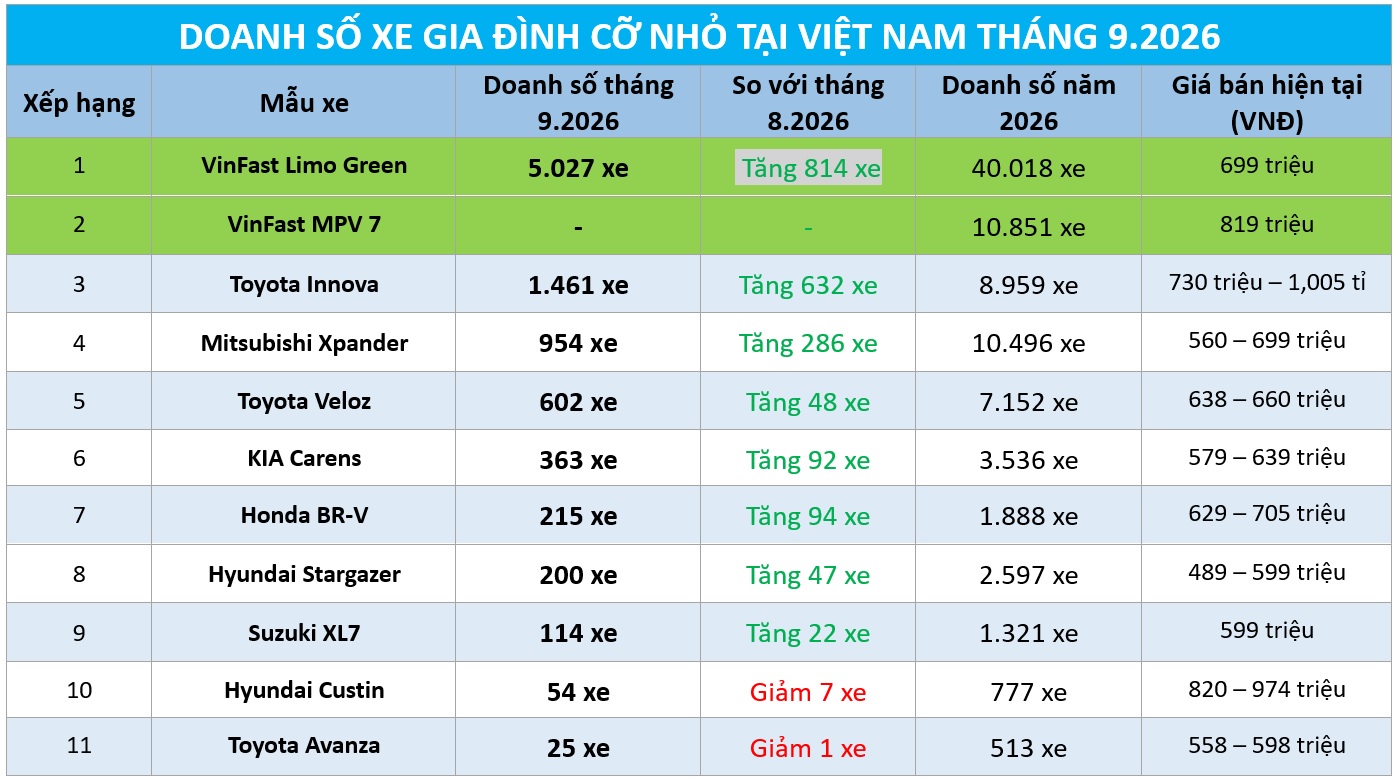
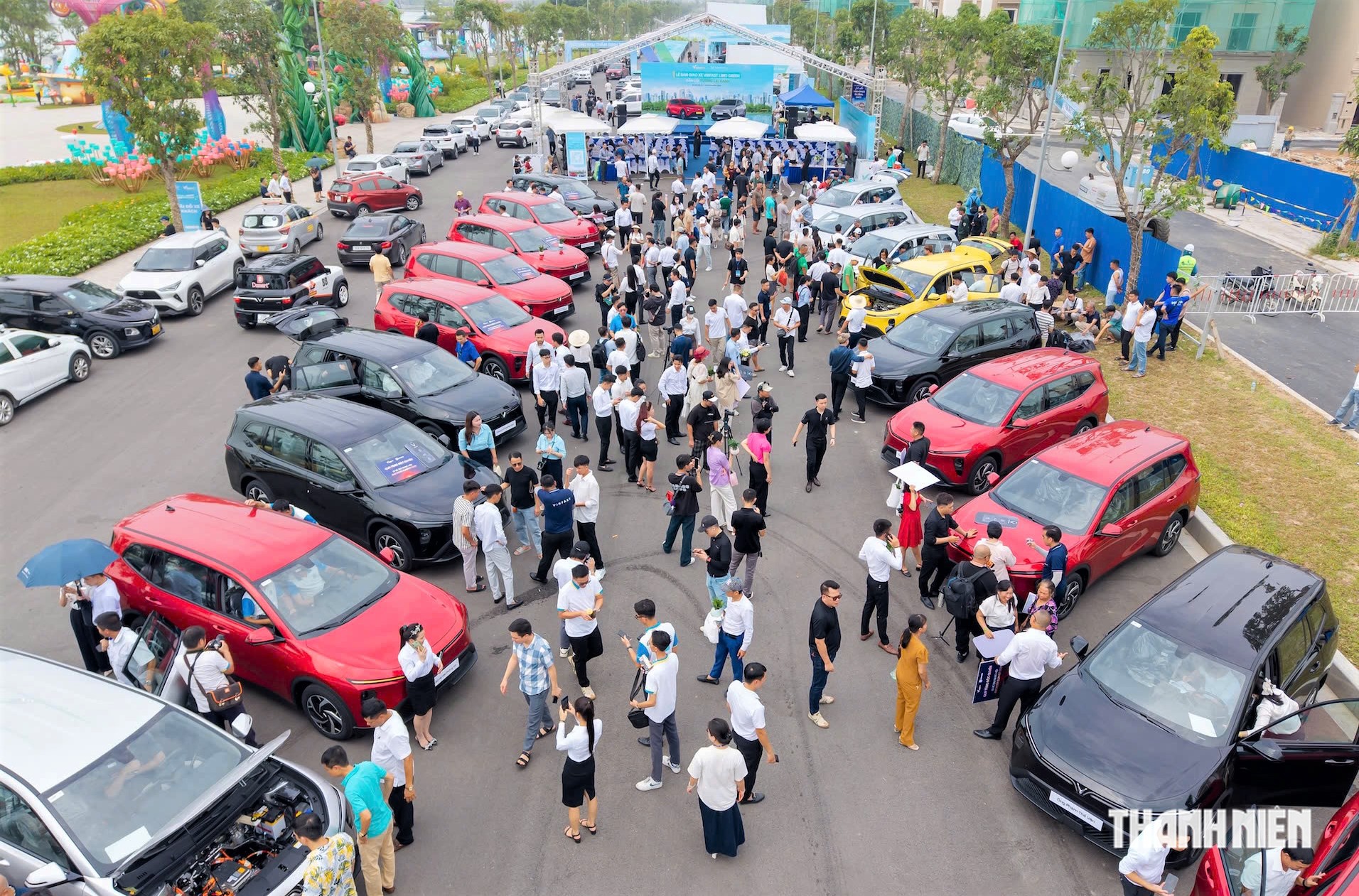
At the forefront of this market transformation is the VinFast Limo Green. As an electric MPV, it has defied broader market trends to maintain a consistent lead in the segment. In September 2026 alone, VinFast reported 5,027 units of the Limo Green delivered to customers, a growth of 824 units or nearly 20% compared to August.
The dominance of the Limo Green is profound. It accounted for approximately 56% of the combined sales of the ten models tracked in the report. In a striking demonstration of the current market hierarchy, the sales volume of this single electric model exceeded the combined total of the nine gasoline and hybrid competitors tracked by VAMA and HTV. With a cumulative year-to-date figure of 40,018 units, the Limo Green has established a formidable lead that suggests a fundamental shift in Vietnamese consumer preference toward electrification, driven by lower total cost of ownership and the growing accessibility of charging infrastructure.
Performance Analysis of Gasoline and Hybrid Competitors
While the EV segment surges, the conventional MPV market is showing resilience. The total volume of 3,997 units for nine gasoline and hybrid models in September reflects a concerted effort by legacy manufacturers to regain lost ground.
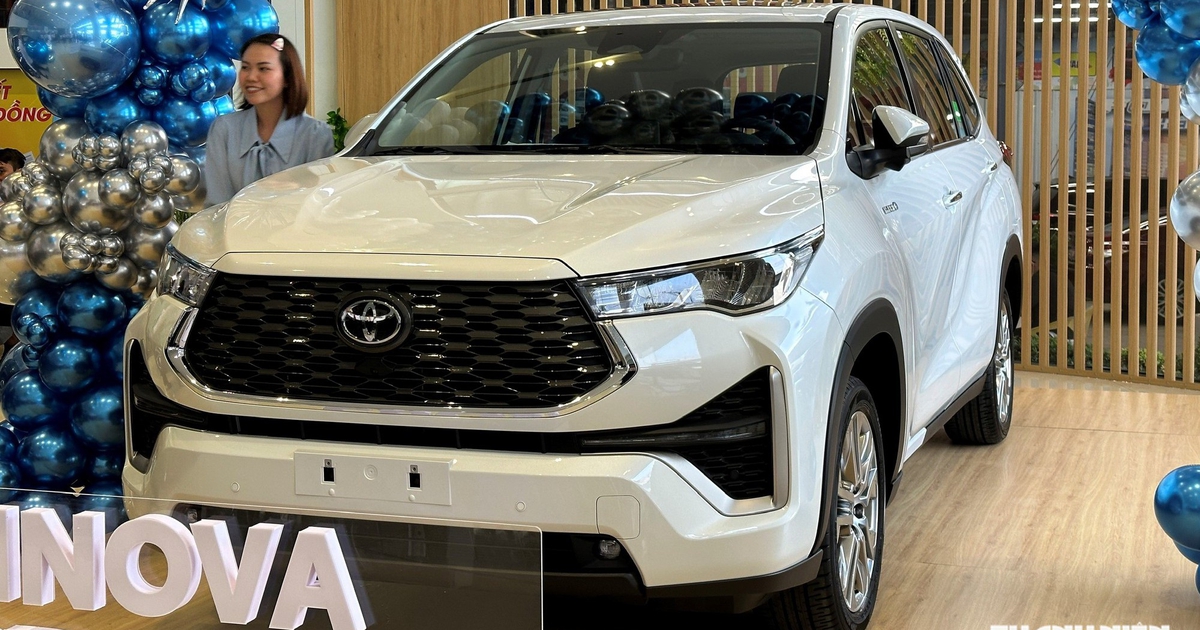
Among the traditional internal combustion engine vehicles, the Toyota Innova Cross stood out as the top performer. The model recorded 1,461 units sold in September, encompassing both gasoline and hybrid variants. This represents a staggering 76% growth compared to August. The success of the Innova Cross has, for the moment, allowed it to eclipse the Mitsubishi Xpander in monthly volume—a feat rarely achieved given the Xpander’s long-standing status as a market staple.
However, analysts note that the comparison is nuanced. The Innova Cross occupies a higher market position in terms of pricing, size, and branding compared to the more budget-oriented MPV segment represented by the Xpander and Toyota Veloz.
The Mitsubishi Xpander, which has historically been the volume leader, saw a recovery of its own. It achieved 954 units in September, an increase of 286 units or roughly 43% from August. While this is a positive trend, the gap between the Xpander and the runner-up, the Toyota Veloz (602 units), has actually widened. The cumulative year-to-date performance for the first three quarters of 2026 shows Xpander at 10,496 units, whereas the Veloz stands at 7,152 units, confirming that while the segment is recovering, the Xpander retains a significant competitive moat.
Secondary Market Dynamics and Laggards
Other manufacturers are also navigating this recovery with varying degrees of success. KIA Carens saw a modest uptick, selling 363 units, up by 92 from August. Similarly, the Honda BR-V experienced a 72% increase, moving 225 units. Hyundai’s Stargazer and the Suzuki XL7 also showed positive momentum, reaching 200 and 113 units respectively.
Conversely, some models continue to face downward pressure. The Toyota Avanza saw a marginal decline, moving only 25 units in September, while the Hyundai Custin experienced a decrease of 7 units, landing at 54. These figures highlight the increasingly crowded nature of the compact family car market, where even established brands must fight for every percentage point of market share against the rising tide of electric competition.
Industry Implications and Future Outlook
The data from September 2026 suggests that while the compact family car market is on a path to recovery, the "gap" between electric and conventional vehicles remains a defining feature of the era. The total sales of 88,108 units recorded since the start of 2026 (including estimates for models not fully disclosed by manufacturers) underscore the sheer scale of demand in this segment.
Industry experts infer that the continued success of the VinFast Limo Green is not merely a result of product availability but a reflection of a broader socioeconomic shift. As fuel prices remain a point of sensitivity for households and the government continues to incentivize green energy initiatives, the transition toward electric mobility is likely to accelerate.
For legacy manufacturers, the challenge for the final quarter of 2026 is clear: they must find ways to compete not just on price, but on value propositions that can match the operational efficiency of EVs. While the jump in sales for the Toyota Innova Cross and the recovery of the Mitsubishi Xpander indicate that there is still a robust appetite for gasoline-powered family transport, these vehicles are increasingly becoming niche players compared to the market-defining influence of electric platforms.
Conclusion
As the year enters its final phase, the automotive industry in Vietnam is entering a critical juncture. The September recovery provides a much-needed morale boost for dealers and manufacturers alike. However, the dominance of VinFast, and the Limo Green in particular, serves as a harbinger of the structural changes ahead. The market is no longer a contest of traditional MPVs competing for a set share of the pie; it is now a multi-front war where powertrain technology—specifically the leap from the internal combustion engine to the electric motor—has become the primary determinant of success.
Moving into the fourth quarter, the focus will likely shift to how much further the conventional models can close the gap, or if the current trend will result in an even larger consolidation of market share under the electric banner. For now, the consumer is the primary beneficiary of this heightened competition, enjoying more options, more competitive pricing, and a rapidly modernizing vehicle fleet.