Ministry of Health Briefing Addresses Controversial Proposals on Organ Donation and Pediatric Feedback in Vietnam Lawmaking


The Vietnamese Ministry of Health convened a high-level press briefing in late October to address growing public and professional debate surrounding the ongoing amendments to the Law on Donation, Removal, and Transplantation of Human Tissues and Organs and Donation and Recovery of Cadavers. Held in the wake of widespread scrutiny over certain consultation practices—most notably the solicitation of feedback from children aged seven and older regarding sensitive medical legislation—the briefing served as a platform for veteran health officials and child rights experts to clarify legislative intent, correct public misconceptions, and establish stricter guidelines for future policy drafting.
Background and Context of the Legislative Review
The current legal framework governing organ transplantation in Vietnam, primarily anchored by legislation passed nearly two decades ago, has increasingly shown signs of inadequacy in addressing the rapid advancements in medical science, surgical techniques, and the escalating demand for viable organs. As hospitals across the country perform increasingly complex transplant procedures, the discrepancy between the number of patients awaiting life-saving organs and the availability of donors has widened significantly.
In response, the Ministry of Health embarked on a comprehensive overhaul of the existing legal framework. The proposed amendments aim to modernize consent procedures, refine the legal definition of death—specifically incorporating neurological criteria such as brain death alongside traditional circulatory death—and streamline the process of organ recovery from deceased donors. However, the inclusion of provisions touching upon minors, both as potential beneficiaries and as subjects of legislative consultation, triggered an unexpected wave of controversy across mainstream media and digital platforms.
The Controversy Surrounding Pediatric Consultation
The focal point of public contention emerged from administrative directives distributed to local authorities, which mandated direct consultation with 100% of children starting from seven years of age regarding the draft legislation. Critics and concerned parents argued that involving young children in complex bioethical discussions concerning organ donation, brain death, and body parts removal was not only impractical but potentially psychologically distressing.

Addressing this issue during the press briefing, Mr. Nguyen Huy Quang, former Director General of the Legal Department at the Ministry of Health, emphasized that while the principle of engaging children aligns with the broader ethos of the Law on Children and international conventions, the execution must be handled with rigorous precision.
"The fundamental principle of gathering children’s opinions must comply with the spirit of the Law on Children and related regulations," Mr. Quang stated. "However, when implementing this, we must clearly identify which group of children we are consulting, for what content, and through what methodology."
Mr. Quang noted that children lack the comprehensive cognitive framework required to fully evaluate complex legislative matters. Consequently, forcing a blanket requirement for direct consultations risks reducing a deeply meaningful civic engagement process into a superficial, box-ticking exercise driven purely by quantitative metrics rather than qualitative value.
Balancing Child Rights with Protective Safeguards
Echoing these sentiments, Mr. Dang Hoa Nam, Vice Chairman of the Vietnam Association for Protection of Child Rights, provided a nuanced legal breakdown distinguishing between general policy consultation and medical interventions involving minors.
According to Mr. Nam, consulting children during the formulation of laws, policies, or programs that directly affect their welfare is a mandatory responsibility of state agencies. Nevertheless, when moving from general policy to specific medical procedures—such as the potential donation or removal of tissues and organs from individuals under the age of 18—obtaining a child’s opinion is a necessary condition, but by no means a sufficient one.
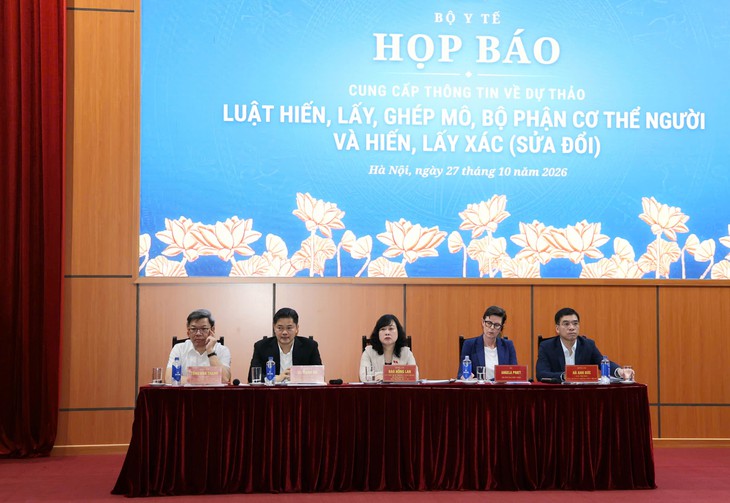
"To guarantee the best interests of the child, there must be strict protective mechanisms in place, including the participation of an independent professional council, alongside the careful consideration of consent from parents or legal guardians in accordance with the law," Mr. Nam explained.
Furthermore, Mr. Nam highlighted that consultations involving minors on sensitive health matters should routinely incorporate pediatric psychologists or experienced social workers. These professionals are uniquely equipped to evaluate whether a child’s expressed opinion is genuinely voluntary and objective, rather than the result of undue pressure, coaching, manipulation, or emotional coercion from adults.
Clarifying Legal Definitions and Preventing Misinformation
Beyond the debate on pediatric consultation, the Ministry of Health officials addressed broader ambiguities within the draft text that have fueled public misunderstanding. Mr. Quang stressed that the drafting committee must improve its communication strategy, offering clearer explanations of legal and medical terms to prevent conceptual confusion and unwarranted public alarm.
A critical area of concern involves the age thresholds set for deceased organ donors. Current legal interpretations often restrict deceased organ donation to individuals aged 18 and older. Medical experts point out that maintaining a rigid age floor creates severe dilemmas when pediatric patients suffering from end-stage organ failure require immediate transplantation, yet face a near-total absence of legally compatible pediatric donor sources.
To bridge this gap, the draft amendments explore the feasibility of recovering tissues and organs from deceased minors under strictly regulated medical conditions—such as cases involving brain death or circulatory death—provided that all ethical, legal, and familial safeguards are rigorously satisfied.

"We need to examine the issue from multiple perspectives, spanning from statutory legal provisions to clinical treatment realities," Mr. Quang emphasized. "If we can formulate appropriate regulations, this will become an initiative of profound humanitarian significance, extending far beyond patient survival to restore happiness to countless families."
Institutional Oversight and Future Implementation Roadmap
As the legislative process moves forward, both officials agreed that expanding the scope of organ donation to include individuals under 18 must be counterbalanced by ironclad regulatory safeguards. These must include transparent oversight mechanisms, mandatory independent medical evaluations, and robust administrative penalties for any violations of ethical standards.
Mr. Nam reiterated that any future implementation must be accompanied by continuous monitoring, inspection, and auditing by health authorities and independent regulatory bodies. Ensuring that statutory protections transition effectively from theoretical legal texts into everyday clinical practice remains paramount to maintaining public trust in the national organ transplantation system.
The Ministry of Health concluded the briefing by affirming its commitment to an open, transparent, and scientifically grounded revision process. By incorporating expert feedback from legal scholars, child welfare advocates, and medical professionals, the finalized draft aims to strike a delicate balance between expanding life-saving medical access and upholding the highest standards of ethics and human rights.