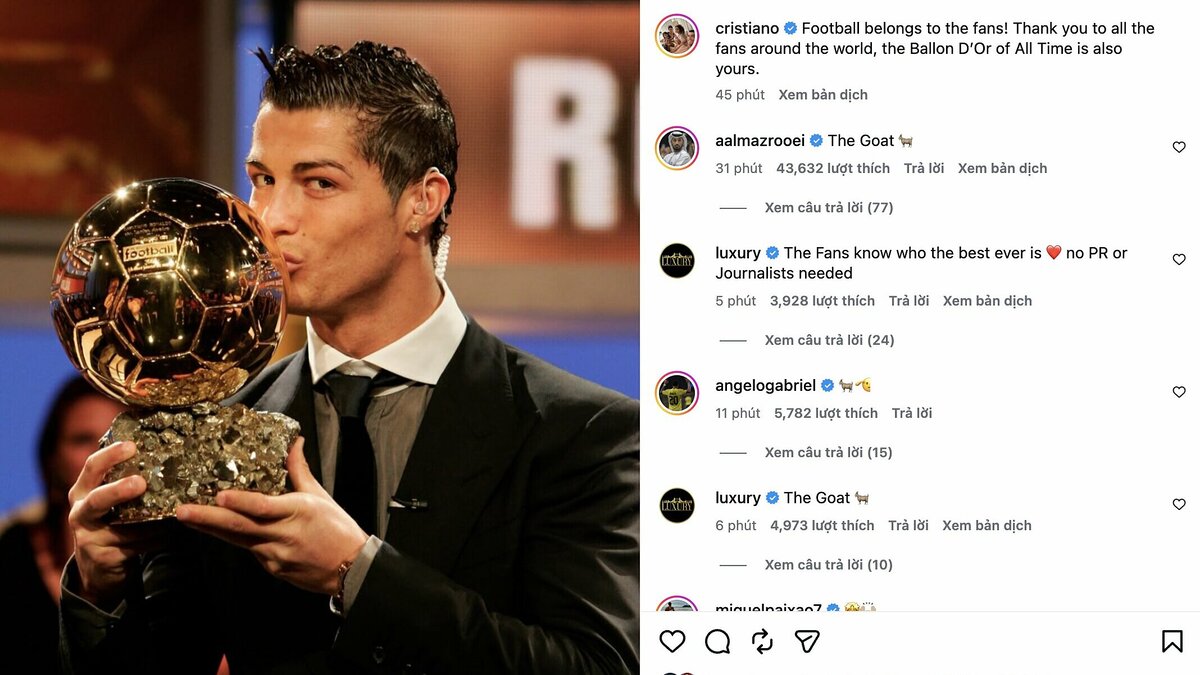
Cristiano Ronaldo has officially been recognized as the recipient of the Ballon d’Or of All Time (B.O.A.T.), a special title conferred following an extensive global fan poll organized by France Football to commemorate the 70th anniversary of the prestigious award. The announcement, which confirms the 2008 iteration of the Portuguese superstar as the pinnacle of individual footballing excellence in the eyes of the public, has reignited the perennial debate regarding the greatest players in the history of the sport.
The accolade, while not a formal addition to the official record books maintained by FIFA or France Football, serves as a significant cultural milestone. It highlights the enduring global influence of the 41-year-old forward, whose career has spanned two decades of dominance, tactical evolution, and record-breaking statistics.
A Landmark Achievement in Fan Engagement
The B.O.A.T. poll represented a departure from traditional voting methods. Historically, the Ballon d’Or has been decided by a panel of international journalists, national team captains, and head coaches. For this anniversary initiative, however, France Football opened the process to the global community, allowing fans to vote online. This shift effectively transformed the award from a technical evaluation of tactical and statistical contribution into a measure of historical impact and public perception.
The voting process was structured to analyze specific "peak" seasons of players who have won at least two Ballon d’Or awards. This narrowed the field to the most decorated icons of the game. According to data released following the conclusion of the polls on October 29, the 2008 version of Cristiano Ronaldo—his first year winning the award while at Manchester United—captured 62% of the total vote. He comfortably surpassed the 2012 vintage of Lionel Messi, which garnered 13% of the vote, and the 2023 version of the Argentine maestro, which secured 9%.
Chronology of a Legendary Season: 2008
The selection of Ronaldo’s 2008 campaign as the greatest of all time is rooted in one of the most prolific individual seasons in modern football history. At the age of 23, under the tutelage of Sir Alex Ferguson at Manchester United, Ronaldo transformed from a promising winger into a complete attacking force.
- Statistical Dominance: Throughout the 2007-2008 campaign, Ronaldo netted 42 goals in 49 appearances across all competitions.
- Domestic Success: He was instrumental in securing the Premier League title, scoring 31 goals in the league alone, which earned him the Golden Boot and the European Golden Shoe.
- Continental Triumph: His impact on the Champions League was profound, capped by his opening goal in the final against Chelsea at the Luzhniki Stadium in Moscow. Despite the match ending 1-1, United’s subsequent victory on penalties cemented his status as the best player in the world at that time.
This period marked the beginning of the intense, decade-long rivalry between Ronaldo and Messi, a duopoly that would define the sport for years to come. Following his success in 2008, Ronaldo went on to secure four additional Ballon d’Or trophies in 2013, 2014, 2016, and 2017 during his tenure with Real Madrid.
Financial and Logistical Structure of the Poll
Unlike the traditional Ballon d’Or, which is free to vote upon by accredited members of the media, the B.O.A.T. poll implemented a unique fiscal component. Participants were required to pay one euro (approximately 1.11 USD) for every vote cast. Furthermore, voters were permitted to cast multiple ballots, a system designed to maximize fan participation and engagement.
Data from the Spanish outlet Marca indicates that the participation was robust, with 5,009 individuals casting more than one vote. The demographic breakdown of the voters showed a high level of dedication: 44 individuals cast between 10 and 26 votes, while 300 participants submitted between five and nine votes. This mechanism not only generated significant revenue for the organizers—amounting to tens of thousands of dollars—but also underscored the willingness of the global fanbase to invest in the recognition of their idols.
Official Responses and Public Reaction
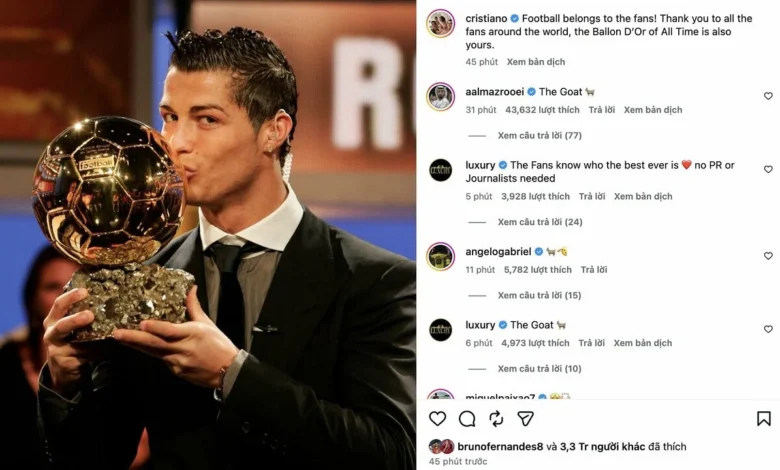
Upon the announcement, Ronaldo took to social media, including his official Instagram account, to express his gratitude. "Football belongs to the fans! Thank you to all the fans around the world," he wrote. "The Ballon d’Or of all time belongs to you."

The statement was a rare public engagement with the subject of individual awards for the veteran forward. In recent years, Ronaldo had distanced himself from the traditional Ballon d’Or and FIFA’s ‘The Best’ awards, frequently expressing concern over the declining credibility and transparency of these institutions. His active participation in this specific campaign suggests a renewed appreciation for recognition derived directly from the supporters, rather than from subjective panels or political voting blocs within governing bodies.
Comparative Analysis: The Legacy of the B.O.A.T.
The distinction between the B.O.A.T. and the standard annual Ballon d’Or is essential for historical context. The annual award remains the formal standard, whereas the B.O.A.T. functions as a celebratory retrospective. This format is distinct from the "Super Ballon d’Or," which was awarded only once in 1989 to Alfredo di Stéfano, an award that held a different weight and was presented under vastly different administrative circumstances.
The dominance of Ronaldo and Messi in this poll—securing the top 12 positions in the rankings—reinforces the narrative of their historical hegemony. The only player outside this duo to break into the top tiers was the Brazilian legend Ronaldo Nazário, whose 2002 World Cup-winning year earned significant recognition from the voting public.
Broader Implications for Football History
The recognition of Ronaldo’s 2008 peak as the greatest of all time has significant implications for how football history is curated. By prioritizing fan-led outcomes, the sport is acknowledging that the "greatness" of a player is as much about the emotional connection they forge with the public as it is about trophy counts and statistical output.
Critics may argue that fan-based voting is prone to popularity bias, favoring players with larger social media followings and global brand recognition. However, supporters of the poll argue that football, at its core, is a sport played for the entertainment and passion of the fans, and their collective voice is the most authentic measure of a player’s legacy.

As Ronaldo continues his career, the "B.O.A.T." title serves as a capstone to a career defined by relentless self-improvement and high-stakes performance. It provides a point of comparison that bridges the gap between the tactical nuances of the late 2000s and the modern era of the sport. Whether or not this title holds long-term academic weight, its impact on the cultural narrative of football is undeniable, cementing 2008 as a year where a singular athlete reached a level of perfection that continues to resonate with millions of people nearly two decades later.
The successful execution of this poll by France Football also signals a potential shift in how legacy awards may be managed in the future. By gamifying the recognition process, the publication has tapped into a vast, digital-native audience, suggesting that the future of sports awards may rely more heavily on interactive, fan-driven models that transcend traditional borders and demographics. As the dust settles on this historic poll, the legacy of Cristiano Ronaldo remains firmly at the forefront of the global football conversation, a testament to a career that has consistently defied expectations and captured the imagination of the world.