Gia Lai Land Dispute: Stepson Registers Family Agricultural Land Under His Own Name, Sparking Legal Battle with Step-Mother and Sibling Heirs


The intricacies of Vietnam’s land tenure laws, household land registration protocols, and familial inheritance dynamics have once again taken center stage following a complex legal battle in Gia Lai province. What began as a familial arrangement concerning a modest parcel of agricultural land ultimately escalated into a multi-tiered judicial review, culminating in a landmark appellate ruling by the High People’s Court in Da Nang. The case underscores the critical legal distinction between individual land acquisition and shared household property rights under the Vietnamese Land Law—a distinction that, when overlooked, can disenfranchise lawful co-owners and trigger profound domestic disputes.
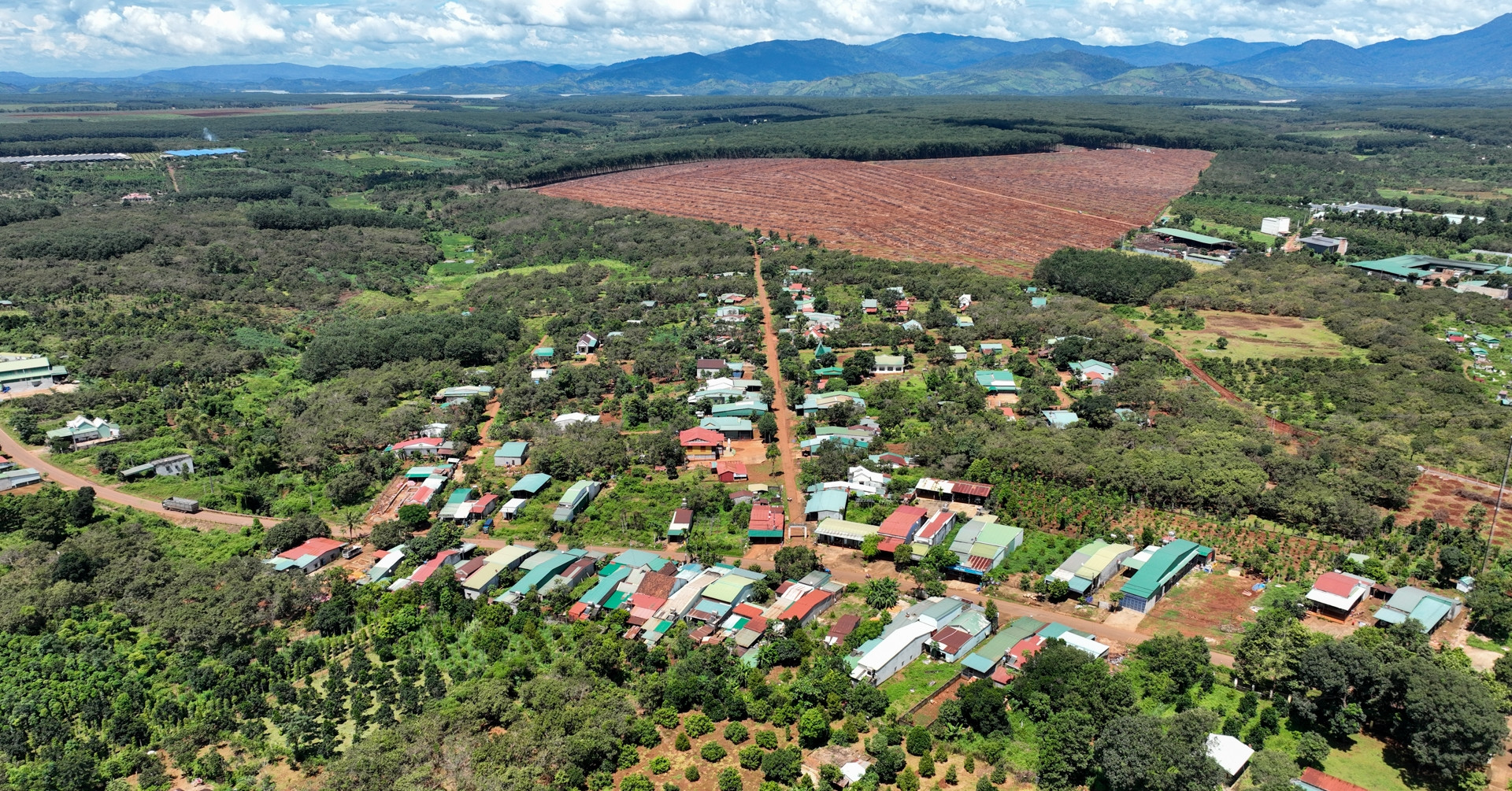
At the heart of the litigation is a parcel of approximately 3,100 square meters of agricultural land located in Gia Lai province. Originally allocated during a period of cooperative farming restructuring in the late 1970s, the land was entrusted to a household unit for cultivation and production. Decades later, actions taken by a member of that household to unilaterally register portions of the property under his sole marital name ignited a fierce legal challenge from his step-mother, representing the broader interests of the remaining family heirs. The appellate court’s decision to overturn the initial first-instance verdict has provided crucial clarity on household property rights, statutory land registration compliance, and the legal limits of individual asset claims derived from collective allocations.
Origins of the Land Allocation and Family Dynamics
The chronicle of the disputed property traces back to 1979, an era defined by agricultural collectives and cooperative farming systems in rural Vietnam. According to court records and testimonies provided during the proceedings, the local agricultural cooperative officially allocated close to 3,100 square meters of productive agricultural land to the household headed by Mr. S. At the time of the allocation, the household comprised multiple members functioning as an economic unit under a collective livelihood framework.
In 1971, following the passing of Mr. S’s first wife, he married Ms. T., who became his second wife and a co-resident within the household. Mr. H., the central figure opposing the subsequent claims, was born as a child of Mr. S and his first wife. Consequently, Mr. H. held the status of a step-son to Ms. T., a family dynamic that would later heavily influence the perceptions of entitlement, inheritance expectations, and stewardship responsibilities over the shared family estate.
For more than a decade, the land was farmed collectively or managed directly by the primary household elders to sustain the family. However, as administrative structures shifted and agricultural management decentralized in the mid-1990s, day-to-day stewardship of the land underwent a practical transition. In 1995, the family entrusted Mr. H. with the direct management and cultivation of the agricultural plots, a routine arrangement intended to facilitate efficient farming operations rather than transfer ownership rights.
Unilateral Registration and the Issuance of Land Use Right Certificates
The core catalyst for the subsequent legal battle materialized in the late 2000s, coinciding with systematic national efforts to map, register, and issue official Land Use Right Certificates (commonly known as "Red Books") to landowners across Vietnam.
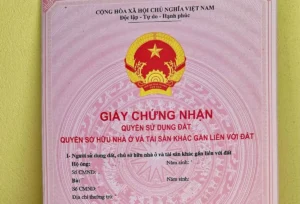
In 2007, Mr. H. and his wife initiated procedures to declare and register a portion of the cooperative-allocated land. Without obtaining formal authorization, written consent, or power of attorney from the other co-owning members of Mr. S’s household, the couple successfully secured a Red Book under their own names for 1,391 square meters of the total disputed area.
A decade later, in 2018, Mr. H. and his wife pursued a second phase of land registration. This time, they obtained an additional Red Book covering another 1,745 square meters of the remaining agricultural land associated with the original family allocation. Through these two administrative actions, the entirety of the productive land originally entrusted to the collective household of Mr. S. had been absorbed into the private administrative registry of Mr. H. and his spouse, effectively cutting off other statutory heirs from their recognized legal shares.
The Initial Legal Challenge and First-Instance Court Ruling
Discovering that substantial portions of the family’s foundational agricultural asset had been registered exclusively under her step-son’s name, Ms. T. initiated legal action. Arguing that the unilateral registration gravely infringed upon her legal rights and those of the surviving family members, Ms. T. filed a lawsuit at the People’s Court of Gia Lai province. Her initial petition sought several major judicial remedies: the formal annulment of the two Red Books issued to Mr. H.’s household in 2007 and 2018, the return of the entire land area to the family pool, and the subsequent fair division of the property as part of the shared family assets and estate.
In his defense, Mr. H. presented a markedly different narrative regarding the origin and nature of the land parcels. He asserted that as early as 1987, his father, Mr. S., had verbally assigned him a specific plot of land to establish economic independence. He maintained that following his marriage in 1991, he and his wife continuously managed, cultivated, and fulfilled all civic obligations, including agricultural taxes and local levies, associated with the land. Regarding the additional 1,745 square meters, Mr. H. claimed that this specific acreage was not part of the original cooperative allocation but was instead the result of personal land reclamation and physical enhancement efforts undertaken between 1987 and 1994.
Representatives of the local agricultural cooperative confirmed during the initial proceedings that the entity had indeed allocated the agricultural land to the household of Mr. S. However, judicial reviews of the administrative files revealed a critical evidentiary gap: there was no contemporaneous written agreement, deed of gift, or documented consent from either Mr. S. or the other household members substantiating the alleged transfer of land ownership to Mr. H.
Delivering its verdict at the first-instance level, the People’s Court of Gia Lai province dismissed Ms. T.’s lawsuit in its entirety. The trial court declined to revoke the contested Red Books, refused the request to order the return of the land, and rejected the petition for asset division. Dissatisfied with the outcome, Ms. T. filed an appeal. Shortly thereafter, the High People’s Procuracy in Da Nang issued a formal protest decision, supporting the appellant’s position and contesting the legal validity of the first-instance judgment.
Appellate Review: Re-evaluating Household Property Rights
The case advanced to the High People’s Court in Da Nang, where an appellate panel thoroughly re-examined the evidentiary record, statutory definitions of household land use rights, and administrative compliance procedures.
During the appellate hearings, the court established that the two disputed land parcels traced their definitive origin to the 1992 cooperative allocations made directly to the household of Mr. S. At the time of this allocation, the household comprised eight distinct members, including both Ms. T. and Mr. H. Under prevailing land and civil laws in Vietnam, land allocated to a household unit is legally categorized as shared common property belonging collectively to all recognized members of that household at the time of the allocation.
The appellate judges underscored that under statutory regulations, an individual member cannot unilaterally declare, register, and obtain title deeds for household-allocated land without the explicit consent and agreement of all other co-owning household members. Consequently, the appellate panel found that the administrative issuance of the Red Books to Mr. H. and his wife without familial consensus violated legal provisions. The trial court’s initial decision to dismiss Ms. T.’s lawsuit was ruled legally unfounded, as it directly undermined the lawful rights and protections guaranteed to the other co-owners.
Equitable Division and Final Appellate Judgment
Having established that the land constituted shared household property, the appellate court turned its attention to formulating a fair and legally compliant division plan. The judges evaluated the results of on-site judicial appraisals and reviewed regulations issued by the People’s Committee of Gia Lai province concerning the minimum surface area required for the legal subdivision of agricultural land within the locality, which is established at 500 square meters.
Acknowledging the legal standing of Ms. T. and the remaining living members of the household, the court recognized their inherent co-ownership rights. At the same time, the appellate panel carefully factored in the documented contributions made by Mr. H., acknowledging his years of physical labor, physical improvements, land reclamation efforts, and consistent management of the property.
Balancing these competing equities, the appellate court formulated a structured partition plan. Under this arrangement, a total surface area of 1,264 square meters was allocated to Mr. H. and his wife, reflecting their recognized contribution and labor inputs while preserving the integrity of regional land subdivision limits. The remaining portions were apportioned to safeguard the legal interests of the other rightful heirs.
In its definitive ruling, the High People’s Court in Da Nang officially accepted the appeal lodged by Ms. T. and the protest filed by the High People’s Procuracy. The court formally modified the first-instance judgment, granting Ms. T.’s petition to divide the disputed land use rights. Furthermore, the appellate tribunal issued a formal declaration revoking the two contested Red Books that had been issued to Mr. H. and his spouse in 2007 and 2018, thereby concluding Appellate Judgment No. 227/2025/DS-PT.
Broader Legal Implications and Socio-Economic Impact
Legal analysts and property rights experts point to this appellate decision as a significant reminder of the complexities inherent in land tenure regularization in rural Vietnam. During the rapid issuance of Red Books in the late 1990s and 2000s, administrative agencies frequently processed applications submitted by individual household members without rigorously verifying collective household consent.
This case illustrates the long-term legal vulnerabilities created when informal familial arrangements collide with formal titling systems. While familial trust often dictates the day-to-day division of agricultural labor—such as delegating farm management to a specific sibling or child—the absence of formal, written documentation regarding land transfers frequently sets the stage for bitter intergenerational disputes once land values appreciate or administrative titles become permanent.
Furthermore, the ruling reinforces the judiciary’s commitment to protecting the collective rights of household members against unilateral administrative appropriations. By balancing equitable labor contributions with strict adherence to statutory co-ownership principles, the appellate court has provided a clear legal precedent for resolving similar land tenure disputes across the Central Highlands and beyond, highlighting that administrative certificates of land use rights can and will be invalidated when issued in defiance of statutory household consensus.