The Rise of Three-Cylinder Engines: Efficiency, Turbocharging, and Key Models in the Vietnamese Automotive Market

The modern automotive landscape is undergoing a profound structural transformation driven by stringent global emissions regulations, an industry-wide push for enhanced fuel efficiency, and the necessity to reduce overall vehicle weight. While the traditional four-cylinder engine remains a ubiquitous and foundational option across numerous segments, automakers are increasingly embracing three-cylinder powerplants. Modern engineering breakthroughs—particularly the widespread adoption of turbocharging—have successfully mitigated historical drawbacks such as vibration and underperformance, allowing compact three-cylinder engines to rival the output of their larger predecessors. Today, these compact configurations are deployed not just in entry-level city cars, but across a diverse spectrum of sedans, crossovers, and SUVs, balancing packaging efficiency with modern performance demands.
The Evolution of the Three-Cylinder Engine: Overcoming Engineering Hurdles
Historically, three-cylinder engines suffered from inherent mechanical imbalances. Because an odd number of pistons creates primary and secondary vibration forces that are difficult to neutralize naturally, these engines were long relegated to budget-oriented, entry-level micro-cars where NVH (Noise, Vibration, and Harshness) levels were considered an acceptable trade-off for low manufacturing costs.
However, the rapid advancement of turbocharging technologies over the past decade completely redefined this segment. By utilizing turbochargers alongside direct fuel injection and advanced computer engine management systems, manufacturers managed to extract significantly higher horsepower and torque outputs from smaller displacements. Furthermore, modern engines incorporate sophisticated balancing shafts, dual-mass flywheels, and advanced active engine mounts to damp out vibrations, making modern three-cylinder powerplants remarkably smooth during idle and acceleration alike.
From an environmental and economic perspective, reducing the displacement and shedding one cylinder yields multiple cascading benefits. It lowers internal friction, reduces pumping losses, decreases total engine mass, and minimizes thermal inefficiency. Consequently, vehicles equipped with three-cylinder engines consistently demonstrate superior fuel economy figures, helping manufacturers meet strict corporate average fuel economy (CAFE) standards and increasingly stringent national emissions frameworks.
The Vietnamese Automotive Market Context
In the Vietnamese market, consumer preferences have traditionally favored robust, naturally aspirated four-cylinder configurations, largely due to consumer perceptions regarding long-term durability and resale value. Yet, rapid urbanization, rising fuel costs, and shifting demographics have altered buyer priorities. Urban motorists, young families, and ride-hailing drivers increasingly prioritize low fuel consumption, compact exterior dimensions for navigating congested city streets, and accessible initial purchase prices.
As imported and locally assembled models diversify, three-cylinder engines have found a comfortable niche in Vietnam’s A-segment hatchback, A-SUV, B-SUV, and B-sedan categories. Below is a comprehensive breakdown of the notable vehicles currently available in Vietnam that utilize three-cylinder propulsion.
Key Three-Cylinder Models Available in Vietnam
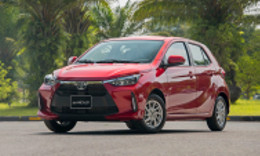
1. Toyota Wigo: The A-Segment Hatchback Option
As the entry-level hatchback offering from the Japanese giant, the Toyota Wigo stands as one of the few vehicles in its class retaining a three-cylinder architecture. Originally launched in its modern iteration in June 2023 via imports from Indonesia, the Wigo has streamlined its lineup to focus exclusively on automatic transmission variants.
Under the hood, the Wigo utilizes a 1.2-liter naturally aspirated three-cylinder engine, producing 87 horsepower and 113 Nm of torque, paired with a D-CVT (Dual-Mode CVT) transmission. Designed primarily for first-time car buyers and urban commuters, the Wigo prioritizes simplicity, low maintenance costs, and impressive fuel efficiency within congested municipal environments.

2. Toyota Raize: Pioneering Compact A-SUVs
Following closely behind its hatchback sibling, the Toyota Raize introduced Vietnamese consumers to the concept of forced induction within the mini-SUV segment upon its late 2021 launch. Imported from Indonesia, the Raize is powered by a 1.0-liter turbocharged three-cylinder engine generating 98 horsepower and 140 Nm of torque.
By pairing this turbocharged unit with a D-CVT transmission, Toyota delivered a vehicle that feels remarkably lively off the line compared to naturally aspirated rivals of similar displacement. The Raize has resonated strongly with urban dwellers who require a higher seating position, enhanced ground clearance, and nimble handling without sacrificing fuel economy.
3. Hyundai Venue: The Dynamic Domestic Competitor
Positioned as a direct rival to the Toyota Raize, the Hyundai Venue is assembled domestically by Thanh Cong Motor (HTV) and comes in two trim levels. Like its Japanese rival, the Venue utilizes a 1.0-liter turbocharged three-cylinder engine, but tunes it to deliver a higher output of 120 horsepower and 172 Nm of torque.

Mated to a 7-speed dual-clutch transmission (DCT), the Hyundai Venue targets a younger demographic seeking sportier driving dynamics, quicker gear shifts, and a comprehensive suite of modern comfort and safety features. The domestic assembly also grants Hyundai a competitive pricing edge, keeping the model tightly positioned within the sub-550 million VND bracket.
4. Mitsubishi Attrage: Economic Efficiency in the B-Sedan Segment
Imported from Thailand, the Mitsubishi Attrage has long built its reputation on rock-solid fuel efficiency and straightforward ownership economics. Operating in the competitive B-segment sedan market, all variants of the Attrage utilize a 1.2-liter MIVEC three-cylinder engine generating 78 horsepower and 100 Nm of torque, mated to either a 5-speed manual transmission or a CVT.
While its output figures are modest compared to turbocharged rivals, the Attrage’s lightweight construction and efficient three-cylinder powerplant make it a perennial favorite among budget-conscious buyers, fleet operators, and individuals seeking a dependable daily commuter with minimal operational overhead.

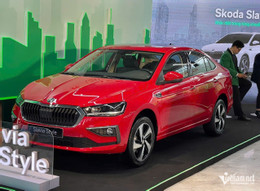
5. Nissan Almera: Bringing Turbocharging to the B-Sedan Class
Replacing the older Sunny model when it debuted in Vietnam in 2021, the Nissan Almera brought a fresh design and modern engineering to the B-segment sedan category, punctuated by a minor update at the end of 2024.
The Almera relies on a 1.0-liter turbocharged three-cylinder engine that churns out 100 horsepower and 152 Nm of torque, routed through an Xtronic CVT transmission. This powertrain provides the Almera with strong mid-range flexibility, making highway passing effortless while maintaining exceptional urban fuel economy. It appeals directly to families looking for generous cabin space combined with nimble city maneuverability.
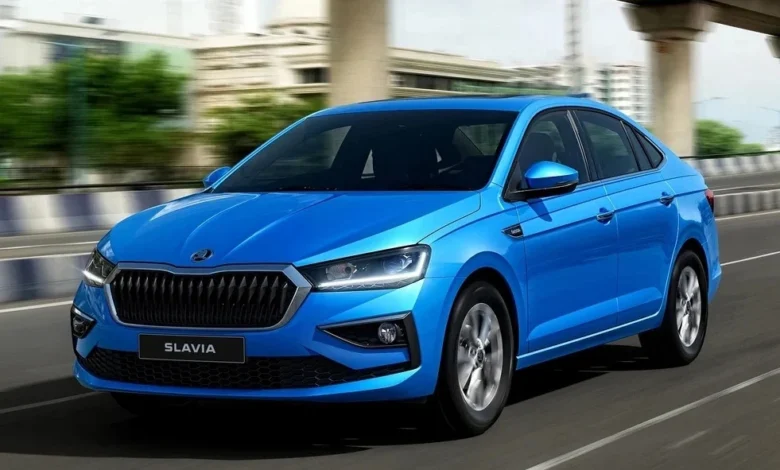
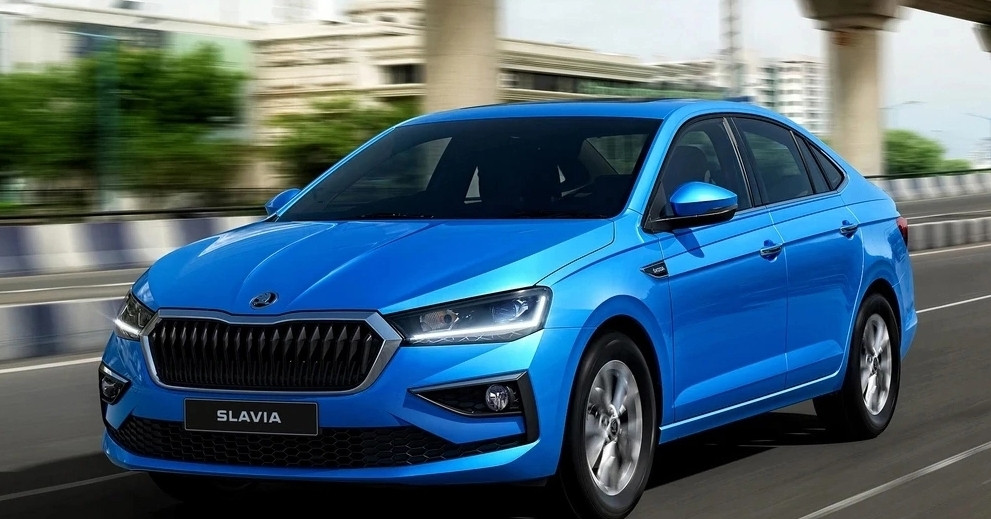
6. Skoda Slavia: European Flavour in a Localized Package
Representing the expansion of European brands into local manufacturing, the Skoda Slavia was introduced to the Vietnamese market in September 2025 through local assembly via TC Motor. Competing in the B-sedan segment, the Slavia offers three trim levels, featuring both manual and automatic transmission options.
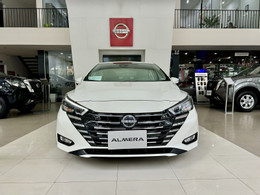
The Czech sedan is powered by a 1.0-liter turbocharged three-cylinder engine producing 115 horsepower and 175 Nm of torque, paired with either a 6-speed manual or a 6-speed automatic gearbox. The Slavia bridges the gap for buyers seeking European styling, solid driving dynamics, and the punchy performance of a modern turbo-three layout.
7. Geely Coolray: High-Performance B-SUV Dynamics
As the Chinese automotive wave accelerates its presence in Vietnam, the Geely Coolray occupies the B-SUV segment with high-performance aspirations. Launched in March 2025 and imported from China, the Coolray stands out by utilizing a larger 1.5-liter turbocharged three-cylinder engine.
Developing a robust 177 horsepower and 255 Nm of torque—paired with a 7-speed dual-clutch transmission—the Coolray challenges conventional wisdom regarding three-cylinder capacity limits. It delivers athletic acceleration and aggressive styling that appeal to buyers prioritizing dynamic performance and extensive technology packages within a competitive price bracket.
Industry Implications and Future Outlook
The persistence and growth of three-cylinder engines in Vietnam reflect broader global trends. As emission standards tighten and consumer expectations mature, automotive engineers have proven that the cylinder count is secondary to overall powertrain calibration, turbocharging efficiency, and thermal management.
For the Vietnamese market, these engines provide a pragmatic middle ground. They allow manufacturers to offer vehicles equipped with modern active safety systems, compliant emissions profiles, and peppy performance characteristics without pushing vehicle acquisition and fuel costs beyond the reach of developing-market consumers. As local infrastructure evolves and consumer familiarity grows, the stigma historically attached to three-cylinder configurations continues to dissipate, paving the way for these efficient powerplants to anchor the entry and mid-tier vehicle segments for years to come.