CMC Corporation Charts a Course for Global Digital Eminence Through National Mission Alignment


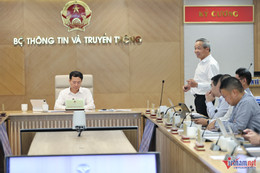
On October 25, 2024, at the headquarters of the Ministry of Information and Communications (MIC) in Hanoi, Minister Nguyen Manh Hung presided over a strategic working session with the leadership team of CMC Corporation. This meeting, which marked a significant milestone in the 31-year history of the technology conglomerate, served as a platform for defining the corporation’s role in Vietnam’s digital evolution. The dialogue underscored a fundamental shift in expectation for domestic tech giants: to transcend purely commercial success and integrate their growth trajectory with the core aspirations of the Vietnamese state.
A New Era of National Digital Sovereignty
The core message delivered by Minister Nguyen Manh Hung was centered on the concept of "Make in Vietnam"—a strategic initiative aimed at ensuring national technological independence. The Minister emphasized that for a company like CMC, which has established itself as a key player in the domestic IT landscape, the path to maturity lies in tackling "large-scale problems" that are inextricably linked to national strength.

"A business that seeks to grow large and endure alongside the nation must tether its own destiny to the national mission," Minister Hung stated. He argued that the current era requires technology firms to evolve from service providers into masters of their own technology, particularly in the fields of digital infrastructure, Artificial Intelligence (AI), and cybersecurity. This is not merely a call for expansion, but a directive for the private sector to lead the nation’s digital transformation into a new epoch of prosperity.
The Evolution of CMC: From 31 Years of Foundation to 2028 Vision
Founded in 1991, CMC Corporation has navigated the changing currents of the global technology landscape for over three decades. During the meeting, Dang Tung Son, Deputy Chairman and Chief Strategy Officer of CMC, presented a comprehensive report detailing the corporation’s performance during the first half of the 2024 fiscal year. The report also outlined the strategic roadmap leading up to 2028.
The vision for 2028 is ambitious: to transform CMC into a global digital and AI-focused group with international standards. Key indicators for this transformation include:
- Revenue Growth: A target to triple revenue compared to current levels.
- Human Capital: Scaling the workforce to exceed 10,000 employees, with a specific focus on high-skilled labor.
- AI Specialization: Integrating AI into 40% of its workforce functions to drive productivity and innovation.
This expansion is planned against a backdrop of increasing international presence, as the company seeks to export Vietnamese intellectual capital to global markets. By positioning itself as a leader in AI and digital services, CMC aims to shift its brand identity from a local powerhouse to a recognizable international entity.
Strategic Priorities: Infrastructure and AI Integration
The four-hour working session served as an incubator for addressing the practical challenges CMC faces in its pursuit of these targets. The discussion centered on three pillars: infrastructure, AI development, and corporate digital maturity.
The Role of Digital Infrastructure
Minister Hung provided specific guidance regarding the development of undersea fiber optic cables. He advised the leadership team to engage with the Ministry’s Telecommunications Authority to align their investment strategies with the new Land Law and national infrastructure planning. By contributing to the robustness of international connectivity, CMC can bolster national security while ensuring the stability of its own service networks.

The AI Imperative
Regarding AI, the Minister encouraged a pragmatic approach. Rather than attempting to compete solely on generic models, he urged CMC to focus on "specialized AI"—AI tailored for specific industries, individual needs, and internal corporate efficiency. By developing AI solutions that can handle data-driven decision-making for various organizations, CMC can build a foundational layer that serves as a platform for other businesses to thrive.
Internal Transformation as a Prerequisite
A recurring theme throughout the meeting was the necessity of internal digital maturity. Minister Hung posited that a technology company cannot effectively lead digital transformation for its clients if it has not mastered the process within its own operations. "You must undergo your own digital transformation first," he noted. "By doing so, you gain the experiential knowledge required to solve the complex problems of others."
Implications for the Vietnamese Tech Sector
The meeting between the MIC and CMC serves as a bellwether for the broader Vietnamese technology sector. The government is signaling a clear expectation: the era of "growth at any cost" is being replaced by a model of "responsible innovation."

For the wider industry, the implications are three-fold:
- Sovereignty in Tech: The state is prioritizing domestic companies that can reduce reliance on foreign hardware and software. This is critical for national security and economic independence.
- Focus on "Hard" Problems: There is a strong push for firms to focus on infrastructure (Data Centers, Cloud, Fiber Optic) rather than just software applications. These capital-intensive investments create the backbone for a digital economy.
- Global Competitiveness: The government is encouraging companies to view the international market as their primary playground, viewing the domestic market as a testing ground for innovations that must meet global standards.
Official Responses and Future Outlook
Nguyen Trung Chinh, Chairman of CMC Corporation, expressed deep appreciation for the guidance provided by the Minister and the MIC leadership. He acknowledged that the goals set for 2028 are inherently challenging but necessary for the company’s evolution.
"Beyond the efforts of the corporation, we seek the continued partnership and guidance of the Ministry," Chinh said. "Our goal is not just to succeed as a business, but to ensure that Vietnamese intelligence is recognized and valued on the global stage."

The meeting concluded with a symbolic gesture, as Minister Hung presented the CMC leadership with copies of literature on digital transformation strategies. This exchange highlighted the collaborative spirit between the state and the private sector, emphasizing that the "Make in Vietnam" movement is a joint venture requiring both policy support and industrial execution.
Analyzing the Path Ahead
The trajectory for CMC over the next four years will be a test case for the viability of the "national champion" model in Vietnam. By focusing on AI and digital infrastructure, CMC is entering a capital-intensive space that requires significant investment in R&D and human resources.
The strategy proposed by the MIC—that companies should act as the "scaffold" upon which other sectors grow—is a sophisticated approach to national development. If CMC can successfully execute its 2028 vision, it will likely serve as a blueprint for other domestic firms, proving that a Vietnamese company can simultaneously serve the national interest and achieve top-tier international status.

As the industry moves forward, the success of these initiatives will depend on the agility of firms like CMC to pivot toward specialized AI, the regulatory environment’s ability to facilitate large-scale infrastructure projects, and the continued alignment between state-level policy and private-sector innovation. The message from the October 25 meeting is clear: the age of digital transformation in Vietnam is no longer a secondary concern—it is the central mission of the nation’s economic future.