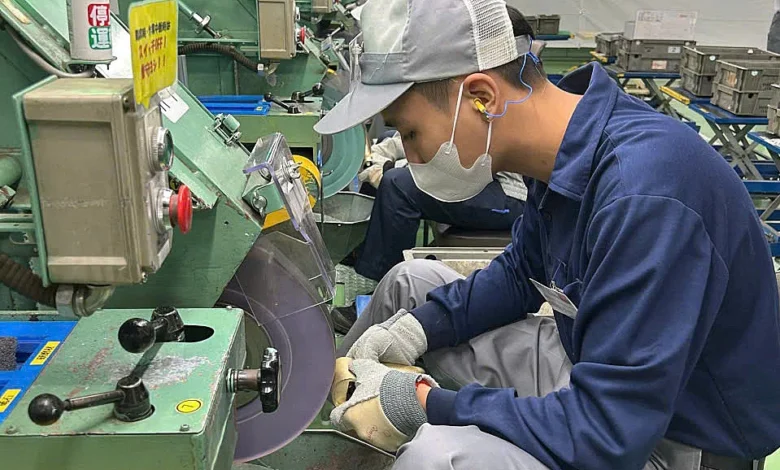
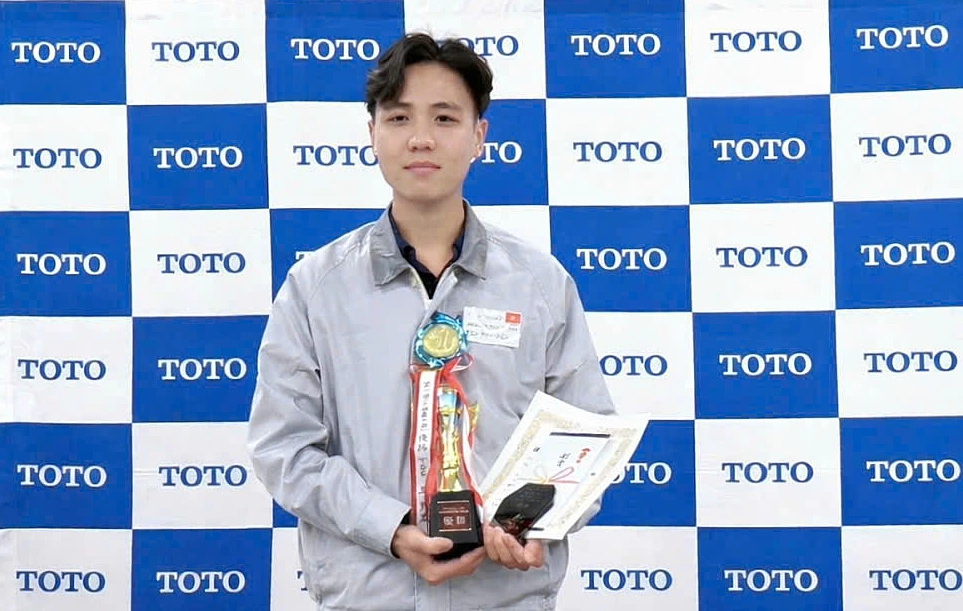
In the high-precision manufacturing sector, where the margin for error is measured in microns, the journey of Nguyen Duc Quyen stands as a testament to the evolving nature of technical expertise among Vietnam’s Gen Z workforce. Entering the TOTO Vietnam factory in Hanoi in 2023 with essentially zero experience in specialized grinding, Quyen transformed himself within two years into a world-class technician, culminating in a gold medal win at the international vocational skills competition held in Japan in November 2025.
The Foundation of Mastery
When Quyen first stepped onto the factory floor of the Japanese FDI enterprise—a company renowned for its rigorous standards in bathroom and kitchen fixtures—he was part of a cohort representing a new generation of industrial workers. The facility, which employs hundreds of veteran workers with decades of combined experience, served as the crucible for his professional development.
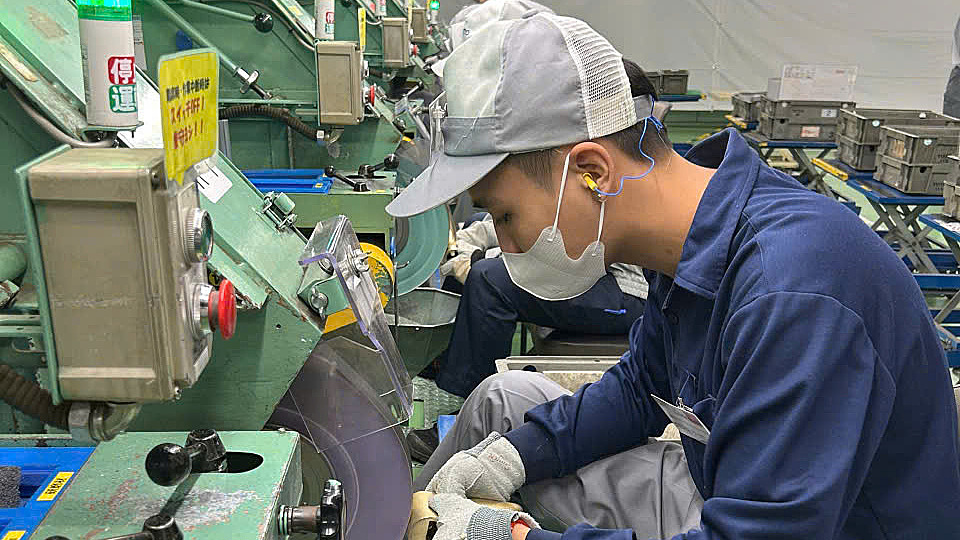
Quyen’s primary responsibility involved the precision grinding and finishing of faucets, showerheads, and various plumbing hardware components. The initial phase of his career was defined by intensive observation. Adopting the philosophy that achieving mastery in a technical skill requires a minimum of 10,000 hours of deliberate practice, Quyen balanced the mentorship of seasoned veteran workers with independent research. He leveraged technical video tutorials and online documentation to supplement the hands-on guidance he received on the shop floor. By focusing on the ergonomics of his hand movements and the precise positioning of the metal workpieces, he began to refine his technique, gradually reducing the defect rate of his output.
Chronology of a Skill-Based Ascent
The trajectory of Quyen’s career within the company is characterized by a rapid acceleration of technical competency:
- 2023: Quyen joins TOTO Vietnam in Hanoi. He begins as a trainee, focusing on foundational grinding techniques and workplace safety standards.
- Early 2024: After less than a year of dedicated training, Quyen masters the fundamental technical requirements of the role. He begins to identify bottlenecks in the traditional production process.
- Late 2024: Quyen secures a top-tier placement in the company-level vocational skills competition, signaling his potential to represent the organization on a broader stage.
- November 2025: Competing in Japan, Quyen faces elite technicians from various international jurisdictions. Despite being one of the youngest participants, he secures the gold medal in the grinding category.
- October 2026: At 27 years old, Quyen is recognized as one of the ten most outstanding industrial workers nationwide in Vietnam, cementing his status as a leader in his field.
Technical Innovation and Efficiency Gains
The shift in Quyen’s career was marked by his departure from the status quo in manufacturing methods. Historically, the factory utilized the "line grinding" method, a sequential approach where each worker is responsible for a single stage of surface treatment before passing the product to the next station. This process is inherently dependent on the pace of the preceding worker, often leading to idle time and bottlenecks.
Recognizing these inefficiencies, Quyen proposed a transition to "cell grinding." In this model, a single technician performs all four critical stages of the finishing process. The implementation of this process required significant retraining and a redesign of the workstation. The results were quantifiable and substantial:
- Time Reduction: The processing time for a single unit was reduced from 1,200 seconds to 900 seconds—a 25% increase in speed per unit.
- Productivity Growth: Overall labor productivity increased by an estimated 20%.
- Economic Impact: The optimization of the process contributed to an estimated savings of 80 million VND per month for the company, derived from reduced waste and increased throughput.
- Daily Output: Through the redesign of jigs and fixtures, which allowed for the simultaneous grinding of multiple pieces, Quyen’s individual daily output rose to 335 units.
Cultural Exchange and Professional Philosophy
Quyen’s victory in Japan was not merely a display of manual dexterity; it was a manifestation of cross-cultural professional synthesis. During the competition, Quyen observed that Japanese technicians often prioritize absolute adherence to established processes, while Vietnamese workers tend to be highly adaptive and creative in their problem-solving.
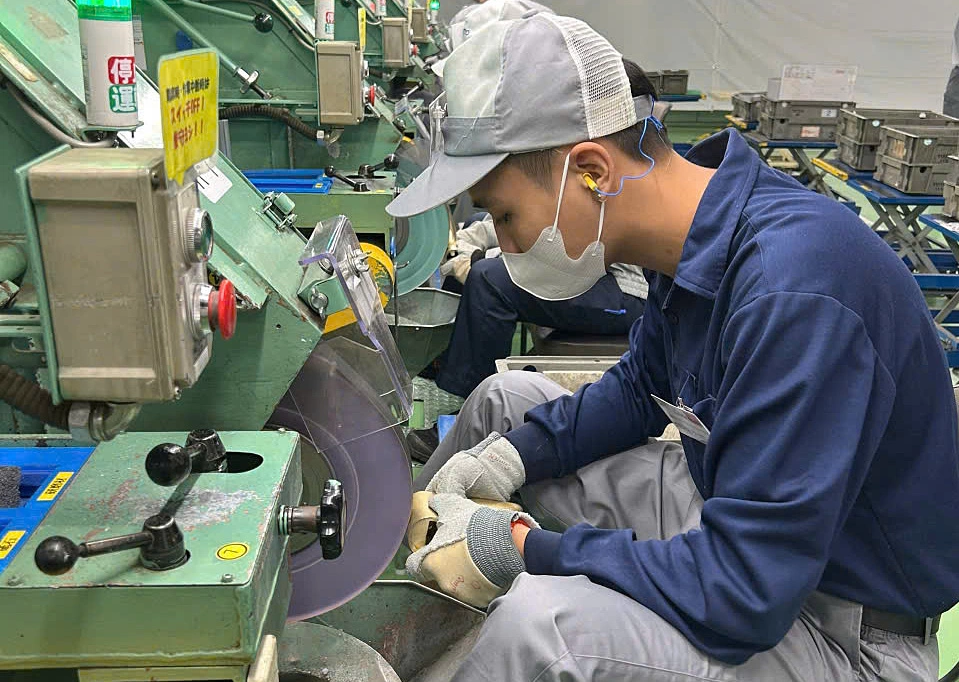
"My approach was to focus on the minutiae of every step," Quyen remarked. "By understanding the internal logic of each stage, I could identify why a particular error was occurring and then develop a solution that was both effective and scalable."
This philosophy of "continuous improvement" mirrors the Japanese concept of Kaizen, which TOTO integrates into its global corporate culture. However, Quyen’s contribution was his ability to marry this disciplined adherence to process with the creative flexibility characteristic of his generation. He argues that Gen Z workers are not merely looking for employment but for environments that allow them to innovate and demonstrate their value through measurable results.
Broader Implications for the Vietnamese Workforce
The recognition of Quyen as an outstanding worker in 2026 highlights a critical shift in the perception of vocational training in Vietnam. As the country transitions toward more complex manufacturing and high-value-added production, the demand for skilled technicians who can optimize processes—rather than simply follow them—is reaching an all-time high.
Industry experts suggest that Quyen’s success provides a blueprint for human resource development in the FDI sector. By empowering young workers to experiment with production methods and providing them with the resources to pursue international-level certifications, companies can significantly improve their operational efficiency.
Furthermore, the integration of digital tools and modern manufacturing principles is bridging the gap between traditional vocational training and the needs of Industry 4.0. Quyen’s ability to use digital media to augment his apprenticeship is a clear indicator that the future of vocational training in Vietnam will likely be hybrid, combining traditional mentorship with self-directed digital learning.
Conclusion
Nguyen Duc Quyen’s professional journey underscores the potential of Vietnam’s younger generation to compete at the highest levels of global manufacturing. His transition from a novice trainee to an award-winning master technician serves as a case study in the efficacy of combining rigorous technical training with the innovative, analytical mindset of the digital native. As Vietnam continues to position itself as a global manufacturing hub, workers like Quyen will be the primary drivers of the country’s climb up the global value chain. By fostering a culture that encourages young employees to question, refine, and optimize existing systems, Vietnamese enterprises can secure their competitive edge in an increasingly automated and high-precision global market.