Apple Enters the Foldable Market with iPhone Duo: A Comprehensive Review of Hardware, Software, and Market Implications

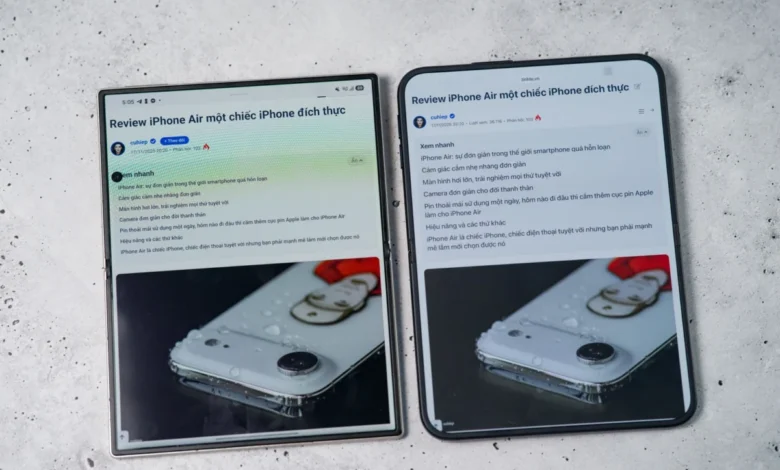
The consumer technology landscape has witnessed a significant milestone as Apple officially introduces its first foldable smartphone, the iPhone Duo. Entering a market segment pioneered and refined by competitors over the better part of a decade, Apple’s latest hardware venture seeks to redefine foldables through distinct design choices and integration within the broader iOS ecosystem. Following an extended evaluation period, early reviews of the iPhone Duo highlight a complex mix of hardware innovation, software adaptation hurdles, and premium pricing strategies that together paint a vivid picture of Apple’s first-generation folding device.

Main Facts and Hardware Architecture
The iPhone Duo departs from the conventional rectangular, sharp-edged aesthetic popularized by other foldable handsets on the market, such as the Samsung Galaxy Z Fold series. Instead, Apple has opted for a form factor characterized by rounded corners and a titanium frame reminiscent of the ultra-thin philosophy seen in the iPhone Air. When folded, the device presents a slightly thicker and more compact profile that fits securely within the palm, addressing ergonomic concerns frequently associated with early-generation foldables.

The physical construction showcases Apple’s manufacturing precision, particularly in the hinge mechanism. Industry observers and early testers note that the hinge operates with remarkable stability, avoiding the loose or creaky attributes often found in competing Android devices. The Duo opens smoothly, requiring minimal initial resistance before gliding into a fully flat position.

However, the hardware choices extend to the display technology, introducing a polarizing feature: an inner screen utilizing nano-texture glass. While nano-texture finishes effectively diffuse harsh studio lighting and minimize direct glare, they introduce notable trade-offs in real-world environments. Outdoors and in brightly lit settings, the inner display appears visibly hazy, with reduced contrast and diminished color vibrancy compared to the glossy outer screen. Consumers accustomed to the deep blacks and punchy contrast of traditional OLED panels may find the visual diffusion disruptive, leading to ongoing debates regarding whether Apple should offer dual display finish options—similar to its approach with the iPad and MacBook lines—in future iterations.

Software Optimization and Ecosystem Integration
Running iOS adapted specifically for a dual-screen foldable environment, the iPhone Duo reveals both the promise and the growing pains of Apple’s software engineering transition. While core navigation remains fluid, numerous system interfaces and third-party applications exhibit layout inconsistencies. For instance, native interfaces like the Settings menu frequently anchor content exclusively to one side of the display, leaving significant portions of screen real estate underutilized or awkwardly aligned.

Third-party application support remains similarly uneven. Productivity tools and messaging platforms, such as Telegram, display split-window layouts when rotated horizontally, yet revert to a stretched single-window view when oriented vertically. In contrast, mature foldable ecosystems on competing platforms maintain consistent multi-window functionality regardless of device orientation. Many applications on the iPhone Duo currently function merely as scaled-up versions of standard iPhone layouts rather than natively optimized tablet-scale interfaces.

Despite these software growing pains, Apple has introduced clever spatial arrangements for device internals. The primary camera module is positioned horizontally across the rear panel, leaving ample unoccupied space to accommodate accessories and prevent cosmetic obstruction. Physical buttons, including the volume controls, are strategically placed to ensure accessibility whether the device is folded, open, or rotated. Furthermore, novel software features like StandBy mode take advantage of the device’s ability to prop itself up on flat surfaces, revitalizing user interest in hands-free interaction, FaceTime calls, and desktop-style clock displays.

Market Positioning, Pricing Strategy, and Competitive Context
The launch of the iPhone Duo positions Apple directly against established foldable manufacturers who have spent years iterating on durability, software multitasking, and cost efficiency. Priced at the absolute peak of the smartphone market—ranging between $60,000 and $70,000 in local currency equivalents for base storage tiers—the iPhone Duo enters the market as an ultra-premium luxury device.

Market analysts point out that this steep pricing structure places a heavy burden of expectation on the device. When compared directly to competitors like the Galaxy Z Fold 8, which generally retail at more accessible price points while offering mature multitasking software and glossy, high-contrast inner displays, the iPhone Duo struggles to justify its cost purely on a value-for-money basis. Industry data suggests that first-generation Apple products often command a substantial early-adopter premium, but the magnitude of the cost gap may limit the device’s initial target demographic to enterprise users, tech enthusiasts, and brand loyalists.

Furthermore, supply chain reports indicate that Apple’s entry into the foldable category was delayed to ensure structural integrity and thermal management met strict corporate standards. As foldable adoption rates climb globally—projected to account for a double-digit percentage of the ultra-premium smartphone segment by the end of the decade—the iPhone Duo serves as Apple’s foundational testbed for future hardware form factors.

Broader Impact and Industry Implications
The arrival of the iPhone Duo marks a psychological turning point for the high-end smartphone market. For several product cycles, critics and consumers alike observed a plateau in smartphone innovation, with incremental updates to processing power and camera optics failing to spark widespread consumer enthusiasm. By introducing a folding iPhone, Apple has successfully reignited excitement within its user base, proving that form-factor diversification can still capture global attention.

Looking forward, the long-term success of the iPhone Duo line will depend heavily on Apple’s software velocity in rolling out developer tools, multitasking enhancements, and display customization options. If subsequent software updates can resolve the interface alignment quirks and refine the visual clarity of the inner display, the Duo framework could become the standard blueprint for future Apple mobile devices. For now, the iPhone Duo stands as an ambitious, beautifully engineered, yet transitional product—one that commands awe for its hardware craftsmanship while highlighting the ongoing challenge of software adaptation in uncharted device categories.