From Rice Fields to Durian Riches: The Remarkable Agricultural Transformation of Farmer Le Van Sau in Can Tho

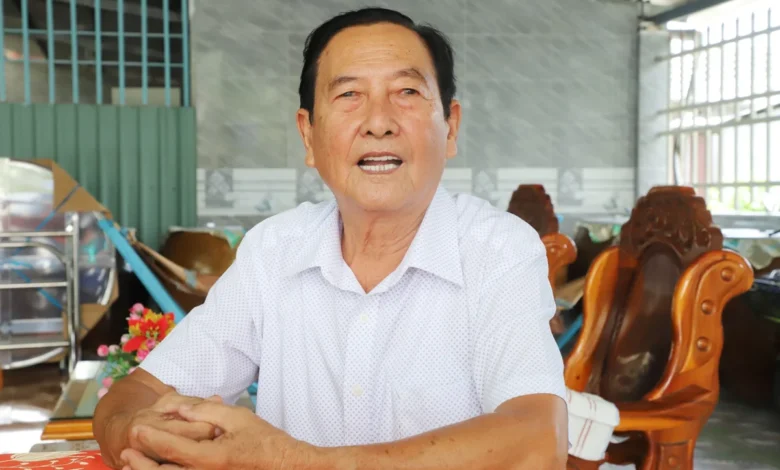
In the heart of Tan Binh Commune, Can Tho, the landscape has undergone a profound metamorphosis over the last four decades, mirroring the broader shifts in Vietnam’s agricultural sector. At the center of this transformation is Le Van Sau, an 82-year-old veteran farmer known affectionately as Sau Sau. What began as a modest 5.5-hectare plot of land once dedicated to traditional wet rice cultivation has evolved into a thriving, high-yield durian orchard that generates approximately five billion VND in annual profit. His journey is more than a personal success story; it serves as a testament to the power of integrating traditional farming wisdom with modern agricultural science and global market standards.
A Legacy of Adaptation: From Rice to Orchard
The story of Le Van Sau begins in 1976, shortly after the reunification of Vietnam, when he established his own household economy. At the time, his resources were limited to ten "cong" (a local measurement equivalent to 1,000 square meters per unit) of land, half of which was dedicated to low-margin rice production. Like many farmers in the Mekong Delta during the late 20th century, Sau struggled with the volatility of the agricultural market and the limitations of subsistence farming.
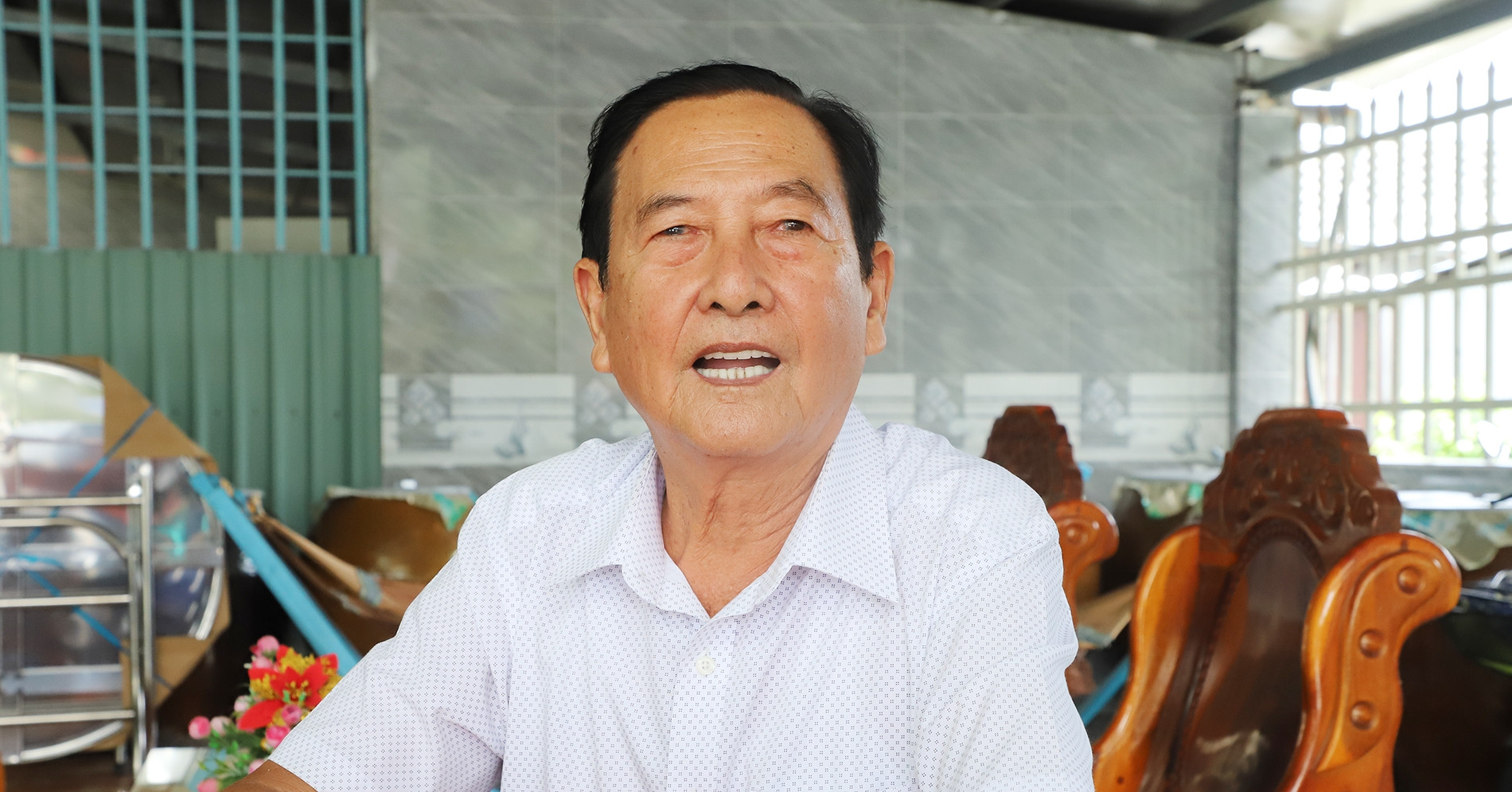
Driven by a desire to escape the cycle of poverty, Sau embarked on a multi-decade quest to diversify his crops. He transitioned from rice to sugarcane, then to oranges, but found that the long-term profitability remained elusive due to tree senescence and erratic market pricing. It was not until the late 1980s and early 1990s, when the Hau Giang Farmers’ Union organized an exposure trip to Tien Giang—a province then pioneering advanced fruit tree cultivation—that Sau found his calling. Seeing the potential for high-yield, high-value durian varieties, he returned home with a vision that would define the rest of his career.
The Pioneering Phase: The 1990s Transition
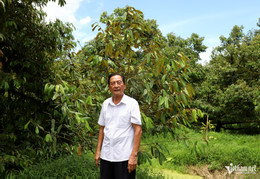
In the early 1990s, Sau made the bold decision to convert his rice fields into a durian plantation. At that time, durian was a niche crop in the region, and he was one of the first in the district to dedicate significant acreage to the fruit. His initial efforts focused on the "Kho Qua Xanh" variety, which provided a stable income that far exceeded the returns from rice.
The economic math was stark. While rice fetched roughly 1,000 VND per kilogram, the durian harvest could command prices ten times higher. By the end of the 1990s, his first 100 trees were already producing between 2.5 to 3 tons of fruit per season. This early success provided the capital necessary for land acquisition, allowing him to expand his holdings as neighbors sold their plots. By the turn of the millennium, Sau had fully committed his land to orchard management, eventually scaling to 5.5 hectares.
The Science of Farming: A Collaborative Approach
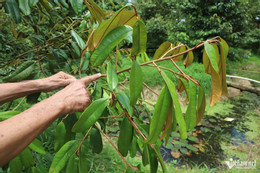
The transition to high-value durian cultivation was not without significant challenges. As Sau shifted toward premium export-grade varieties like Monthong, Musang King, and Black Thorn, he encountered complex botanical issues. Early attempts to scale production were marred by physiological disorders, including fruit drop and severe pest infestations. In some seasons, these issues resulted in losses of up to 50% of the potential crop volume.
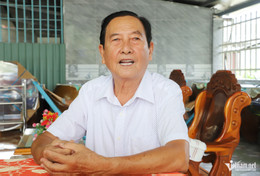
Recognizing that his experience alone was insufficient to master these temperamental varieties, Sau adopted a mantra: "Farmers must walk alongside scientists." He began a long-standing professional relationship with GS.TS Tran Van Hau from the Can Tho University Department of Plant Science. This partnership proved to be the turning point for his operation.
Professor Hau did not merely provide theoretical advice; he conducted hands-on investigations in Sau’s orchard, bringing university students to study soil health, nutrient management, and irrigation precision. This collaboration taught Sau the delicate art of "controlling" the flowering and fruiting cycles—a process that requires precise hydration management. "If you provide too much or too little water at the wrong stage, the tree will shed its entire crop within three days," Sau explains. This technical rigor transformed his farm from a traditional plot into a controlled, high-efficiency production environment.
Modernizing for Global Export Standards
Today, Sau’s operation is a model of modern Vietnamese agriculture. His orchard is not only high-producing but also fully compliant with VietGAP standards, an essential certification for international market entry. He has integrated digital tools into his daily routine, utilizing smartphones to maintain production logs, ensure traceability, and monitor global market price fluctuations.
The farm now produces over 100 tons of fruit annually for export. With a gross annual revenue of 6 to 8 billion VND, and operating costs that have been optimized through the reduction of chemical fertilizers in favor of organic alternatives, Sau retains a net profit of approximately 5 billion VND. His commitment to the environment and to his peers is equally notable. Sau frequently shares his techniques with local cooperatives and has become a mentor to younger farmers, emphasizing that the future of the Mekong Delta lies in collective knowledge-sharing and adherence to strict quality protocols.
Broader Implications for the Mekong Delta
The success of the Sau orchard serves as a case study for the economic trajectory of the Mekong Delta. The shift from low-value staple crops to high-value horticulture has been a cornerstone of Vietnam’s agricultural export strategy over the past decade. As global demand for high-quality tropical fruits grows, the ability of farmers to pivot toward international standards—such as the ones upheld by Sau—is critical.
The government of Vietnam, through the Ministry of Agriculture and Rural Development, has consistently pushed for the "digitization of the countryside" and the formalization of agricultural practices. Sau’s story demonstrates that these top-down policies are most effective when coupled with bottom-up initiatives—where farmers actively seek out academic expertise to solve localized production issues.
Furthermore, his recent experiments with the "Red-Fleshed Durian"—a rare variety with flavor profiles reminiscent of Musang King—show that he remains at the forefront of agricultural innovation. Despite the variety’s high price tag of 500,000 VND per kilogram, Sau is proceeding with caution, testing its viability before mass-planting. This deliberate approach, prioritizing data over speculative trends, is a hallmark of his business acumen.
Civic Responsibility and Recognition
Beyond the ledger, Sau is a pillar of the community in Tan Binh. His success has funded significant social contributions, including the construction of rural bridges, roads, and charitable housing for those in need. He contributes over 160 million VND annually to local funds for the poor and social welfare projects.
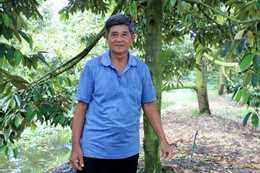
In recognition of his contributions to both the agricultural economy and the community, Sau was awarded the Third-Class Labor Medal by the President of Vietnam in 2020. Additionally, the Central Vietnam Farmers’ Union has honored him with the title of "Outstanding Vietnamese Farmer," a recognition that highlights his role in demonstrating how a lifetime of dedication can turn a modest beginning into a legacy of prosperity and innovation. As Vietnam continues to position itself as a global agricultural powerhouse, the model established by farmers like Le Van Sau provides a sustainable blueprint for the future.