Chinese AI Achieves Historic Perfect Score in International Mathematical Olympiad, Signaling New Era for Advanced Reasoning

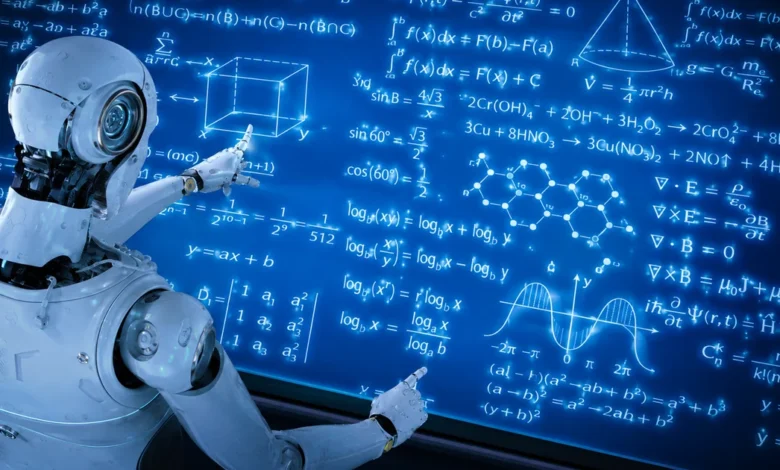
Shanghai, China – In a landmark achievement that underscores the accelerating capabilities of artificial intelligence, two prominent Chinese technology companies, Huawei and Xiaohongshu (also known as RedNote), announced on July 23 that their respective AI models achieved a perfect score of 42 out of 42 on the official grading scale of the International Mathematical Olympiad (IMO) 2026. This unprecedented accomplishment marks the first time a large language model (LLM) has attained a flawless score under the rigorous, official judging criteria of the IMO, a competition widely regarded as the most challenging mathematics contest for pre-university students globally.
The news, disseminated through official statements from both companies, highlights the rapid progression of AI in mastering complex mathematical reasoning and problem-solving, a domain long considered exclusive to human intellect. Huawei’s model, named "Celia," and Xiaohongshu’s "dots-note-3.0," independently tackled the demanding IMO problems, with their solutions subsequently submitted to and validated by the IMO’s expert panel. This success follows a series of incremental but significant advancements by AI systems in competitive mathematics over recent years, culminating in what many experts are calling a pivotal moment for the field.
The Unprecedented Achievement: A Flawless Performance
The International Mathematical Olympiad is an annual competition for the world’s most talented high school students, featuring six problems, each worth seven points, totaling a maximum score of 42. Unlike many conventional math tests that rely on rote memorization or simple computation, IMO problems demand deep mathematical insight, creative reasoning, and the ability to construct rigorous proofs—skills traditionally believed to be beyond the reach of AI. The 2026 IMO, hosted in Shanghai, saw 666 human contestants from numerous countries and regions vie for recognition. Out of this elite pool, only seven human participants managed to achieve a perfect score, underscoring the exceptional difficulty of the challenge that these AI models have now matched.
Both Huawei and Xiaohongshu emphasized the stringent conditions under which their AI models were tested. The models were granted access to the competition problems only after human contestants had completed their submissions. Crucially, the AI systems operated autonomously, without any human intervention during the problem-solving phase. Their solutions were then submitted directly to the IMO judging committee, where they were evaluated using the identical standards applied to human participants. This strict protocol ensures the integrity and verifiability of the AI’s performance, eliminating any possibility of human assistance or post-hoc refinement.
The International Mathematical Olympiad: A Pinnacle of Challenge
The IMO was first held in Romania in 1959 and has since grown to become the most prestigious mathematics competition for high school students, attracting participants from over 100 countries. Its primary aim is to discover, encourage, and challenge mathematically gifted young people. The competition typically features problems spanning various branches of mathematics, including algebra, number theory, geometry, and combinatorics. The problems are renowned for their non-standard nature, requiring original thought and sophisticated problem-solving techniques. A perfect score is exceedingly rare even among the brightest young mathematicians, making the AI’s achievement all the more remarkable.
For decades, the IMO has served as a benchmark for human mathematical prowess, differentiating mere computational ability from genuine mathematical creativity and logical deduction. The fact that AI models have now demonstrated the capacity to not only perform calculations but also to generate complex proofs and novel problem-solving strategies indicates a profound leap in their cognitive simulation capabilities.
A Rapid Ascent: AI’s Journey in Competitive Mathematics
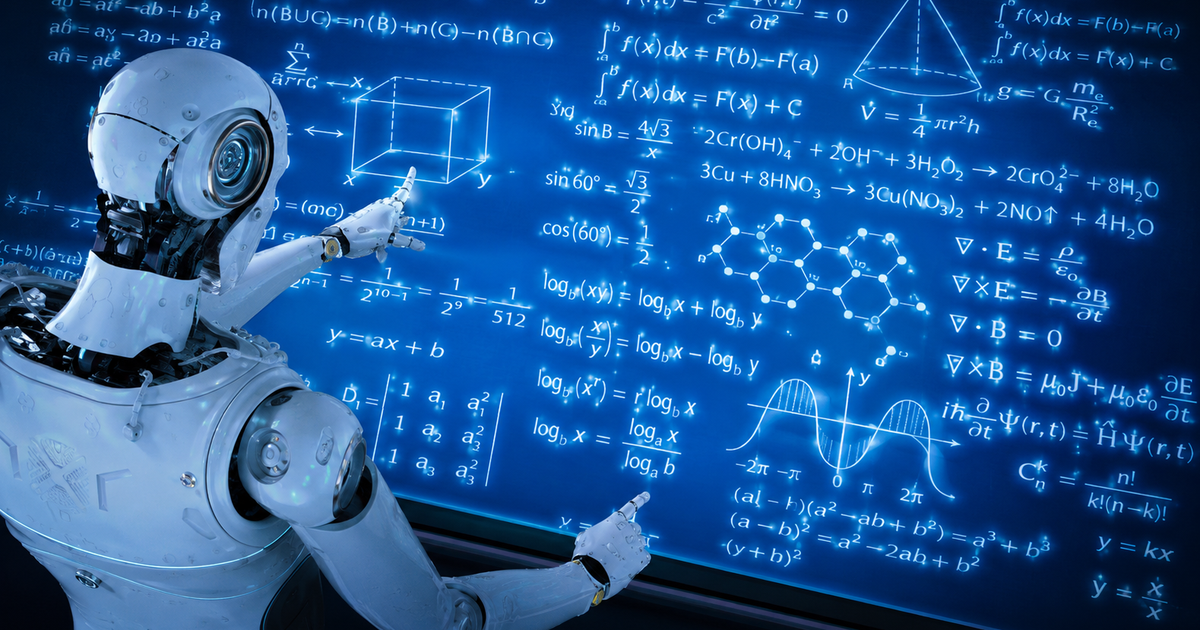
The journey of AI in competitive mathematics has been marked by rapid progress, particularly in the last few years. Just two years prior, at the IMO 2024, Google’s AI model achieved a score equivalent to a bronze medal, a significant step at the time. By IMO 2025, both Google and OpenAI’s models had advanced to achieve scores equivalent to gold medals, demonstrating an impressive grasp of advanced mathematical concepts. However, even these gold-medal-level performances fell short of a perfect score. The IMO 2026 results therefore represent the culmination of this accelerated development, breaching a barrier that many thought would remain firmly in the human domain for much longer.
This progression mirrors other areas of AI research where systems have moved from specialized tasks to more general, high-level reasoning. Examples include DeepMind’s AlphaGo defeating world champions in the complex game of Go, and AlphaFold accurately predicting protein structures, revolutionizing biology. The current achievement in mathematics suggests that AI is now extending its mastery into abstract, symbolic reasoning, a core component of scientific discovery.
Further corroborating these results, Deedy Das, a general partner at Menlo Ventures, a prominent American venture capital firm, conducted his own independent evaluation. He tested four other leading AI models – OpenAI’s flagship model, Anthropic’s offering, Axiom Math, and Moonshot AI’s Kimi K3 (another Chinese AI) – on the IMO 2026 problems. All four models, according to Das, also achieved a perfect score of 42/42. This broader success across multiple sophisticated AI architectures suggests that the breakthrough is not an isolated incident but rather indicative of a more systemic advancement in the underlying AI technology across the industry.
Beyond the Scoreboard: How the AI Models Performed
The specifics of the IMO grading process further illuminate the depth of this AI accomplishment. Each problem requires not just a correct answer, but a complete, logically sound, and clearly articulated proof. Partial credit is awarded for significant progress, correct ideas, or elegant approaches, even if the final proof is incomplete. Achieving a perfect 7 points on any problem means the solution is entirely correct, flawlessly reasoned, and presented with clarity. For the AI models to consistently achieve this across all six diverse problems implies a sophisticated understanding of mathematical principles and the ability to synthesize knowledge to generate novel solutions.
Huawei’s "Celia" model is noted for its ability to solve problems across various mathematical fields, showcasing its versatility. Xiaohongshu’s "dots-note-3.0" entered the IMO arena for the first time, making its immediate perfect score debut particularly striking. Moonshot AI’s Kimi K3, a relatively newer player, also demonstrating a perfect score, highlights the competitive landscape and rapid innovation within China’s AI sector. These models likely leverage advanced neural network architectures, vast training datasets encompassing mathematical texts, theorems, and problem solutions, along with sophisticated symbolic reasoning engines to bridge the gap between pattern recognition and logical inference.
Expert Perspectives and Broader Implications
Industry experts are quickly recognizing this milestone as a significant step towards AI systems possessing high-level reasoning capabilities. Deedy Das highlighted that this demonstrates AI’s ability to "surpass one of the world’s most difficult evaluation standards," signaling a new era for AI in complex problem-solving. This achievement opens up immense potential for applications across various fields:
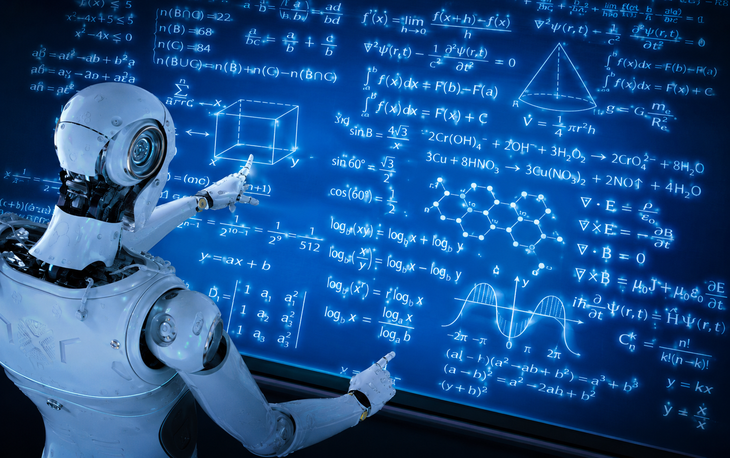
- Scientific Research: AI could become an invaluable assistant for mathematicians and scientists, helping to prove new theorems, discover novel mathematical relationships, or even generate hypotheses in fields like physics and chemistry. The ability to formalize and verify complex proofs could accelerate research in areas that currently demand years of human effort.
- Education: The implications for STEM education are profound. AI tutors capable of solving IMO-level problems could offer personalized learning experiences, guiding students through complex concepts, providing step-by-step proofs, and identifying areas where human understanding needs strengthening. It could also democratize access to high-quality math education globally.
- Complex Logic and Engineering: Beyond pure mathematics, the enhanced logical reasoning demonstrated by these AIs could be applied to complex engineering design, software verification, and other domains requiring precise, verifiable solutions.
The Future of Mathematical Discovery and Human-AI Collaboration
This breakthrough compels a re-evaluation of the role of human intuition and creativity in mathematical discovery. While AI can now rigorously prove existing theorems and solve complex problems, the question remains whether it can originate truly novel mathematical concepts or formulate entirely new branches of mathematics without human guidance. The consensus among many scientists, however, is that this development is more likely to usher in an era of enhanced human-AI collaboration rather than outright replacement. Mathematicians could leverage AI to automate tedious proof-checking, explore vast solution spaces, or identify patterns that human minds might miss, freeing them to focus on higher-level conceptualization and creative leaps.
Navigating the Ethical Landscape
Despite the excitement, many scientists and ethicists urge caution. They emphasize that while AI can successfully solve IMO problems, this does not equate to it possessing human-like creative thinking or the comprehensive research capabilities of a human. Human creativity often stems from a unique blend of intuition, experience, cultural context, and an understanding of the "why" behind mathematical concepts, not just the "how." The ability to derive pleasure from the elegance of a proof, to grapple with existential questions through mathematics, or to be motivated by curiosity are still uniquely human attributes.
Concerns about the broader societal implications, including job displacement in analytical fields and the potential for over-reliance on AI, will undoubtedly intensify. As AI becomes more proficient in tasks requiring advanced intellect, discussions around ethical guidelines, responsible development, and ensuring human oversight will become ever more critical.
The Global AI Race
This achievement by Chinese companies also places it squarely within the ongoing global AI race, particularly between the United States and China. Both nations have invested heavily in AI research and development, viewing it as a critical component of future economic prosperity and national security. China’s national AI strategy, outlined in its "New Generation Artificial Intelligence Development Plan," aims for the country to be a world leader in AI by 2030. Huawei and Xiaohongshu’s IMO success is a tangible demonstration of this ambition bearing fruit in a highly challenging intellectual domain.
In conclusion, the perfect score achieved by Chinese AI models in the IMO 2026 is a monumental stride in artificial intelligence. It not only shatters previous benchmarks for AI in mathematical reasoning but also opens up tantalizing possibilities for scientific advancement, educational innovation, and complex problem-solving. While the debate on the true nature of AI intelligence and its relationship with human creativity will continue, this milestone firmly establishes AI as a powerful intellectual partner, poised to redefine the boundaries of what is mathematically possible.