Cho Ray Hospital and Phu Quoc Medical Center Perform Historic First On-Island Interventions to Save Acute Myocardial Infarction Patients

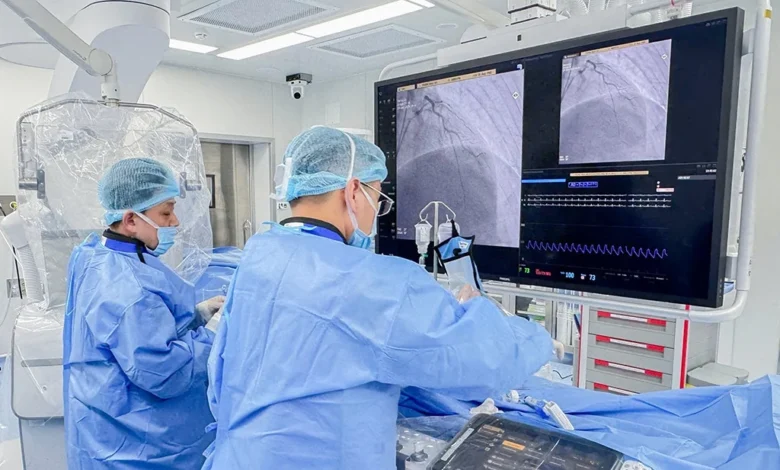
On September 19, Associate Professor Dr. Ly Ich Trung, Head of the Interventional Cardiology Department at Cho Ray Hospital, announced a monumental milestone in Vietnam’s regional healthcare landscape. Cho Ray Hospital, in close collaboration with a medical facility in Phu Quoc, successfully executed high-risk, life-saving emergency cardiovascular interventions directly on the island for two patients suffering from acute myocardial infarction (AMI).
This unprecedented medical achievement marks the very first successful coronary interventions performed on the island since the two institutions formalized their strategic professional cooperation agreement in July 2026. By eliminating the hazardous and time-consuming necessity of transferring critical cardiac patients to mainland hospitals, the medical teams successfully capitalized on the critical "golden hour," averting catastrophic outcomes and setting a new benchmark for emergency medical care in Vietnam’s remote and island districts.
The Clinical Manifestation of Acute Myocardial Infarction
Acute myocardial infarction, commonly known as a heart attack, remains one of the leading causes of morbidity and mortality globally and within Vietnam. It occurs when blood flow decreases or stops in one of the coronary arteries, causing damage to the heart muscle. In the cases of both patients treated in Phu Quoc, the clinical presentation involved ST-segment elevation myocardial infarction (STEMI), widely recognized by cardiologists as the most lethal and time-sensitive form of heart attack.
In STEMI cases, a complete and prolonged blockage of an epicardial coronary artery leads to transmural myocardial ischemia—meaning the entire thickness of the heart muscle begins to die rapidly. Medical consensus dictates that every minute of delayed reperfusion significantly escalates mortality rates. Statistical data underscores that for every hour intervention is delayed, a patient’s relative risk of mortality increases by 5% to 10%, while irreversible myocardial necrosis expands exponentially. Historically, patients experiencing severe STEMI in remote island regions like Phu Quoc faced grueling maritime or air transport logistics to reach mainland specialized centers in Ho Chi Minh City, often exhausting the precious golden window of opportunity and resulting in extensive, permanent cardiac damage or death.
Chronology of the Emergency Interventions
The successful saving of the two patients unfolded over an intense, high-stakes 48-hour period in mid-September, highlighting the seamless coordination between deployed specialists from Cho Ray Hospital and the resident medical personnel in Phu Quoc.
The first emergency case arrived at the island facility at midnight on September 14. The patient, identified as 65-year-old L.V.Q., possessed a heavy prior history of cigarette smoking—a major independent risk factor for accelerated atherosclerosis and coronary artery disease. Mr. Q. presented to the emergency department at 00:00 hours exhibiting classic, alarming symptoms of acute distress: severe dyspnea (shortness of breath), profuse cold sweating, debilitating dizziness, and profound fatigue. Immediate diagnostic evaluations, including a 12-lead electrocardiogram (ECG), confirmed an acute myocardial infarction involving the inferior wall of the myocardium, categorized as Killip class III, indicating pulmonary congestion and severe hemodynamic compromise.
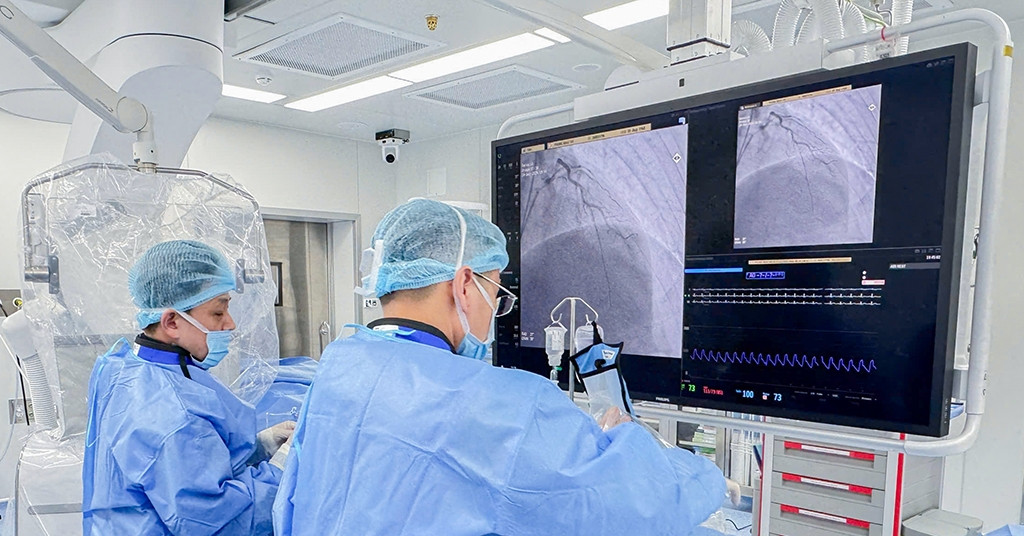
Recognizing the imminent danger to the patient’s life, Dr. Nguyen Tuan Anh from the Interventional Cardiology Department at Cho Ray Hospital—who had been officially deployed to Phu Quoc just a day prior on September 13—immediately mobilized. Operating alongside the local medical team, Dr. Tuan Anh spearheaded the emergency catheterization procedure. By 01:00 AM on September 14, just one hour after the patient’s arrival, the surgical team successfully performed primary percutaneous coronary intervention (PCI). They achieved successful recanalization and restoration of blood flow in the distal right coronary artery. The intervention instantly halted the ischemic cascade, leading to a rapid reduction in the patient’s clinical symptoms and stabilizing his vital signs.
Scarcely had the first intervention concluded when the medical team was confronted with a second critical emergency late into the same night. The second patient, 58-year-old P.N.V., presented with a complex medical history marked by chronic cigarette smoking, long-standing type 2 diabetes mellitus, hyperlipidemia, and a two-week history of worsening exertional chest pain and progressive shortness of breath.
Upon comprehensive clinical evaluation and advanced diagnostic imaging, specialists diagnosed Mr. V. with subacute myocardial infarction, mild heart failure classified under New York Heart Association (NYHA) Class II, and severe lipid metabolism disorders. The pathology revealed a chronically or subacutely occluded mid-segment of the left anterior descending (LAD) artery—often referred to in cardiology as the "widow-maker" lesion due to its supply of blood to the majority of the left ventricle.
Operating under intense pressure, the interventional team planned and executed a complex revascularization procedure. By 20:00 hours on September 14, the specialists successfully reopened the occluded LAD artery, restoring normal coronary perfusion and preventing catastrophic left ventricular failure.
Strategic Implications of On-Island Advanced Cardiology
The successful execution of these complex procedures directly on Phu Quoc Island represents a paradigm shift in the decentralization of advanced medical care in Vietnam. Traditionally, patients presenting with STEMI in remote tourist hubs or island districts faced insurmountable geographical barriers. Arranging emergency medical evacuation (Medevac) to mainland hospitals in Ho Chi Minh City involves navigating unpredictable weather conditions, coordinating complex air or sea logistics, and enduring transit times that frequently exceed the critical therapeutic window.
By establishing a permanent or rotational specialist presence and upgrading infrastructural capabilities under the professional cooperation framework initiated in July 2026, Cho Ray Hospital and its Phu Quoc counterpart have bridged the healthcare equity gap. Performing primary PCI on-site eliminates transit delays, directly addresses the core pathophysiological mechanism of AMI, and preserves maximal myocardial tissue viability. Medical literature consistently demonstrates that timely primary PCI reduces short-term mortality, lowers the incidence of malignant arrhythmias, preserves ejection fraction, and significantly enhances long-term functional recovery and quality of life for survivors.
Post-Procedural Recovery and Patient Outcomes
Following the successful revascularization procedures, both patients were transferred to specialized post-intervention care units for rigorous hemodynamic monitoring, rhythm tracking, and medication optimization to manage underlying risk factors such as hypertension, diabetes, and dyslipidemia.
Medical teams closely observed both men for signs of reperfusion injury, heart failure progression, or ischemic recurrence. Benefiting from the immediate restoration of coronary blood flow and the absence of transport-induced stress, both Mr. Q. and Mr. V. demonstrated remarkable clinical trajectories. Their cardiac enzymes normalized, their respiratory status stabilized, and their subjective complaints of chest pain and dyspnea completely resolved within days.
Following four days of intensive monitoring and uneventful recovery, both patients were discharged in stable, satisfactory medical condition on September 18. They were provided with comprehensive cardiac rehabilitation guidelines, secondary prevention pharmacotherapy regimens, and strict instructions for outpatient cardiology follow-ups.
Broad Impact on Vietnam’s Healthcare Infrastructure
The triumph of the Cho Ray-Phu Quoc medical collaboration serves as a compelling proof-of-concept for the broader national strategy to enhance secondary and tertiary healthcare delivery in remote and underserved regions of Vietnam. As cardiovascular diseases continue to rise in prevalence, driven by shifting lifestyles, aging populations, and metabolic risk factors, the decentralization of high-tech medical interventions is no longer a luxury but an urgent necessity.
Healthcare analysts and senior medical officials note that the model established through this partnership can serve as a blueprint for other remote archipelagos and mountainous provinces across the country. By pairing premier tertiary institutions like Cho Ray Hospital—renowned for its expertise in critical care, trauma, and cardiology—with regional health centers, Vietnam is steadily building a more resilient, responsive, and equitable healthcare network.
Ultimately, the successful rescue of these two patients underscores the profound impact of professional foresight, technological advancement, and inter-institutional cooperation. It reaffirms a fundamental truth in emergency medicine: when advanced medical expertise meets timely intervention, lives can be pulled back from the brink, transforming remote geographical isolation from a fatal barrier into a manageable challenge.