Ha Tinh Land Auction Sparks Controversy as Rural Starting Prices Reach Record Highs Amid Market Stagnation

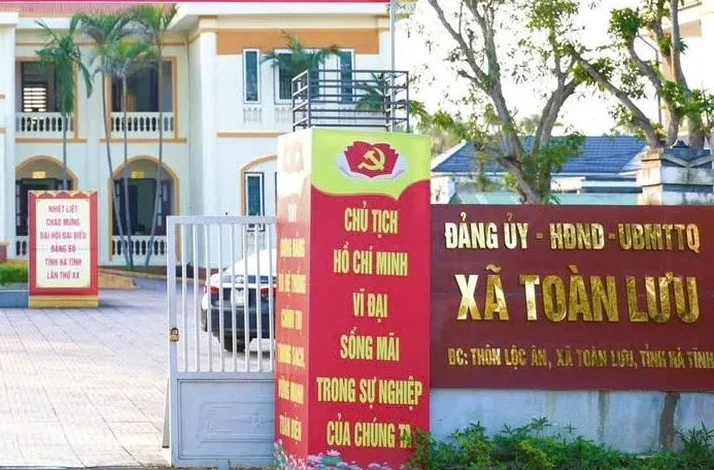
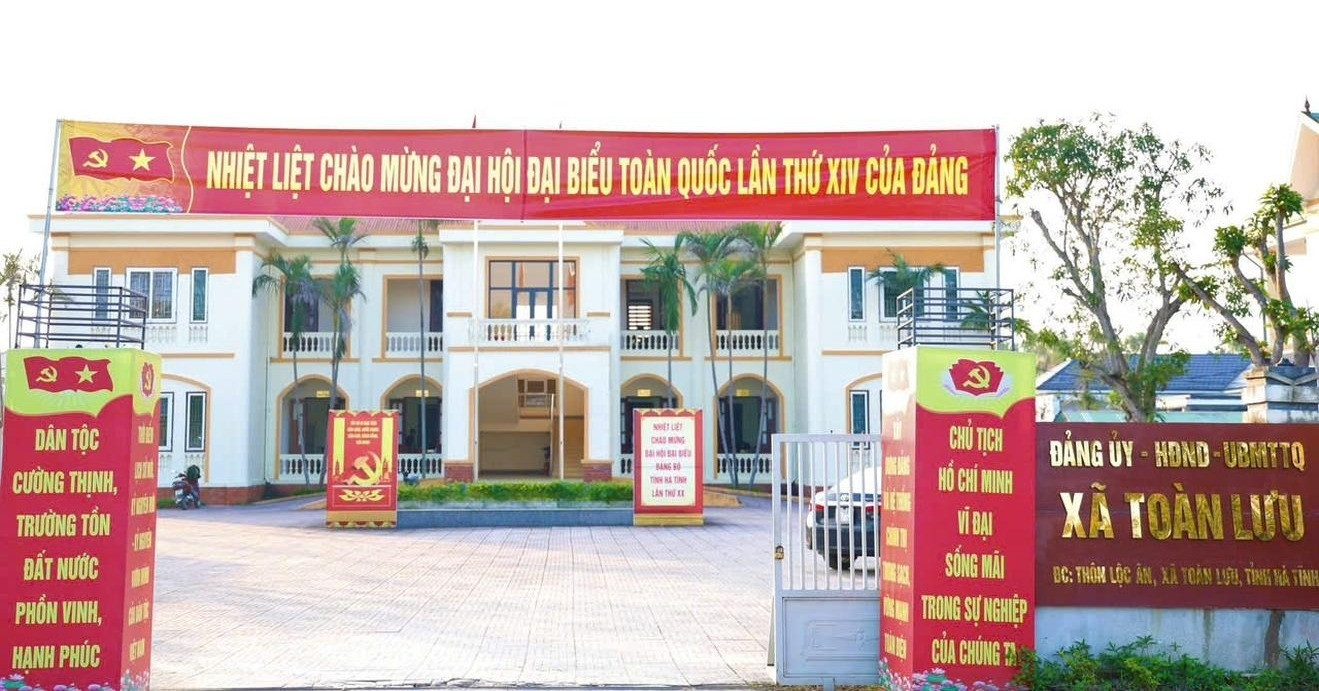
On July 23, the Hong Linh Auction Partnership Company, based in Ha Tinh Province, officially issued a public notice regarding the auction of land use rights for 15 residential lots located in the Loi Vai area of Thach Vinh Village—formerly known as Vinh An—within Toan Luu Commune. The announcement has immediately drawn significant attention from investors and local residents alike, not merely for the volume of land being offered, but for the unprecedented starting prices attached to these rural plots. At a time when the regional real estate market is characterized by a notable cooling period, the decision to set floor prices at levels typically reserved for more urbanized or developed hubs has raised questions about the methodology of land valuation and the accessibility of housing for local populations.
Comprehensive Breakdown of the Land Assets and Pricing Structures
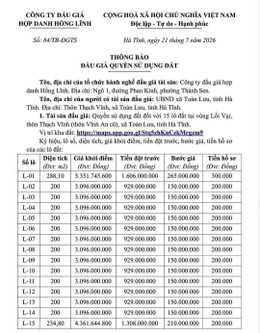
The 15 lots scheduled for auction vary in size and strategic positioning, ranging from 200 square meters to a maximum of 288.1 square meters. According to the detailed dossier provided by the Hong Linh Auction Partnership Company, the inventory is categorized into three distinct pricing tiers based on area and location within the Loi Vai planning zone.
The bulk of the offering consists of 13 lots, each measuring exactly 200 square meters. These plots have been assigned a starting price of 3.096 billion VND per lot. When calculated on a per-square-meter basis, this equates to approximately 15.5 million VND per square meter. For a commune that is predominantly agricultural and rural in character, this baseline figure represents a substantial financial barrier to entry.
Beyond the standard plots, the auction features two larger corner or premium-positioned lots. The largest of these measures 288.1 square meters and carries a starting price exceeding 5.351 billion VND, which translates to roughly 18.6 million VND per square meter. The second specialized lot, covering 234.8 square meters, has been listed with a starting floor price of more than 4.361 billion VND.
The financial requirements for participation in the auction are equally rigorous. The organizing unit has specified that the "earnest money" or deposit required to secure a bidding slot ranges from 929 million VND to over 1.606 billion VND per lot, depending on the specific plot’s value. Furthermore, the "price step"—the minimum increment by which a bid must be raised during the proceedings—has been set between 150 million and 265 million VND per step. These high entry costs suggest that the auction is geared toward high-net-worth individuals or institutional investors rather than local families seeking to build homes.
Chronology of the Auction Process and Procedural Requirements
The auction process for the Loi Vai land fund is being conducted under the authority of the People’s Committee of Toan Luu Commune, which acts as the asset owner. The Hong Linh Auction Partnership Company has been contracted to manage the technical and legal aspects of the sale.
The timeline for the event began with the public announcement on July 23, followed by a period for the sale and submission of application dossiers. Potential bidders are required to navigate a multi-stage process that includes:
- Public Notice and Document Distribution: The dissemination of information regarding lot locations, legal status, and infrastructure.
- Site Inspections: Providing opportunities for interested parties to view the physical boundaries of the land in Thach Vinh Village.
- Deposit Payment: The mandatory transfer of earnest money into a designated escrow account to ensure the seriousness of the bids.
- The Auction Session: The formal event where bids will be cast, likely following a multi-round or sealed-bid format, as per the current regulations governing land use rights in Ha Tinh Province.
This structured approach is intended to ensure transparency and compliance with the Law on Property Auction. However, the timing of this specific auction is particularly noteworthy given the broader economic climate in North-Central Vietnam.
Market Context: Rural Land Pricing vs. Regional Economic Stagnation
The announcement of these 15 lots comes at a sensitive juncture for the Ha Tinh real estate market. Throughout the late months of 2023 and the first half of 2024, the province has witnessed a "quiet" market, with transaction volumes dropping significantly compared to the "land fever" periods of 2021 and 2022. During those peak years, speculative capital flooded rural districts, driving prices up; however, the subsequent tightening of credit by the State Bank of Vietnam and more stringent regulations on land subdivision (often referred to as "splitting plots") led to a sharp correction.
In this context, the starting prices of 15.5 to 18.6 million VND per square meter in Toan Luu Commune are being viewed by market analysts as "bold." For comparison, similar rural land in neighboring districts has often struggled to clear auctions when priced above 10 million VND per square meter in recent months. The discrepancy between the official valuation and the current market liquidity suggests a potential disconnect that could lead to "failed" auctions, where no bidders step forward, or "inflated" auctions, where only speculators participate.
Local Reactions: The Growing Gap in Housing Affordability
The primary concern voiced by the local community in Toan Luu is the exclusion of native residents from the land market. Mr. Nguyen Van Tam, a resident of Toan Luu Commune, shared his shock upon reviewing the auction notice. Mr. Tam had intended to purchase a plot for his son, who is planning to marry and establish a separate household.
"I expected that for rural land, the starting price would be reasonable enough for local families to participate," Mr. Tam stated. "When I saw that the cheapest lot was over 3 billion VND, I was truly surprised. With the average income and the general standard of living in this area, such a starting price is extremely high. It makes it nearly impossible for a young couple starting out to afford a place to live in their own hometown."
Mr. Tam’s sentiment is echoed by many in Thach Vinh Village. There is a growing fear that the land will be snatched up by "outsider" investors from larger cities like Ha Tinh City or even Hanoi and Vinh, who view the land as a speculative asset rather than a place of residence. This phenomenon often leads to "ghost plots"—land that remains vacant for years as owners wait for prices to rise, while local demand for housing remains unfulfilled.
Official Response and Justification from Local Authorities
In response to the public’s concerns regarding the high starting prices, leaders of the Toan Luu Commune People’s Committee have defended the valuation. Speaking with reporters, a representative of the commune leadership emphasized that the 15 lots in question are "prime real estate" within the local context.
The lots are situated in the Loi Vai area, which is in close proximity to the Commune People’s Committee headquarters and key infrastructure. According to the authorities, the location offers significant convenience for residential and commercial use.
Regarding the specific price points, the leadership clarified that the figures were not determined arbitrarily. "The starting prices were established by an independent consultancy firm based on a thorough market survey," the official explained. "These prices were subsequently reviewed and agreed upon by local authorities and relevant provincial departments before the auction was organized. We believe they reflect the true potential value of the land fund."
The commune also noted that the revenue generated from land auctions is a critical component of the local budget, providing the necessary funds for infrastructure development, such as paving rural roads, building schools, and improving irrigation systems that benefit the entire community.
Broader Implications and the Risk of "Virtual Waves"
The situation in Ha Tinh does not exist in a vacuum. A recent auction in the neighboring province of Nghe An serves as a cautionary tale for local officials and investors. In Bach Ha Commune, Nghe An, 19 lots of land were recently auctioned with starting prices that were also considered high. However, the final winning bids for many of those lots were more than four times the starting price.
While such a result might initially seem like a success for the provincial treasury, it often triggers a "virtual wave" or "price bubble." Shortly after the Nghe An auction, the winning lots were immediately listed for resale on social media and real estate platforms with massive markups. This type of speculative behavior creates a distorted market where the price of land no longer reflects its utility or the economic reality of the people living near it.
For Toan Luu Commune, the risk is twofold. On one hand, if the auction succeeds at these high prices, it may further cement the province’s reputation for having unaffordable rural land, discouraging long-term settlement and investment. On the other hand, if the auction fails due to a lack of interest at such high floor prices, it could signal a lack of confidence in the local market and delay essential public works projects that rely on land-use revenue.
Conclusion: Balancing Development and Social Equity
The upcoming auction in Thach Vinh Village will be a litmus test for the Ha Tinh real estate market. It highlights the ongoing tension between local governments’ need to maximize land-use revenue and the social necessity of providing affordable housing for citizens.
As the date of the auction approaches, all eyes will be on the Loi Vai planning zone. Will the 15 lots find buyers willing to pay a premium for rural land, or will the high starting prices serve as a deterrent in a cooling market? Regardless of the outcome, the case of Toan Luu Commune underscores the need for a more nuanced approach to land valuation—one that considers not just the "market potential" as determined by consultants, but also the economic capacity of the local population and the long-term stability of the community.
For now, residents like Mr. Tam remain on the sidelines, watching as the land they once hoped to call home moves further out of reach, transformed into a high-stakes financial instrument. The result of this auction will likely influence how other communes in Ha Tinh and across Central Vietnam approach land management and public auctions in the years to come.