Dong Nai Seeks New Growth Drivers Through Technology and Digital Transformation at DIGIFEST 2026


The Science, Technology, Innovation, and Digital Transformation Week of Dong Nai Province for the year 2026, officially known as DIGIFEST Dong Nai 2026, concluded its dynamic three-day run on November 1, marking a pivotal milestone in the locality’s ongoing economic and administrative modernization. Held under the comprehensive theme "Digital Transformation and Innovation: From Market Thinking to Real-World Action—Forging New Growth Drivers for Dong Nai Province," the high-profile event served as a collaborative crucible for policymakers, tech pioneers, industry leaders, and academic researchers. Throughout the three-day program from October 30 to November 1 at the Dong Nai Investment, Trade, and Tourism Promotion Center in Tan Trieu Ward, the event operated under a disciplined operational philosophy: "Three Realities—Real Problems, Real Solutions, Real Effectiveness." This pragmatic framework guided dozens of exhibitions, panel discussions, forums, and tech showcases, ensuring that every proposed innovation addressed a concrete socioeconomic bottleneck in the rapidly developing southern hub.
Background Context and Strategic Vision
Dong Nai Province has long stood as one of Vietnam’s foremost industrial engines, characterized by a dense concentration of manufacturing facilities, industrial parks, and rapid urbanization. However, as global supply chains evolve and traditional industrial models face sustainability pressures, local leadership recognized the imperative to transition from labor-intensive growth to a knowledge-driven, technology-enabled economy. DIGIFEST 2026 was conceived as a direct response to this strategic challenge, functioning as an institutional platform to harness emerging technologies—such as Artificial Intelligence (AI), the Internet of Things (IoT), and digital twin technology—to solve municipal and regional challenges.
During the opening and plenary sessions, provincial leaders emphasized that digital transformation is no longer a peripheral initiative but the primary catalyst for enhancing administrative efficiency, improving corporate competitiveness, and elevating the overall quality of life for local residents. The event successfully bridged the gap between theoretical technological capability and actionable municipal implementation by presenting targeted challenges directly to the tech community and inviting rigorous, market-tested solutions.
Addressing Real-World Municipal Challenges
At the core of DIGIFEST 2026 was the practical application of smart city frameworks to everyday urban management. Nguyen Van Ut, Chairman of the Dong Nai Provincial People’s Committee, outlined the province’s primary focus on four critical municipal domains during the event’s high-level forums.
The first priority centers on intelligent transportation systems. Dong Nai is currently deploying advanced traffic signal control systems driven by real-time data analytics, automated electronic toll collection, and computer vision-powered traffic surveillance designed to enforce traffic regulations and optimize public bus fleet management. These smart transit initiatives are critical for easing congestion fueled by the province’s soaring vehicle registration rates and expanding commuter base.
The second priority addresses environmental protection and disaster early warning systems. The local government has initiated continuous automated environmental monitoring protocols targeting air quality metrics as well as water purity levels in the Dong Nai River and Tri An Lake. Additionally, advanced flood warning applications have been integrated into citizen-facing mobile platforms, providing real-time routing alerts during heavy precipitation events to safeguard commuters and commercial transport.
The third focus area leverages Geographic Information Systems (GIS) to streamline technical infrastructure management. Dong Nai has embarked on an ambitious journey to digitize urban mapping data, including municipal green spaces, public lighting grids, underground utility networks, and GPS-tracked municipal solid waste collection routes.
Finally, the province has placed immense emphasis on upgrading public administrative services and citizen feedback mechanisms. Nguyen Minh Quang, Deputy Director in charge of the Dong Nai Department of Science and Technology, noted that the province aims to achieve a 100% online resolution rate for eligible administrative dossiers, pushing local citizen and business satisfaction indices above 99%. Mr. Quang stressed that a truly smart city transcends isolated gadget purchases or fragmented software installations; rather, it relies on an interconnected, data-driven administrative ecosystem where information flows seamlessly across municipal departments to optimize urban governance.
Leveraging the Long Thanh International Airport Advantage
Beyond immediate urban management, DIGIFEST 2026 placed profound strategic emphasis on maximizing the monumental economic potential offered by the upcoming Long Thanh International Airport. Integrated with the region’s existing maritime ports, riverways, and extensive industrial park networks, the new aviation hub represents a generational opportunity to establish a high-value economic corridor.
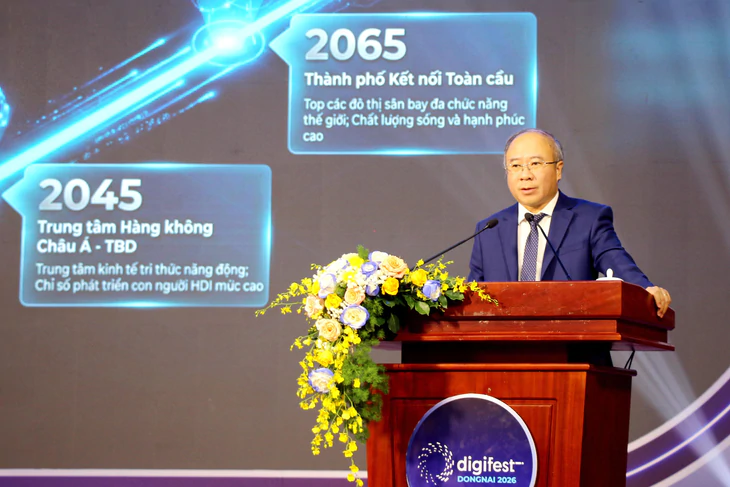
During a specialized symposium dedicated to developing smart urban ecosystems, logistics hubs, and aviation-maritime-industrial synergies, delegates debated frameworks for establishing a smart logistics ecosystem. Discussions centered on creating a seamless supply chain network connecting "City – Airport – Seaport – Industrial Park" through the deployment of AI-driven predictive logistics, IoT supply chain tracking, and digital twin modeling.
Nguyen Minh Quang underscored that transport infrastructure, logistics architecture, and data pipelines must be calculated comprehensively starting from the initial urban and regional planning phases. Solutions must originate from the genuine operational needs of enterprises and state governance requirements, ensuring full interoperability with legacy systems.
Echoing this perspective, Deputy Minister of Science and Technology Pham Duc Long delivered an authoritative address urging Dong Nai to aggressively upgrade its legacy industrial base while accelerating high-tech manufacturing. According to Mr. Long, the province must strategically harness the Long Thanh International Airport to anchor a high-value-added economic ecosystem. He advised local authorities to meticulously prioritize challenges, clearly define expected outputs, assign distinct institutional accountability, allocate adequate financial resources, and establish strict implementation timelines. Crucially, the Deputy Minister emphasized that all proposed technological solutions must undergo rigorous pilot testing and impact evaluation before widespread municipal deployment.
Event Highlights, Exhibition Scale, and Concrete Commitments
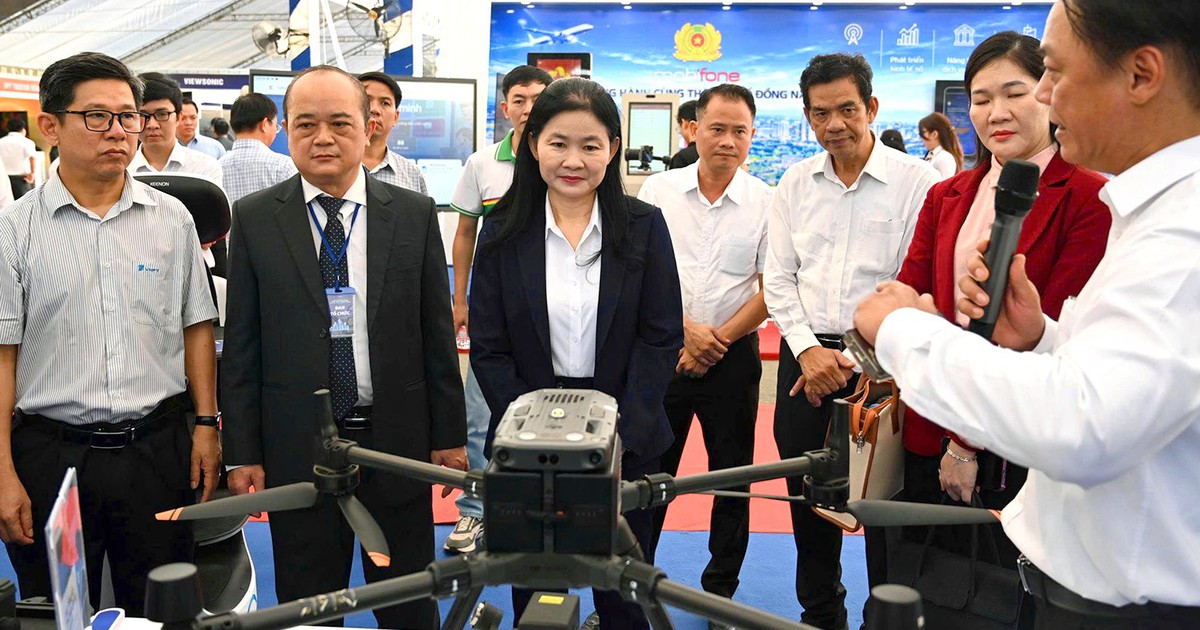
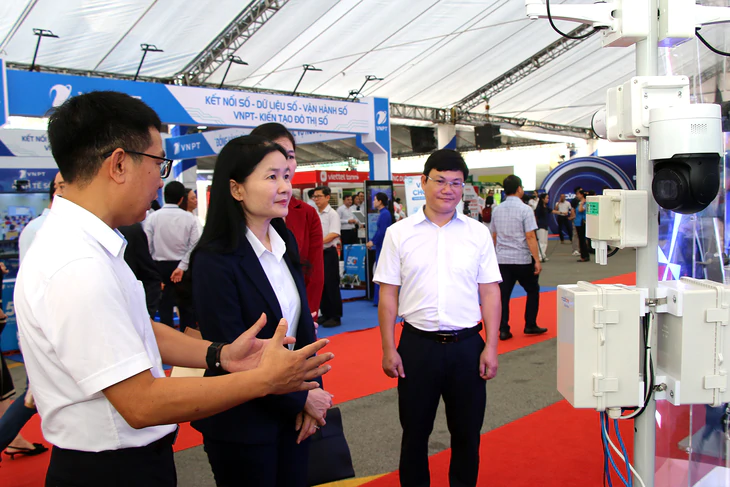
The three-day festival was marked by substantial commercial and institutional engagement. The venue hosted more than 200 specialized exhibition booths showcasing cutting-edge technological innovations, scientific research milestones, national digital transformation achievements, and local OCOP (One Commune One Product) agricultural specialties. These pavilions attracted thousands of visitors, ranging from tech entrepreneurs and venture capitalists to local students and agricultural cooperatives.
A defining characteristic of DIGIFEST 2026 was its transition from dialogue to formal legal commitment. At the closing ceremony, the organizing committee publicly announced the results of the "problem-solving challenge" matching process. Rather than concluding with abstract recommendations, the event culminated in the formal signing of cooperation agreements and binding implementation commitments between the Dong Nai Provincial People’s Committee, the Ministry of Science and Technology, and various technology solution providers. These agreements establish explicit Key Performance Indicators (KPIs), execution timelines, and evaluative criteria to ensure that the innovations showcased during the week transition smoothly from exhibition floors into live municipal operations.
Broader Economic Implications and Outlook
The conclusion of DIGIFEST 2026 signals a definitive shift in Dong Nai Province’s economic trajectory. By institutionalizing the "three realities" approach—identifying real problems, deploying tailored solutions, and measuring tangible effectiveness—the province is positioning itself as a progressive destination for domestic and international technology investments.
The convergence of the Long Thanh International Airport development with advanced digital governance frameworks creates a compelling value proposition for multinational corporations seeking resilient, technologically advanced operational bases in Southeast Asia. As Dong Nai operationalizes the data-sharing agreements, smart traffic networks, and automated environmental monitoring systems forged during DIGIFEST 2026, the province is laying a resilient, future-proof foundation for sustainable regional growth that can serve as a viable benchmark for other industrializing localities across Vietnam.
Related posts: