Decoding Vietnam Road Signs Understanding the End of Prohibition Rules and Safe Overtaking Protocols

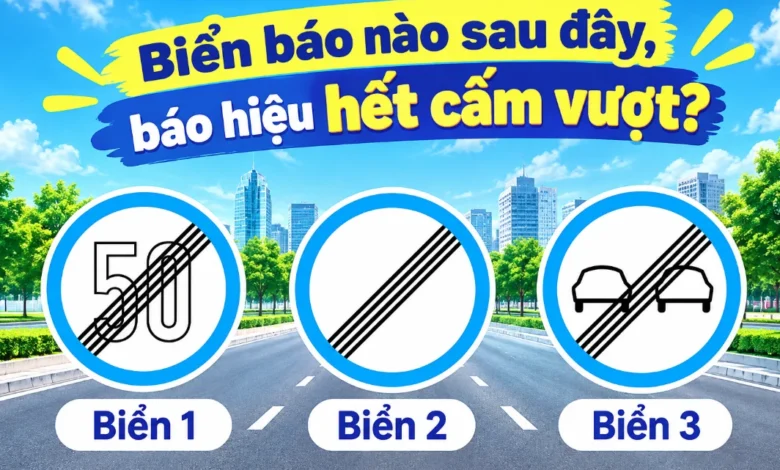
Navigating Vietnam growing and increasingly sophisticated road network requires a comprehensive understanding of traffic signals, regulatory markings, and national infrastructure codes. Among the most critical yet frequently misunderstood signs encountered by motorists on national highways and urban arterials are those governing passing maneuvers. Specifically, recognizing the exact moment when a restriction on overtaking is lifted can mean the difference between maintaining a smooth, efficient traffic flow and committing an inadvertent traffic violation or, worse, causing a catastrophic collision.
According to the National Technical Regulation on Road Signs QCVN 41:2019, issued by the Ministry of Transport, the transition from restricted to unrestricted zones is marked by specific circular blue-and-white plates overlaid with diagonal black stripes. These markers serve as vital waypoints for drivers, dictating precisely where vehicle maneuvers can resume without legal penalty. As traffic authorities continue to roll out standardized signage across provincial and national routes, mastering these visual cues has become an essential competency for both seasoned motorists and newly licensed drivers.
Main Facts and Regulatory Framework
The governance of road traffic in Vietnam operates under a strict legal framework designed to minimize accidents, reduce congestion, and establish clear liabilities in the event of an incident. Within this framework, regulatory signs—categorized systematically under QCVN 41:2019—play an uncompromising role. Passing prohibitions, typically initiated by Sign P.125 (Prohibiting Overtaking) and Sign P.126 (Prohibiting Trucks from Overtaking), are implemented on road segments featuring reduced visibility, sharp curves, narrow bridges, or high accident histories.
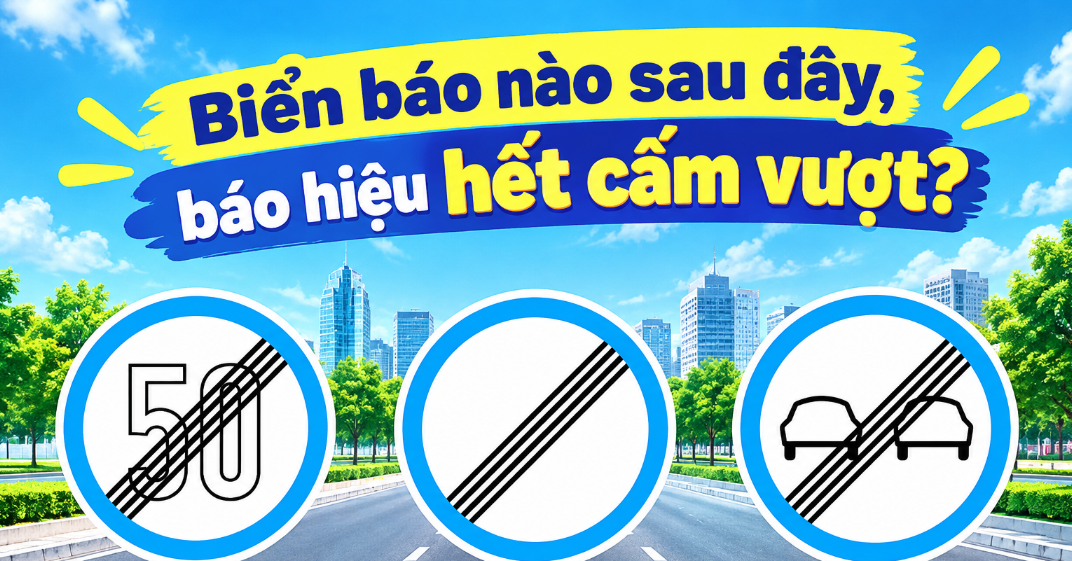
Conversely, the termination of these prohibitions is signaled by dedicated cancellation markers. The primary marker governing this transition is Sign DP.133, formally designated as the "End of Overtaking Prohibition" sign. Upon encountering this specific visual cue, drivers are legally permitted to resume overtaking maneuvers, provided that surrounding road conditions are entirely safe, visibility is unobstructed, and all other general traffic laws are meticulously observed.
However, distinguishing between various cancellation markers is a common challenge for motorists. For instance, Sign DP.135—representing the "End of All Prohibitions"—often creates confusion because it simultaneously nullifies a broader array of preceding restrictions, including minimum distance requirements and parking bans. Understanding the nuanced differences between these signs is not merely an academic exercise for theoretical driving examinations; it is a foundational pillar of defensive driving on Vietnam highways.
Chronology and Historical Evolution of Signage Standards
The standardization of road signaling in Vietnam has undergone a significant evolution over the past two decades, driven by rapid motorization, infrastructure expansion, and a national commitment to aligning with international transport agreements such as the Vienna Convention on Road Signs and Signals.
Prior to the introduction of modernized technical regulations, Vietnamese roads frequently suffered from inconsistent signage, ambiguous placement, and overlapping restrictions that baffled local and international drivers alike. The implementation of QCVN 41:2010 marked a major turning point, establishing uniform dimensions, colors, and symbolic meanings for regulatory signs. This was subsequently updated and refined by QCVN 41:2019, which currently governs the design and application of traffic controls nationwide.
| Regulation Year | Key Milestone | Primary Impact on Passing Regulations |
|---|---|---|
| QCVN 41:2010 | Introduction of standardized national road codes | Standardized shapes and colors for overtaking prohibitions and cancellations. |
| QCVN 41:2016 | First major revision and clarification of sign hierarchies | Clarified the termination zones for multi-restriction zones. |
| QCVN 41:2019 | Current technical standard implementation | Refined visual definitions for Sign DP.133 and DP.135, emphasizing driver comprehension. |
Through this evolutionary timeline, transport authorities have systematically replaced ambiguous text-based or non-standard boards with internationally recognizable pictorial symbols. The inclusion of distinct diagonal black stripes across circular blue backgrounds has become the universal standard for indicating the cessation of restrictive mandates.
Detailed Breakdown of Cancellation Signs
To prevent costly administrative fines and prevent hazardous road situations, drivers must be intimately familiar with the exact visual morphology and legal scope of both the "End of Overtaking" sign and its broader counterpart.
Sign DP.133: End of Overtaking Prohibition
- Visual Identification: Shaped as a circle with a white background, bordered by a blue outer ring, and intersected by five diagonal black stripes running from upper right to lower left (or standard downward angle). The interior features the symbolic silhouettes of two passenger cars.
- Legal Scope: This sign formally announces the termination of the restriction imposed by Sign P.125 (Overtaking Prohibited) and Sign P.126 (Trucks Prohibited from Overtaking).
- Operational Reality: Passing is legally allowed past this point. However, regulatory compliance dictates that drivers must still evaluate external factors—such as oncoming traffic, vehicle acceleration capabilities, weather conditions, and road surface integrity—before initiating a pass.
Sign DP.135: End of All Prohibitions
- Visual Identification: A circular white plate with a blue border, featuring five diagonal black stripes.
- Legal Scope: This sign indicates the conclusion of an entire zone where multiple prohibitions—ranging from minimum spacing requirements (P.121) and parking bans (P.131) to overtaking restrictions—were previously in effect.
- Operational Reality: When a motorist passes this marker, all localized restrictive commands issued over the preceding stretch of road are simultaneously lifted, restoring standard open-road traffic rules unless otherwise dictated by permanent laws or subsequent signage.
Official Responses and Perspectives from Traffic Authorities
Representatives from the Directorate for Roads of Vietnam have repeatedly emphasized that driver education remains the single most effective countermeasure against highway collisions resulting from improper passing. In official briefings concerning road safety audits, transport ministry officials note that a significant percentage of head-on collisions on two-lane national highways occur due to driver impatience and misinterpretation of passing zones.
"Signage is designed to communicate clear, unambiguous safety parameters in split seconds," stated a senior roads administration official during a recent safety seminar in Hanoi. "When a driver misreads an overtaking cancellation sign—either initiating a pass too early within a restricted zone or failing to recognize that a restriction has ended and unnecessarily impeding traffic flow—the risk profile of that roadway increases exponentially. Compliance must be paired with comprehensive spatial awareness."
Furthermore, traffic police departments across various provinces have highlighted that automated surveillance camera networks are increasingly being deployed to monitor illegal passing infractions. These systems utilize optical character recognition and high-resolution imaging to capture vehicles crossing solid center lines or executing passing maneuvers in prohibited zones, making precise knowledge of signs like DP.133 financially and legally imperative.
Broader Impact and Implications for Road Safety
The implications of accurate sign comprehension extend far beyond individual compliance; they form the bedrock of national traffic efficiency and economic productivity. In developing logistics corridors, commercial transport fleets rely heavily on predictable traffic flows. Unnecessary hesitation caused by unclear signage can create rolling bottlenecks, increasing fuel consumption, transit times, and vehicle wear-and-tear.
Conversely, premature or unauthorized overtaking—undertaken under the mistaken belief that a restriction has ended—frequently results in severe multi-vehicle accidents, emergency service deployments, and prolonged highway closures. As Vietnam continues to expand its expressway network and upgrade secondary arterial roads, the harmonization of driving behaviors through rigorous testing and public awareness campaigns is paramount.
Ultimately, mastering the distinctions between traffic markers like Sign DP.133 and DP.135 underscores a broader philosophy of modern mobility: safety is a shared responsibility anchored in strict adherence to standardized rules. By continuously reviewing regulatory codes and maintaining situational awareness behind the wheel, motorists ensure not only their own physical security but also the collective safety of the entire transport ecosystem.