Vietnam Japan ICT Day 2024 underscores deepening strategic partnership in digital transformation and human capital development


The Japan ICT Day 2024, held in Hanoi on December 2, has served as a pivotal platform for strengthening the long-standing technological collaboration between Vietnam and Japan. Organized by the Vietnam Software and IT Services Association (VINASA), the event highlighted the significant growth of the IT sector’s footprint in Japan, with data from 20 key Vietnamese IT enterprises operating in the Japanese market revealing a trajectory of robust expansion. As both nations pivot toward advanced digital solutions, the event emphasized a collaborative focus on artificial intelligence (AI), systems modernization, and green production.
A Period of Exponential Growth
A comprehensive survey presented by An Ngoc Thao, Deputy Secretary General of VINASA, provided a detailed look at the performance of 20 prominent Vietnamese IT companies currently operating within Japan. The data set, covering the period from 2020 to 2024, paints a picture of rapid scaling and increased productivity.
During this four-year window, the collective revenue of the surveyed firms surged from 672 million USD to 1.345 billion USD. This near-doubling of revenue, characterized by a consistent annual growth rate between 22% and 28%, suggests that Vietnamese IT firms are not only maintaining their market share but are effectively moving up the value chain.

The workforce expansion within these firms further supports this trend. The aggregate number of employees grew by approximately 8,000, representing a 6% to 10% increase in human capital. Notably, the disparity between revenue growth and headcount growth—where revenue increased at a significantly faster pace—serves as a primary indicator of improved labor productivity. According to An Ngoc Thao, this shift reflects the successful transition of Vietnamese firms from providing basic outsourcing services to undertaking high-value projects that incorporate sophisticated technologies such as AI and Blockchain.
The Evolution of the Partnership
The relationship between Vietnamese IT service providers and their Japanese counterparts has evolved significantly over the last two decades. Historically, the partnership was characterized by simple software testing and basic coding tasks. Today, over 400 Vietnamese companies maintain active partnerships with Japanese businesses, engaging in complex research, design, and strategic digital transformation initiatives.
Akira Watanabe, Director of NTTe-MOI and Vice Chairman of the Vietnam-Japan IT Cooperation Committee, noted that the focus has shifted toward high-impact areas. Japanese enterprises are increasingly relying on Vietnam for assistance in modernizing legacy infrastructure, which is a critical concern for Japan as it faces an aging population and a labor shortage in the domestic tech sector.
Key sectors currently driving this cooperation include:

- Manufacturing and Automotive: Developing software for smart factories and autonomous systems.
- Finance and Insurance: Implementing secure, scalable fintech solutions.
- Information Security: Enhancing cybersecurity protocols for complex enterprise networks.
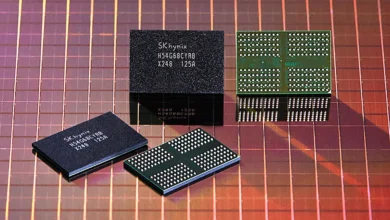
- Semiconductor Industry: Collaborating on design and production support.
The Talent Gap and Strategic Imperatives
Despite the optimistic outlook, the Japanese IT market is facing a structural crisis. Data from Japan’s Ministry of Economy, Trade and Industry (METI) indicates that by 2030, Japan will face a shortage of approximately 789,000 IT professionals. This deficit is driven by a shrinking domestic workforce and the rapid pace of digital transformation required by Japanese corporations.
Junya Kawamoto, Chairman of the International Cooperation Committee of the Japan Information Technology Services Industry Association (JISA), highlighted that Vietnam has emerged as a premier partner to fill this gap. "Vietnam has established itself as a logical partner due to its large pool of skilled labor, technical proficiency, and strong support from the Vietnamese government," Kawamoto stated.
To address the shortage, Japanese policies under the "DX Stocks" program encourage companies to modernize their digital assets and systems. However, as Kawamoto pointed out, the transition is not without challenges. Language barriers, the need for deep cultural integration, and the requirement for increased international competitiveness remain the primary hurdles for Vietnamese firms looking to scale their operations further in Japan.
Japan ICT Day 2024: A Framework for Future Cooperation
The two-day event in Hanoi, spanning December 2 and 3, was structured into three core components: formal conference sessions, networking opportunities, and "Company Tours." The latter involved Japanese delegates visiting major Vietnamese tech hubs to observe firsthand the capabilities and infrastructure of their partners.

The event attracted over 100 representatives from more than 30 Japanese and Vietnamese enterprises. Discussions were heavily weighted toward three specific themes:
- AI Implementation: Moving beyond experimentation to practical, enterprise-wide AI deployment.
- Modernization of Legacy Systems: Updating older, mission-critical systems that form the backbone of Japanese industry.
- Green and Smart Production: Utilizing IT to achieve sustainability goals and operational efficiency in manufacturing.
Analytical Perspective: Implications for the Future
The shift toward high-value projects signifies a maturation of the Vietnam-Japan IT corridor. For Vietnam, this move is essential to avoid the "middle-income trap" in the tech sector, where reliance on low-cost labor becomes a liability rather than an asset. By embedding themselves into the R&D cycles of Japanese corporations, Vietnamese firms are effectively building a defensible market position.
For Japan, the partnership represents more than just a cost-saving measure; it is a strategic necessity. As Japanese companies struggle with the "2025 cliff"—a term often used in Japan to describe the potential for massive economic loss due to aging legacy systems—the ability to offload the burden of digital modernization to a reliable, culturally aligned, and technically capable partner like Vietnam is vital.
The long-term success of this cooperation will likely depend on the ability of both parties to facilitate "knowledge transfer" rather than just "task outsourcing." As emphasized by industry leaders at the event, the goal is a model of shared business growth where Vietnamese engineers are deeply integrated into the design phases of Japanese products.

Chronology of the Cooperation
- Pre-2010: Early phase of cooperation focused on simple outsourcing, testing, and maintenance of legacy software.
- 2010–2020: Expansion of the partnership; entry of large-scale Vietnamese firms into the Japanese market; focus on software development and human resource training.
- 2020–2024: Acceleration of digital transformation; focus on advanced technologies (AI, Blockchain); significant increase in revenue and higher-value project acquisition.
- 2024 and beyond: Strategic emphasis on addressing Japan’s massive talent deficit through deeper, long-term technological integration and collaborative R&D.
As the Japan ICT Day 2024 concludes, the sentiment among attendees is one of cautious optimism. While the geopolitical and economic risks remain, the foundational trust built over the last two decades provides a solid basis for continued growth. The next phase of this partnership will likely see increased focus on green technology and the further integration of Vietnamese firms into the Japanese semiconductor and automotive supply chains, cementing the role of Vietnam as an indispensable ally in Japan’s digital future.