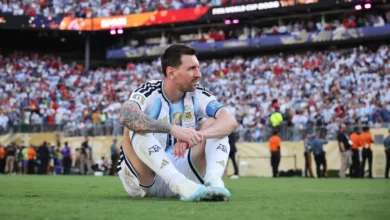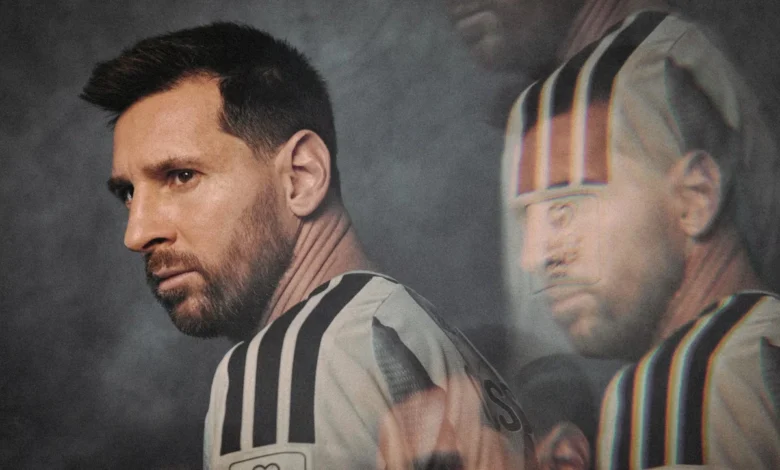
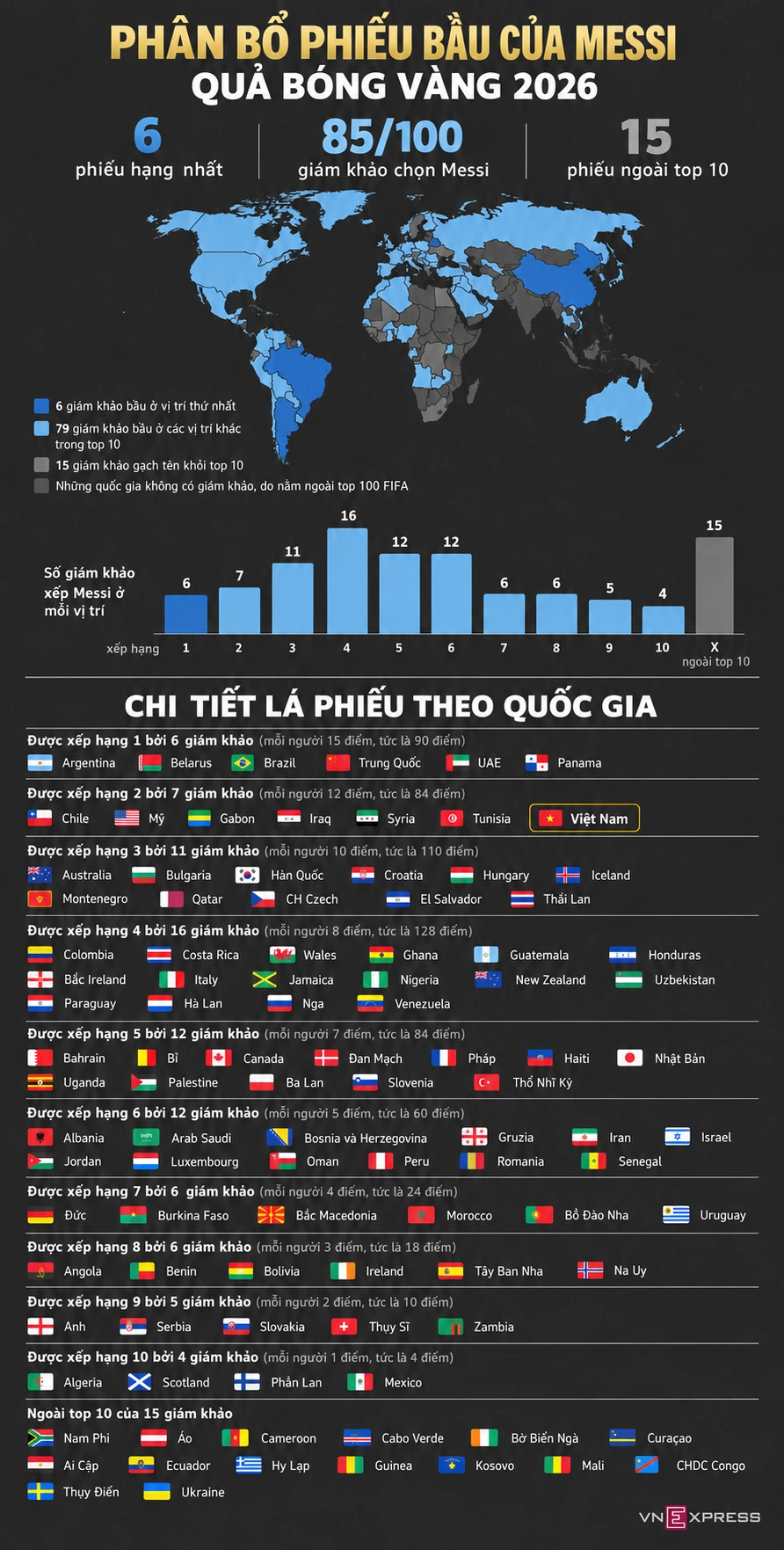
The release of the 2026 Ballon d’Or voting records has sparked significant discourse within the international football community, revealing a stark divide in how Lionel Messi’s late-career performance was perceived by the global panel of journalists. According to the official data published on November 1, 2026, the legendary Argentine forward garnered first-place votes from six members of the jury. However, in a surprising turn of events that underscores the changing criteria of the prestigious award, fifteen other jurors opted to exclude him entirely from their top-ten ballots, highlighting a polarized perspective on his contribution to the sport during this calendar year.
The Anatomy of the 2026 Voting Process
The Ballon d’Or, organized annually by France Football, relies on a panel of expert journalists from the top 100 nations in the FIFA rankings. Each juror is tasked with selecting their top ten players, awarding points on a descending scale from 15 points for a first-place vote down to one point for a tenth-place vote.
The 2026 voting cycle was characterized by a transition in the sport’s landscape. With the conclusion of the 2026 FIFA World Cup, the criteria for the award placed heavy emphasis on performance in major international tournaments, domestic league consistency, and individual statistical impact. For Messi, whose career has been defined by an unparalleled consistency for nearly two decades, the 2026 season represented a unique challenge: balancing the waning physical attributes of a veteran player with the tactical intelligence that still allows him to influence high-stakes matches.
The six jurors who ranked Messi first likely pointed to his sustained influence in key moments and his role as a tactical playmaker, even as his goal-scoring output shifted. Conversely, the fifteen jurors who omitted him from their top-ten lists likely prioritized the emergence of younger, high-intensity stars who dominated the European club circuit, suggesting a shift in voter preference toward physical dynamism and league performance in the UEFA Champions League.

Chronology of the 2026 Season
To understand the context of this voting result, one must examine the timeline of the 2026 football calendar.
- January – March 2026: Messi maintained a high level of performance during the winter months, serving as the creative fulcrum for his club side. During this period, his statistical output regarding key passes and assists remained in the top percentile of his league.
- April – June 2026: As the European club season reached its climax, the pressure on the Ballon d’Or candidates intensified. While Messi’s team enjoyed success, the individual accolades were increasingly contested by younger rivals who were instrumental in their clubs’ deep runs in continental competitions.
- June – July 2026: The 2026 World Cup served as the ultimate litmus test. Messi’s performance on the international stage was marked by tactical discipline and leadership. However, the tournament also saw the rise of several breakout stars, creating a crowded field for voters to navigate.
- August – October 2026: Following the international tournament, the evaluation phase for jurors began. This period is often where the narrative of the "best player in the world" is solidified. The voting window closed in late October, leading to the final results revealed in November.
Comparative Analysis: The "Polarization" Effect
The fact that Messi received first-place votes alongside total omissions is a statistical anomaly that speaks to the subjective nature of the award. In modern football journalism, the debate often splits between "traditionalists," who value technical proficiency, vision, and career legacy, and "modernists," who prioritize high-pressing stats, defensive contribution, and current season form.
Data from the 2026 voting panel suggests that Messi remains a divisive figure not because of a lack of talent, but because his current role is becoming harder to categorize. When voters look at his heat maps, they see a player who operates in a distinct, lower-intensity zone compared to his counterparts. For the six voters who ranked him first, this is interpreted as efficiency—doing more with less movement. For the fifteen voters who omitted him, it is interpreted as an inability to compete with the sheer physical output required by the modern tactical model.
Institutional Responses and Industry Context
While France Football does not comment on individual ballots, the organization has consistently maintained that the voting panel is autonomous. The diversity of the jury—representing different footballing cultures from Europe, South America, Africa, and Asia—naturally leads to varied interpretations of what constitutes "the best."
Former players and pundits have weighed in on the result, noting that the 2026 voting pattern reflects a "generational passing of the torch." Industry analysts suggest that Messi’s inclusion in the conversation at this stage of his career is, in itself, a testament to his longevity. However, the presence of voters who feel the need to move on from the "Messi-Ronaldo era" to recognize newer talents is a trend that has been building since 2024.
Broader Implications for the Ballon d’Or
The outcome of the 2026 voting raises broader questions about the future of the Ballon d’Or. As the sport continues to evolve toward a more data-driven and physical game, the criteria for the award may face further scrutiny. If journalists are increasingly split on how to weigh legacy versus current-year productivity, the consistency of the award’s prestige could be at stake.
Furthermore, the 2026 results serve as a case study for how the football world handles the "twilight" phase of all-time greats. When a player has set the standard for nearly twenty years, the jury’s expectations remain artificially high. Every minor dip in form is magnified, and every statistical output is compared against the player’s own peak, rather than against their peers.
Conclusion: A Legacy Defined by Debate
The 2026 Ballon d’Or results will likely be remembered not for who won the trophy, but for the stark reality of the voting breakdown. The six jurors who remained steadfast in their support for Messi represent a generation of observers who value the intangible qualities of the game—the vision, the composure, and the tactical mastery that Messi still possesses. The fifteen who omitted him represent the relentless forward momentum of the sport, which demands new faces and new metrics of success.
Ultimately, the data from the 2026 vote provides a snapshot of a sport in transition. As the influence of the old guard wanes and the influence of the new generation rises, the Ballon d’Or remains the ultimate battleground for these competing philosophies. For Lionel Messi, being at the center of such a debate—even in the final stages of his illustrious career—only reinforces his status as a permanent fixture in the history of football, regardless of where individual voters placed him on their ballots. The 2026 season will stand as a reminder that even at the very end, his presence alone is enough to command the attention of the entire world, forcing every juror to make a choice that defines their own philosophy of what football truly is.