Why Steering Wheel Vibration Is a Critical Warning Sign of Wheel Imbalance That Drivers Should Never Ignore


Maintaining a vehicle requires constant vigilance from drivers, particularly regarding components that directly interface with the road surface. Among these, the tires and wheels bear the immense responsibility of transferring engine power, braking force, and steering inputs safely onto the pavement. However, as vehicles accumulate mileage across varied and often imperfect road networks, mechanical tolerances can shift. One of the most common yet frequently overlooked maintenance issues facing motorists is wheel imbalance. When a tire and its accompanying rim lose their equilibrium, the resulting mechanical disruptions can compromise ride comfort, accelerate component wear, and, in severe cases, jeopardize vehicle safety at high speeds.
Understanding the mechanics of wheel balance, recognizing the subtle or overt symptoms of imbalance, and knowing when to seek professional intervention are essential aspects of responsible automotive ownership. Industry data and technical insights from automotive engineers underscore that failing to address tire imbalance promptly can lead to cascading mechanical failures, resulting in costly repairs that far outweigh the minor expense of routine balancing services.
The Fundamentals of Wheel Balance and Mass Distribution
To comprehend why a vehicle vibrates when a wheel loses its equilibrium, one must first examine the physics of a rotating wheel assembly. A tire and its metal rim, or la-zăng, are manufactured to exacting standards, yet they are rarely uniform in mass across their entire circumference. Variations in manufacturing, internal structural overlaps, valve stems, and subsequent repairs—such as tire patching or plugging—introduce microscopic weight discrepancies. Furthermore, everyday driving hazards such as striking deep potholes, aggressively traversing speed bumps, or clipping curbs at speed can physically warp the rim or alter the internal structure of the tire.
Wheel balancing is the precise mechanical process of neutralizing these weight discrepancies. During a balancing procedure, a technician mounts the wheel assembly onto a specialized diagnostic machine that spins the wheel at high speeds to detect heavy spots. Once these areas of disproportionate mass are identified, the technician attaches precisely measured lead or steel balancing weights to the opposite side of the rim. This counterweight system ensures that centrifugal forces are distributed evenly around the rotational axis, allowing the wheel to spin smoothly without generating destabilizing oscillations.
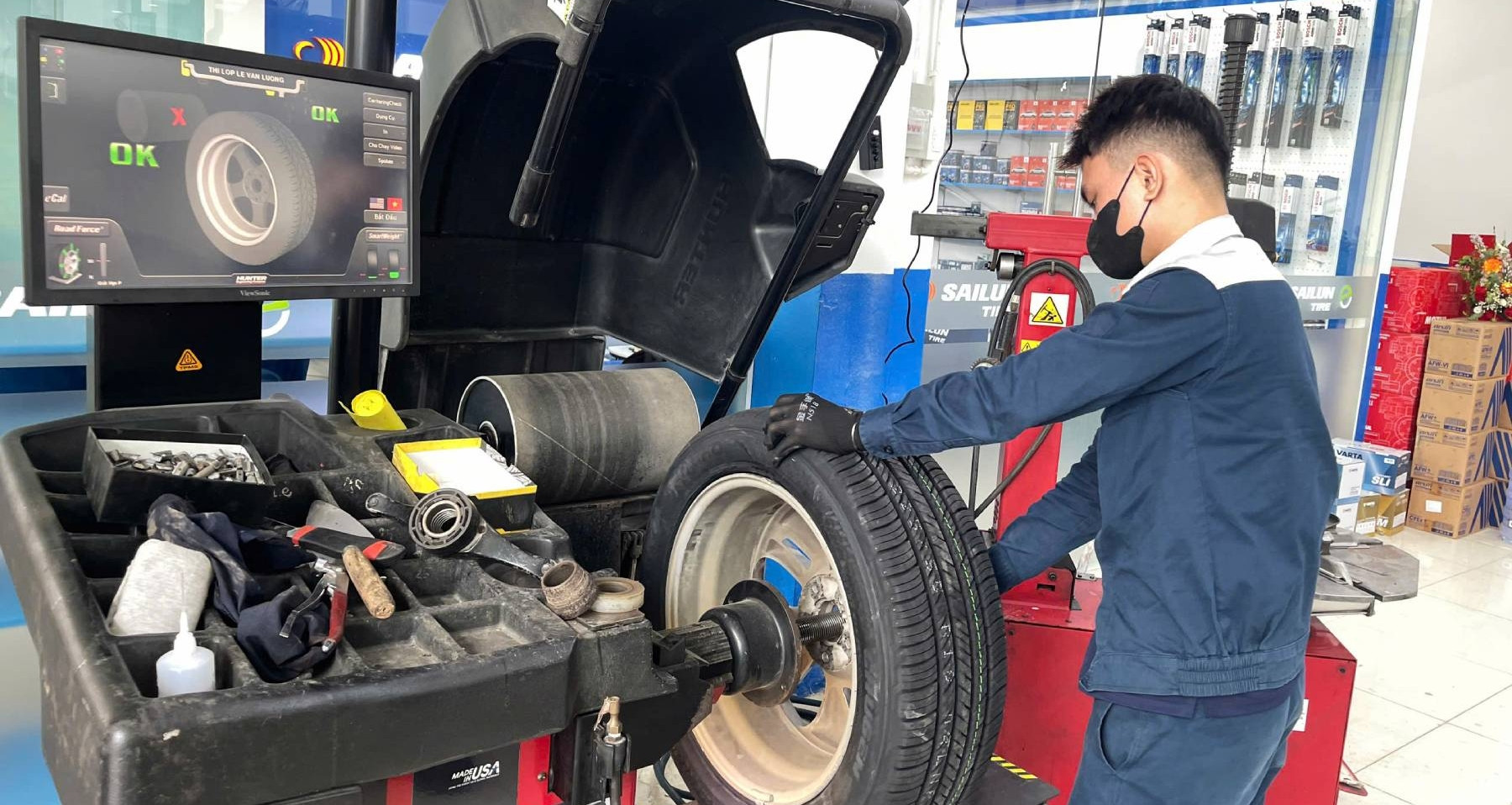
Despite the critical nature of this maintenance task, many motorists operate under the misconception that wheel balancing is only necessary when a tire is replaced. In reality, wheels can gradually lose their balance over time due to normal wear and tear, thermal expansion and contraction, and minor impacts with road debris. Because these changes occur incrementally, drivers often fail to notice the onset of imbalance until the symptoms become pronounced at highway speeds.
Recognizing the Primary Symptoms of an Unbalanced Wheel
Automotive technicians emphasize that wheel imbalance manifests through distinct physical sensations within the cabin. These symptoms typically vary depending on whether the imbalance affects the front or rear wheels. Recognizing these warning signs early allows drivers to address the root cause before structural damage occurs to the steering or suspension systems.
Steering Wheel Vibration at Elevated Speeds
The most classic and frequently reported symptom of a front wheel imbalance is steering wheel vibration. When a front tire has an uneven mass distribution, the resulting centrifugal force causes the wheel to wobble rhythmically as it rotates. As vehicle speed increases—typically becoming noticeable between 80 km/h and 100 km/h—this wobble translates into a distinct tremor, shake, or continuous oscillation in the steering wheel.
The physics behind this phenomenon are straightforward: as rotational speed increases, the centrifugal force generated by the heavy spot grows exponentially. This energy is transmitted directly through the steering knuckles, tie rods, and steering rack into the cabin. Interestingly, some drivers report that the vibration peaks at a specific speed, such as 80 km/h, but seemingly diminishes or transforms when accelerating past 100 km/h. Automotive engineers explain that this behavior is often related to resonant frequency matching rather than the imbalance disappearing. At certain critical speeds, the natural frequency of the suspension components matches the frequency of the wheel rotation, amplifying the vibration. As the vehicle accelerates beyond this window, the system passes through the resonance zone, though the underlying mechanical imbalance remains fully intact.

Drivers experiencing steering wheel vibration should never attempt to "drive through it" with the mistaken belief that higher speeds will smooth out the ride. Continuing to operate a vehicle at high speeds with an unbalanced front wheel accelerates tire wear and places excessive mechanical stress on the steering linkage.
Seat and Floorboard Vibrations
While front wheel imbalance primarily affects the steering wheel, an imbalance originating in the rear wheels produces a different set of physical sensations. Rear-wheel imbalance is typically felt not through the steering mechanism, but through the vehicle floorboard, the seat cushions, and the chassis itself.
Passengers seated in the rear or the driver in the front may notice that the ride quality feels uncharacteristically harsh, accompanied by a low-frequency hum or rhythmic pulsing sensation transmitted through the vehicle frame. This occurs because the vibrations from the rear assembly travel through the rear suspension components and chassis structure rather than the steering rack. Like front wheel issues, this symptom usually becomes prominent at moderate to high cruising speeds, particularly on smooth asphalt highways where subtle imperfections are easily isolated.
Abnormal and Uneven Tire Wear Patterns
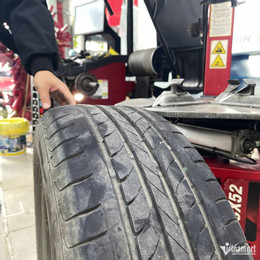
Beyond cabin vibrations, wheel imbalance takes a severe toll on the tire tread itself. When a wheel assembly rotates while out of balance, the contact patch between the tire and the road experiences unstable, fluctuating aerodynamic and mechanical forces. Over time, this uneven loading causes specific sections of the tread to wear down prematurely or irregularly.
Drivers may visually or tactually notice patches of baldness, cupping, or scalloping along the tread surface, where certain areas are worn down significantly faster than adjacent sections. This irregular wear not only drastically shortens the operational lifespan of expensive tires but also degrades overall traction, braking performance, and ride comfort. Furthermore, because wheel imbalance causes continuous micro-bouncing against the pavement, it accelerates the deterioration of shock absorbers, struts, ball joints, and wheel bearings.
The Distinction Between Wheel Balancing and Wheel Alignment
A common point of confusion among motorists is the difference between wheel balancing and wheel alignment. While both services relate to the vehicle’s handling and tire health, they address entirely different mechanical parameters.
Wheel balancing, as detailed, focuses exclusively on the mass distribution of the tire and rim assembly around its rotational axis. It corrects weight asymmetries to eliminate vibrations. In contrast, wheel alignment refers to adjusting the angles of the wheels—specifically camber, caster, and toe—so that they are set to the manufacturer’s precise specifications relative to the vehicle body and the road surface. Alignment issues are typically caused by driving over severe potholes, hitting curbs, or general wear in suspension bushings, and they manifest as a vehicle pulling to one side or a crooked steering wheel when driving straight.
Because these two services correct different problems, they cannot substitute for one another. A vehicle with perfect wheel alignment can still suffer from severe steering wheel vibration if the wheels are out of balance. Conversely, balanced wheels will not correct a vehicle that pulls stubbornly to the left or right due to poor alignment. Automotive experts recommend verifying both parameters during comprehensive maintenance intervals, especially after major suspension repairs or severe impacts.
The Maintenance Timeline and Economic Implications
Industry experts generally recommend checking wheel balance during routine maintenance intervals, such as every 10,000 to 15,000 kilometers, or whenever tires are rotated, serviced, or replaced. However, these figures serve as general guidelines rather than rigid mandates. Drivers who frequently commute over rough roads, unpaved construction zones, or areas prone to deep potholes may require more frequent checks.
From an economic perspective, wheel balancing is one of the most cost-effective preventative maintenance procedures available. The process typically takes only a short amount of time and involves minimal service fees compared to major mechanical overhauls. By investing in timely balancing services, vehicle owners protect their investment in tires, preventing premature replacement caused by cupping and irregular wear. Moreover, eliminating excessive vibrations safeguards sensitive electronic sensors, steering actuators, and suspension linkage components from premature fatigue and failure.
Broader Impacts on Fuel Efficiency and Driving Safety
While the immediate consequences of wheel imbalance are localized to ride comfort and component wear, the broader implications extend to vehicle safety and fuel efficiency. A vehicle experiencing severe mechanical vibrations does not track the road as efficiently. Rolling resistance increases when tires are subjected to unnatural oscillation and uneven deformation, forcing the engine to work harder to maintain momentum. This marginal increase in mechanical drag contributes to higher fuel consumption over time, compounding the financial cost of neglected maintenance.
On a safety level, maintaining optimal tire contact with the road is paramount. An unbalanced wheel exhibits momentary reductions in grip during high-speed cornering or emergency braking maneuvers, as the oscillating contact patch struggles to maintain uniform friction with the asphalt. By ensuring that all four wheel assemblies remain properly balanced, motorists preserve maximum tire contact area, enhancing braking efficiency, directional stability, and overall vehicle control.
Conclusion and Recommendations for Motorists

Vehicle ownership entails a commitment to regular safety and maintenance checks. Wheel balance is a fundamental aspect of this routine that directly influences the driving experience, mechanical longevity, and active safety of an automobile. By remaining attentive to the early warning indicators—such as steering wheel tremors at highway speeds, unusual floorboard vibrations, or asymmetric tread wear—drivers can intervene before minor imbalances cascade into costly repairs.
Adopting a proactive approach, which includes inspecting wheel assemblies after significant road impacts and incorporating balance checks into scheduled maintenance intervals, ensures a smoother, safer, and more economical driving experience for years to come.