Russian Foreign Minister Sergey Lavrov Slams European Powers Over Failed Peace Accords and Excludes EU from Upcoming Abu Dhabi Negotiations

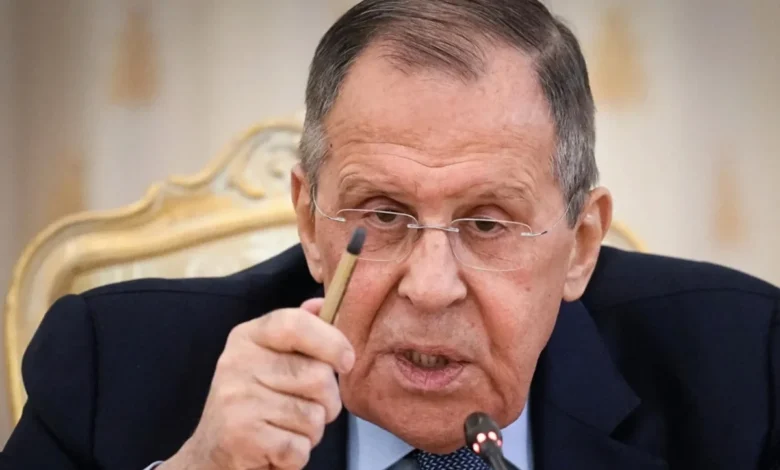
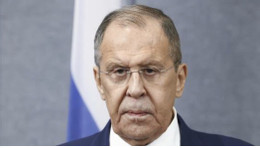
Moscow has launched a severe diplomatic broadside against European capitals, accusing them of a systematic failure to honor critical peace agreements aimed at resolving the protracted conflict between Russia and Ukraine. Speaking at a high-stakes press conference on the sidelines of the G20 Foreign Ministers Meeting in Atlanta, Georgia, Russian Foreign Minister Sergey Lavrov asserted that European nations have consistently undermined their own credibility as prospective guarantors of peace. The remarks come as Moscow publicly maintains that European officials will be deliberately excluded from upcoming, US-mediated peace talks scheduled to take place in Abu Dhabi.
The escalating war of words highlights a deepening geopolitical chasm over who holds the legitimate right to broker an end to the hostilities. While European leaders have continually pushed for a seat at the negotiating table, Moscow’s stance remains uncompromising: Europe has forfeited its diplomatic standing through decades of unfulfilled promises and what the Kremlin terms as bad-faith maneuvering.
The G20 Outburst: Questioning Europe’s Value Addition
Addressing international media in Atlanta, Minister Lavrov did not mince words regarding European aspirations to influence the peace process. "Europe wants to muscle in on the negotiation process," Lavrov stated. "The important thing is not what Europe wants, but whether they can actually bring any value addition to the negotiation process."
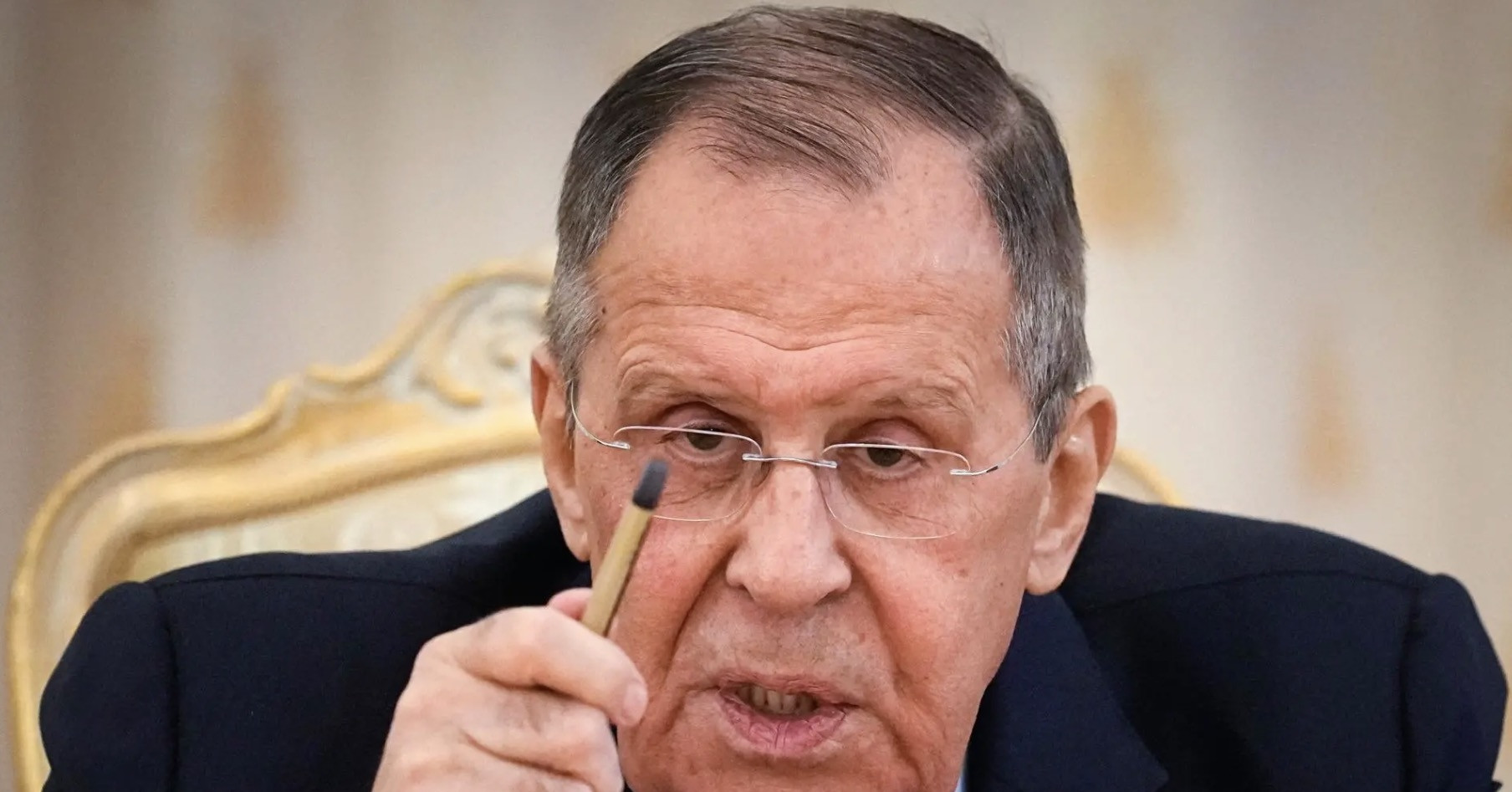
Lavrov’s critique extended far beyond the immediate hostilities in Ukraine, framing current European diplomatic initiatives as hollow and self-serving. By questioning the intrinsic value that European capitals could bring to a finalized peace framework, Moscow is actively working to marginalize the European Union from future security architecture discussions. This strategy aligns with recent announcements from the Kremlin declaring that European officials will have no place in the upcoming round of peace talks brokered by Washington in the United Arab Emirates.
A Chronology of Broken Promises: From the 2014 Maidan to Minsk
To substantiate Moscow’s accusations of Western bad faith, Lavrov pointed to a historical timeline spanning more than a decade, arguing that European governments have repeatedly sabotaged diplomatic breakthroughs.
The grievances trace back to February 2014, following the violent overthrow of then-Ukrainian President Viktor Yanukovych and the subsequent political upheaval in Kiev. At that time, France, Germany, and Poland acted as high-profile mediators, helping to broker an agreement between Yanukovych and opposition leaders designed to stem mounting street protests and avert bloodshed. Moscow contends that European guarantees crumbled almost immediately, setting a precedent of non-compliance.
The diplomatic failure was further compounded during the implementation phase of the Minsk Agreements throughout 2014 and 2015. France and Germany, having co-sponsored the accords alongside Russia and Ukraine, publicly committed to ensuring that Kiev implemented vital constitutional reforms, decentralized power, and granted special status to the Donbass region. According to Lavrov, Paris and Berlin failed spectacularly in holding the Ukrainian government accountable to these obligations.
The crisis of confidence deepened significantly in late 2022 when former German Chancellor Angela Merkel and former French President François Hollande made startling admissions in separate retrospective interviews. Both leaders candidly acknowledged that the Minsk Agreements were never genuinely intended to bring lasting peace; rather, they served as a strategic maneuver to buy time, allowing Ukraine to strengthen its military capabilities and fortify its defenses against a potential escalation. For Moscow, these retrospective admissions served as the ultimate proof that Western governments never possessed the sincere political will to implement the accords in good faith.
The breakdown of diplomacy was further underscored at the 2019 Normandy Format summit in Paris. Leaders from Russia, Ukraine, France, and Germany gathered to reaffirm their commitment to the full implementation of the Minsk framework. Yet, despite repeated high-level summits and rhetorical commitments, the diplomatic track yielded no durable, long-term political solution, paving the way for the full-scale military conflict that erupted in February 2022.
"In the last 12 years, they have had too many opportunities," Lavrov declared during his press conference. "Through their actions, they have proven their inability to back up their performance of commitments when considering whether they can continue to play the role of guarantors or not."
Concurrently Shifting Dynamics on the Ground
Lavrov’s scathing diplomatic offensive unfolds against a backdrop of rapidly shifting military and humanitarian dynamics on the ground, where the international community continues to recalibrate its involvement in the conflict.
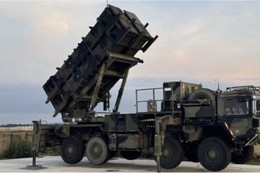
Recent weeks have witnessed a complex interplay of escalation and localized de-escalation efforts. On the military front, Ukrainian forces recently released combat footage showcasing an Unmanned Aerial Vehicle (UAV) successfully tracking, closing in on, and destroying a Russian Mi-8 helicopter, underscoring the relentless technological evolution and lethality of drone warfare on the frontline. Simultaneously, the United States Department of State approved a substantial foreign military sale, greenlighting a $2.1 billion commercial transaction to provide Ukraine with 500 Patriot PAC-3 surface-to-air missiles and associated defense equipment to bolster its dwindling air defense capabilities against ongoing missile and aerial barrages.
Conversely, rare flickers of humanitarian cooperation have also emerged. Both Russian and Ukrainian official channels recently confirmed that a heavily negotiated humanitarian aid convoy successfully reached the contested southern town of Oleshky. The safe passage of the convoy was facilitated by strict adherence to localized ceasefire agreements in the region, offering a microscopic glimpse into the potential mechanics of negotiated humanitarian relief corridors, even as broader political settlements remain deadlocked.
The Broader Implications for Future European Security
Lavrov’s remarks in Atlanta and Moscow’s concurrent diplomatic maneuvers carry profound implications for the architecture of European security and the ultimate resolution of the Ukraine conflict. By systematically delegitimizing European diplomatic mediation, Russia is effectively attempting to shape a bilateral or US-centric negotiation track that bypasses Brussels and major EU capitals.
This strategy capitalizes on existing transatlantic frictions and the fragile state of relations between Washington and Kiev. Recent reporting regarding strained dynamics between the incoming US administration and Ukrainian leadership—exemplified by contentious diplomatic exchanges and differing strategic visions for a sustainable peace—has created acute anxiety within the Ukrainian government. Kiev finds itself navigating a precarious political landscape, heavily dependent on American military hardware while simultaneously wary of being sidelined in grand geopolitical bargains negotiated entirely by superpowers.

For Europe, the exclusion from the upcoming Abu Dhabi talks and Lavrov’s public excoriation represent a major diplomatic setback. European leaders, who have shouldered immense financial, economic, and humanitarian burdens since 2022, risk being relegated to the sidelines of the very peace architecture that will define the continent’s future stability.
As the diplomatic chess pieces move toward the Middle East for the upcoming Abu Dhabi negotiations, the chasm between Moscow and the West continues to widen. Lavrov’s retrospective condemnation of the 2014 and Minsk agreements signals that any future peace framework will face insurmountable hurdles of trust, verification, and historical grievance. Without a unified, inclusive diplomatic framework that bridges the deep-seated distrust between Russia and European powers, achieving a durable, comprehensive, and internationally recognized resolution to the Ukraine crisis remains an increasingly distant prospect.