The Third Quarter Financial Reporting Season Unveils Deep Sector Divergence as Real Estate Surprises and Brokerage Firms Navigate Market Volatility

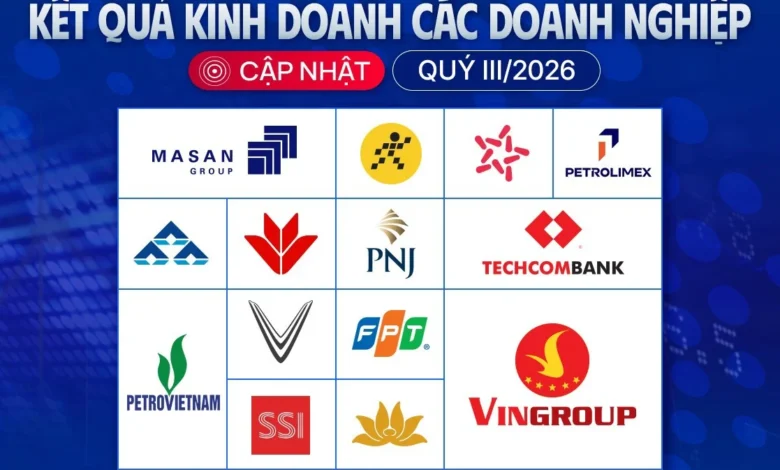
The release of corporate financial reports for the third quarter of 2026 has begun to paint a complex and highly divergent picture across the broader economic landscape. Early data from the current reporting season highlights a profound shift in market dynamics, characterized by stark contrasts between traditional powerhouse sectors and emerging growth segments. While macroeconomic headwinds continue to test corporate resilience, specific segments—most notably real estate and energy—have demonstrated unexpected agility, recording sharp profit surges. Conversely, the financial and brokerage sector has faced a more subdued operating environment, underscoring the uneven pace of economic recovery.
Market analysts and financial observers tracking the Q3 reporting cycle note that this quarter serves as a critical litmus test for corporate adaptability. Supply chain realignments, fluctuating commodity prices, and shifting monetary policies are translating directly into corporate bottom lines, creating clear winners and losers across various asset classes. As stakeholders digest the latest round of disclosures, attention is increasingly focused on the underlying catalysts driving these contrasting financial trajectories.
Background Context and Macroeconomic Environment
To understand the current financial landscape of Q3 2026, it is essential to examine the broader macroeconomic backdrop that preceded this reporting period. The preceding quarters of 2026 were marked by persistent inflationary pressures, gradual adjustments in global interest rates, and volatile international trade conditions. Businesses across all sectors have had to navigate rising operational costs while simultaneously managing shifting consumer demand and tighter credit conditions.
Within this environment, capital allocation has become increasingly selective. Investors and institutional funds are rotating away from broad-market plays toward sectors demonstrating structural pricing power and clear earnings visibility. The third quarter has thus emerged as a pivotal juncture where strategic pivots made by corporate management teams earlier in the year are beginning to yield tangible financial results—or, conversely, exposing vulnerabilities in unprepared business models.
Real Estate Sector Emerges with Abrupt Profit Surges
Perhaps the most notable development in the Q3 2026 financial reports is the unexpected outperformance within the real estate sector. Encompassing both residential developers and industrial park operators, the segment has reported a series of dramatic profit growths compared to the same period in the previous year.
For months, the property market faced severe liquidity constraints and cautious buyer sentiment. However, targeted governmental policy interventions, improved legal frameworks for project approvals, and a strategic shift toward industrial real estate to accommodate expanding foreign direct investment (FDI) have begun to bear fruit. Industrial park developers, in particular, benefited from sustained high occupancy rates and robust demand for logistics and manufacturing infrastructure. Meanwhile, select residential developers that successfully restructured their debt profiles and pivoted toward affordable or mid-end housing segments managed to unlock significant liquidity, driving sharp spikes in net income.
Industry experts point out that while the real estate recovery is not yet uniform across all market participants, the outperformance of tier-one developers in Q3 signals a potential turning point for an industry that has weathered prolonged consolidation.
Energy Sector Stability and Material Highlights
Parallel to the real estate turnaround, the energy sector has maintained its position as a reliable pillar of economic stability, characterized by positive operational margins and steady profitability. Several major oil and gas enterprises reported favorable results, buoyed by resilient global energy demand and disciplined cost-management strategies.
Furthermore, ancillary segments closely linked to the broader industrial ecosystem—specifically rubber producers, industrial materials, and select manufacturing enterprises—emerged as unexpected profit bright spots. These companies capitalized on optimized supply chain efficiencies and stabilized raw material input costs, allowing them to expand profit margins despite broader inflationary pressures. Corporate disclosures from these segments indicate that proactive inventory management and long-term supply contracts played a crucial role in safeguarding profitability against external market shocks.
Brokerage Firms Navigate a Subdued and Fragmented Environment
In stark contrast to the robust earnings seen in real estate and select industrial segments, the securities and brokerage sector recorded a notably subdued quarter. Q3 2026 financial statements for financial institutions reveal a clear polarization among brokerage firms, heavily influenced by market volatility, transaction volume fluctuations, and the performance of proprietary investment portfolios.
Following periods of high retail participation, the brokerage landscape in Q3 experienced a moderation in trading liquidity. Firms heavily reliant on brokerage commissions faced top-line pressures as daily trading volumes contracted. Additionally, market fluctuations impacted the valuation of proprietary investment portfolios, resulting in varied earnings outcomes. While well-capitalized institutions with diversified revenue streams—such as wealth management, corporate advisory, and underwriting services—managed to buffer against market headwinds, smaller or mono-line brokerages reported compressed margins and stagnant profit growth.
This polarization within the securities sector reflects a maturing market where digital infrastructure, risk management capabilities, and service diversification are paramount for sustained profitability.
Chronology and Reporting Timeline
The release of the Q3 2026 financial reports follows a structured corporate reporting calendar mandated by regulatory authorities. The timeline unfolded through several distinct phases:
- Early October 2026: Initial preliminary production data and operational updates began filtering into the market, offering the first hints of sector-specific momentum, particularly within energy and logistics.
- Mid-October 2026: Early-adopting enterprises, primarily large-cap industrial and select real estate firms, officially published their interim financial statements, sparking initial market revaluations.
- Late October 2026: The bulk of corporate disclosures, including comprehensive reports from major brokerage houses and real estate developers, were made public, confirming the broader trends of sector divergence.
- Early November 2026 (Current Phase): Financial analysts and institutional research desks continue to release in-depth evaluations, parsing balance sheet health, cash flow statements, and forward-looking guidance for the final quarter of the year.
Supporting Data and Financial Metrics
While comprehensive market-wide aggregations are still being finalized, early data compiled from Q3 2026 financial filings illustrates the divergence:
- Real Estate Segment: Select industrial park developers noted year-on-year net profit increases exceeding 30% to 50%, driven by new lease realizations and land-bank monetization. Residential counterparts with strong balance sheets reported unexpected double-digit earnings recoveries.
- Energy and Materials: Major oil and gas entities maintained stable operating cash flows, with profit margins holding steady or expanding marginally relative to Q2 2026. Rubber and industrial material suppliers reported margin expansions averaging between 5% and 15% due to localized cost efficiencies.
- Securities Sector: Overall operating revenue for mid-tier brokerages contracted by single to low double digits compared to the peak quarters of previous years, driven by lower average daily trading values and cautious investor participation.
Broader Impact and Economic Implications
The findings of the Q3 2026 financial reporting season carry significant implications for macroeconomic policy, investor sentiment, and corporate strategy as the business year enters its final stretch.
For policymakers, the uneven recovery highlighted in the reports underscores the necessity of continued, targeted support for credit-constrained sectors while maintaining systemic financial stability. The resilience of the industrial real estate and energy sectors suggests that structural economic fundamentals remain intact, providing a buffer against external global uncertainties.
For investors, the clear sector divergence emphasizes the inadequacy of broad-market indexing strategies in the current economic climate. Stock-picking, rigorous fundamental analysis, and a focus on balance sheet strength have once again proven critical for navigating market cycles. As corporations look ahead to the final quarter of 2026, management teams are expected to prioritize cash preservation, operational efficiency, and strategic adaptability to sustain momentum into the upcoming fiscal year.
Related posts: