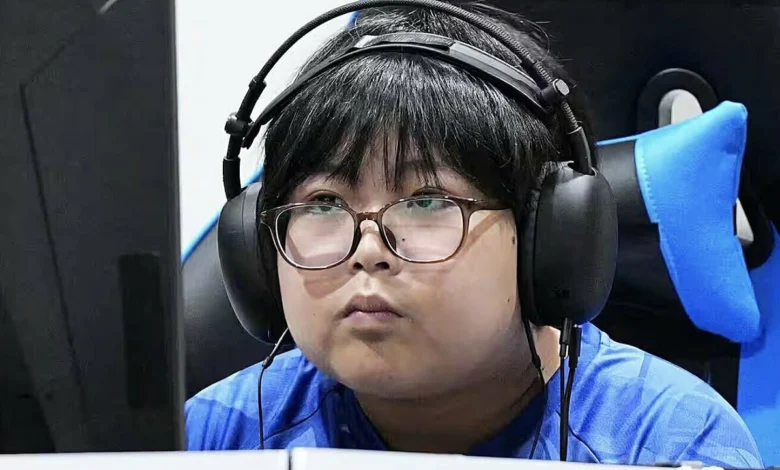
At the 2026 Asian Games (ASIAD) held in Aichi-Nagoya, 11-year-old Yuki Kurihara etched her name into the history books of competitive gaming. By securing the gold medal in the Puyo Puyo event—a strategic puzzle game that demands lightning-fast cognitive processing—Kurihara became the youngest athlete to ever stand on the podium at this prestigious continental multi-sport event. Yet, despite her monumental victory on the international stage, the young prodigy returned home without the financial rewards typically associated with such a high-profile achievement, primarily due to her age and the complex regulatory landscape governing professional esports in Japan.
A Historic Victory in Aichi-Nagoya
On September 26, 2026, the atmosphere at the Aichi-Nagoya esports arena was electric as Kurihara faced off against South Korea’s Kang Dong-shin in the Puyo Puyo grand final. Despite dropping the opening game, the Tokyo-born student demonstrated remarkable composure, adjusting her strategy to execute a series of high-level 11, 13, and 15-chain combos. Her dominance culminated in a decisive 10-2 victory, granting Japan its first-ever gold medal in an esports discipline at the Asian Games.
This performance eclipsed the previous age record set by Indonesian skateboarder Nishiya Momiji, who was 12 years old when she claimed her medal at the 2018 Asian Games. Kurihara, born on June 18, 2015, is currently in the fifth grade and is a member of the Tokyo Verdy esports division, a testament to her integration into the professional circuit at an exceptionally young age.
The Evolution of a Prodigy
Kurihara’s journey into the world of professional gaming began in early childhood. After receiving the "Puyo Puyo Tetris 2" game as a Christmas gift, she displayed an intuitive aptitude for the mechanics of the game. By the first grade, she had already begun competing in serious, structured environments. Her signature style revolves around creating massive, overlapping chains, with her personal record in practice reaching an impressive 19-chain combo.

Her path to the 2026 Asian Games was paved with a series of domestic accolades. In 2023 and 2024, she secured back-to-back victories in the elementary school category of the Japanese Puyo Puyo Championship. By 2025, she had achieved the rare feat of winning both the elementary school division and the open age category of the same tournament. That same year, she topped the Puyo Puyo Global Ranking Match, establishing herself as a formidable force on the international stage before reaching middle school.
Regulatory Barriers and Professional Licensing
The central issue regarding Kurihara’s lack of prize money lies in the stringent regulations imposed by the Japan Esports Union (JeSU) and the traditional view of youth participation in professional sports. Historically, Japan maintained a strict policy prohibiting the issuance of professional esports licenses to individuals under the age of 13. Even if a young player possessed the skill to defeat top-tier professionals, they were legally barred from being classified as "professional" athletes, which often rendered them ineligible to receive monetary rewards.
The landscape began to shift in February 2026, when JeSU revised its regulations, lifting the age restriction for professional license applications. By April, Kurihara became the first elementary school student to be officially granted a professional esports license in Japan. However, being recognized as a professional did not automatically grant her the same financial privileges as her adult counterparts. Under Japanese law and specific tournament bylaws, prize money for athletes below the junior high school level is frequently replaced by physical goods or non-monetary awards to comply with labor and protection laws regarding minors.
The Financial Paradox of ASIAD
The 2026 Asian Games presented a unique scenario. Unlike private tournaments, which may offer cash prizes, the Asian Games operate under the umbrella of the Olympic Council of Asia (OCA). Medals earned at the Games are considered achievements in amateur-status sporting competitions rather than professional prize-earning events. Consequently, there is no standardized "prize money" provided by the Games organizers themselves.
The distribution of rewards is left to the discretion of individual national Olympic committees. For instance, the Japan Athletics Federation announced a one-million-yen reward for athletes securing a gold medal, with relay team members receiving 500,000 yen. In contrast, the esports delegation has not established a clear prize pool for the Puyo Puyo victory. While South Korean silver medalist Kang Dong-shin is expected to receive approximately 100,000 yen (roughly 16.5 million VND) from his federation, Japanese officials have yet to announce a similar provision for Kurihara.

Perspective from the Athlete
Despite the headlines surrounding her missing financial reward, Kurihara appears largely indifferent to the monetary aspect of her victory. When asked what she would do with the prize money if she had received it, the 11-year-old expressed a childlike, yet earnest, desire to purchase "something sparkly," specifically mentioning her love for gemstones, particularly blue ones.
Her life outside of gaming is remarkably typical for a child of her age. Beyond Puyo Puyo, she enjoys table tennis, soccer, and collecting natural stones. She also harbors a deep fascination for the Chiyoda subway line in Tokyo, with dreams of one day becoming a train driver or a coach at a training center. Her response to the post-victory media inquiries revealed her innocence; she was genuinely surprised when asked about the prize money, questioning whether she was even entitled to receive any at all.
Broader Implications for Esports
The case of Yuki Kurihara highlights a growing tension between the rapid rise of child prodigies in esports and the legal frameworks designed to protect them. As esports continues to gain legitimacy alongside traditional Olympic sports, governing bodies face the challenge of reconciling the high-stakes professional nature of these games with the developmental needs and rights of child competitors.
The decision by JeSU to lower the age threshold for professional licensing was a progressive step toward formalizing the industry. However, the lack of a clear, uniform policy for handling prize money for minors in international, multi-sport events remains a gray area. Experts suggest that as the industry matures, there will need to be a shift toward establishing trust funds or educational grants for minor athletes, ensuring that their achievements are rewarded in a manner that supports their future growth without compromising their status as minors.
For now, Kurihara remains a beacon of potential for Japan’s esports future. Her composure in the face of intense pressure and her humility regarding the financial rewards speak to a maturity that belies her age. While she may not have walked away from Aichi-Nagoya with a paycheck, she has secured a place in history, proving that the digital arena is just as capable of producing legends as any traditional sports field. The focus for her team, Tokyo Verdy, will likely shift toward long-term development, ensuring that this young champion continues to flourish in a career that is only just beginning.