China Sets 70% New Energy Vehicle Sales Target for 2030 Under Ambitious 15th Five-Year Blueprint

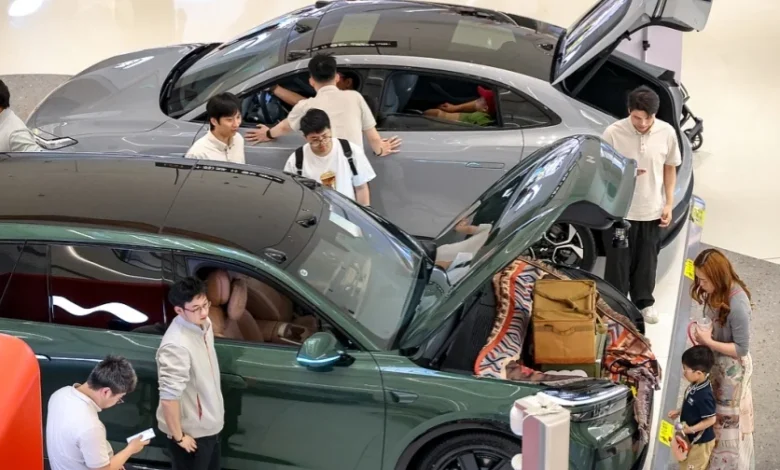
The People’s Republic of China has formally unveiled its comprehensive industrial roadmap for the automotive sector under the forthcoming 15th Five-Year Plan, establishing a groundbreaking target for New Energy Vehicles (NEVs) to command 70 percent of total domestic sales by the end of the decade. Announced by the Ministry of Industry and Information Technology (MIIT) on September 10, the sweeping legislative and strategic framework outlines a transformative vision for the world’s largest automotive market. Beyond aggressively expanding the electrification of personal and commercial transport, the policy signals a coordinated state intervention to consolidate oversupplied domestic manufacturing lines, eliminate destructive price wars, establish rigorous safety standards for connected and autonomous vehicles, and accelerate the commercialization of automated driving infrastructure across national highways and major urban arteries.
The ambitious goals detailed in the latest blueprint build upon the unexpectedly rapid maturation of China’s green automotive transition over the past several years. Under the previous five-year framework enacted in 2021, Beijing had initially established a conservative benchmark for NEVs to capture roughly 20 percent of market share by 2025. However, this projection was systematically outpaced by exponential consumer adoption, heavily propelled by aggressive corporate discounting, continuous technological improvements, and rapidly scaling domestic supply chains. According to official data compiled by the China Passenger Car Association, the market share of NEVs surged past 54 percent by 2025, effectively meeting and exceeding state objectives years ahead of schedule.
This momentum has continued to accelerate unabated. By August, NEVs accounted for an unprecedented 65 percent of all new vehicle sales nationwide. This surge has been further amplified by external geopolitical and economic factors, notably rising fuel costs driven by ongoing supply disruptions stemming from conflict dynamics in Iran, which have continuously incentivized consumers to transition away from traditional internal combustion engines toward electric alternatives. Consequently, industry analysts note that the newly instituted target of 70 percent market share by 2030 is highly likely to be reached and surpassed well before the terminal deadline, cementing electrification as an irreversible cornerstone of China’s domestic mobility landscape.
Restructuring Domestic Overcapacity and Eliminating Destructive Price Wars
Despite the impressive volume growth, the rapid expansion of China’s automotive sector has birthed severe structural vulnerabilities, chief among them being chronic overcapacity and destructive price competition. Over the preceding years, hundreds of domestic automakers engaged in protracted pricing battles to capture market share, significantly eroding profit margins across the entire supply chain. Combined with a broader 21 percent contraction in overall automobile sales during the first eight months of the year, these financial pressures have sparked widespread industry concerns regarding product quality, corporate solvency, and long-term financial sustainability.
In response to these systemic risks, the MIIT’s new guidelines explicitly prioritize the curtailment of speculative investments and the active promotion of industry consolidation. Regulators in Beijing have signaled an explicit objective to whittle down the sheer number of domestic manufacturers, forcing inefficient production lines to close and encouraging mergers and acquisitions among struggling firms. Furthermore, the ministry intends to clamp down on predatory market fragmentation by terminating unviable local government subsidies and tightening regulatory enforcement against practices that distort fair market competition.
Industry observers note that this regulatory pivot marks a decisive turning point for Chinese industrial policy. For years, local governments frequently provided financial lifelines to regional automakers regardless of economic viability, fostering an overcrowded ecosystem of low-margin producers. By enforcing strict production discipline and setting stringent quality thresholds—particularly for software-defined vehicles and advanced driver-assistance systems—Beijing aims to foster a healthier, globally competitive cohort of Tier-1 manufacturers capable of withstanding international scrutiny.
Navigating the Autonomous Driving Frontier and the Robotaxi Resurgence
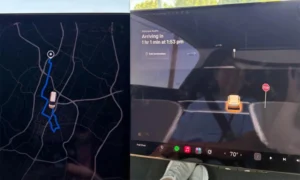
Parallel to its electrification goals, the 15th Five-Year Plan outlines a massive expansion of Autonomous Vehicle (AV) deployment across designated expressways, core urban thoroughfares, and selected secondary routes. However, this ambitious push occurs against a backdrop of acute regulatory caution. The sector was forced into a near three-month freeze earlier in the year following a high-profile traffic disruption in Wuhan, where a fleet of Apollo Go robotaxis operated by internet giant Baidu experienced widespread technical glitches, causing gridlock and leaving passengers stranded on major municipal overpasses.
To mitigate safety risks and prevent similar operational failures, the newly minted directives mandate that autonomous driving systems must achieve significantly higher safety thresholds than traditional human drivers, though specific quantitative metrics for the deployment timeline were deliberately omitted. This heightened regulatory oversight coincides with a fundamental architectural divergence between China’s autonomous vehicle development strategy and that pursued by Western industry leaders.
While Western companies such as Tesla and Alphabet’s Waymo rely heavily on vehicle-centric computing power, advanced on-board hardware suites, and independent high-definition (HD) mapping, Chinese regulators and technology firms are championing a cooperative infrastructure model known as vehicle-to-everything (V2X). Under this framework, autonomous vehicles will not operate in isolation. Instead, they will interface directly with 5G-enabled roadside sensor arrays, traffic management systems, and centralized municipal cloud computing networks. This collaborative approach distributes computational burdens between the physical vehicle and the urban infrastructure, a strategy designed to accelerate the safe commercialization of autonomous transit.
Simultaneously, the MIIT’s guidelines indicate a strategic shift in software development priorities. Recognizing the limitations and high maintenance costs of traditional HD maps, regulators are actively encouraging the adoption of end-to-end artificial intelligence models. These advanced neural network architectures reduce autonomous driving systems’ reliance on pre-mapped geographic data, enabling vehicles to navigate complex, unfamiliar environments dynamically using real-time sensor fusion and machine learning.
Standardization of Battery Technologies and Circular Economy Initiatives
The comprehensive framework also addresses the upstream and downstream environmental impacts of the electric vehicle boom by mandating the establishment of rigorous national standards for solid-state batteries. As next-generation energy storage technology transitions from laboratory settings to commercial production, Beijing is keen to preempt supply chain bottlenecks by standardizing battery architectures and manufacturing protocols across domestic producers.
Complementing these manufacturing standards are stringent regulations governing the circular economy of critical minerals. The framework finalizes comprehensive compliance processes for the systematic recovery and recycling of lithium, cobalt, and nickel from decommissioned electric vehicle batteries. Given China’s heavy reliance on imported raw materials for battery production, establishing a closed-loop domestic recycling ecosystem is viewed by policymakers as an indispensable pillar of national energy security and environmental sustainability.
Furthermore, the policy addresses international expansion. The MIIT has been formally tasked with formulating comprehensive guidelines to support domestic automakers in successfully navigating foreign markets, enhancing regulatory harmonization, and increasing international research cooperation on vehicle components and complete vehicle platforms.
Strategic Implications and Global Market Dynamics
The release of China’s 15th Five-Year automotive roadmap carries profound implications for the global automotive industry. For international legacy automakers—including legacy giants such as Toyota, Volkswagen, and Hyundai—the acceleration of China’s domestic electrification and automation standards presents both a severe competitive challenge and a stark warning.
Management officials in Beijing have long harbored ambitions for several domestic marques to secure permanent positions among the top ten largest global automakers by sales volume—a milestone that leading domestic players like BYD, SAIC, and Geely have increasingly closed in on. While these domestic champions still maintain a distinct distance in global footprint compared to their international legacy counterparts, their rapid technological iteration and cost-efficiency advantages have effectively marginalized foreign internal combustion engine models within the Chinese domestic market.
By shifting the focal point of automotive innovation from isolated vehicle engineering to integrated smart infrastructure, China’s "smart road, smart car" philosophy creates a structural divergence from Western paradigms. Whether the massive capital expenditures required to upgrade municipal infrastructure will successfully accelerate safe commercialization, or whether it will merely transfer excessive financial and operational complexity from the vehicle to the city planner, remains the central question facing industry analysts. As the 15th Five-Year Plan takes effect, the global automotive sector watches closely to see whether Beijing’s bold bet on coordinated state capitalism and infrastructure-backed autonomy will successfully redefine the future of global mobility.