U23 Japan and U23 Uzbekistan Face Off in High-Stakes ASIAD 2026 Men’s Football Semi-Final

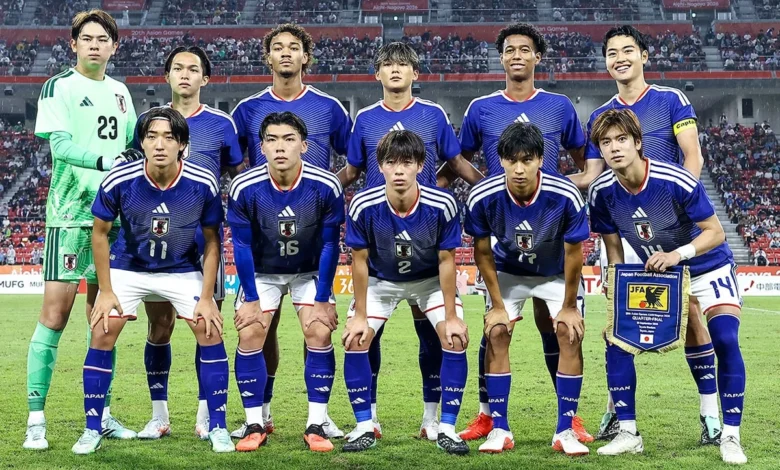
The stage is set at the Asian Games 2026 as two of the continent’s most formidable youth football programs lock horns in a high-stakes semi-final showdown. U23 Japan and U23 Uzbekistan are set to battle for a coveted spot in the men’s football gold medal match, promising a masterclass in tactical discipline, technical prowess, and physical intensity. Both nations have navigated a grueling tournament schedule, but only one can advance to the ultimate match and move one step closer to the ultimate prize.
For tournament hosts Japan, this semi-final represents a vital opportunity to inch closer to their ultimate objective: capturing the gold medal on home soil. Playing in front of passionate local supporters, the young Samurai Blue have carried the heavy burden of expectation with admirable composure. Uzbekistan, meanwhile, enters this fixture with a clear mission to overcome a formidable hurdle and secure their place in the championship match, continuing their remarkable ascent as a powerhouse in Asian youth football.
Path to the Semi-Finals: A Tournament of Resilience
The journey of both teams to the final four of ASIAD 2026 has been marked by strategic brilliance and physical endurance. Both squads have largely utilized core U21 players in this tournament, viewing the continental games as a crucial testing ground for the future generation of senior national team stars. Despite their youthful composition, both Japan and Uzbekistan have displayed the tactical maturity of seasoned veterans.
Japan’s campaign began with dominant displays in the group stage, where their trademark passing rhythm and defensive organization kept opponents at bay. The hosts showcased their depth by rotating players effectively, ensuring that key legs remained fresh as the knockout rounds intensified. Their quarter-final victory was a testament to their mental fortitude, as they absorbed intense pressure before capitalizing on clinical counter-attacks to seal their progression.
Uzbekistan, on the other hand, has carved a path defined by sheer power and relentless attacking pressure. The Central Asian side has consistently overwhelmed their opponents in the middle of the third, utilizing rapid transitions and physical dominance to dictate the tempo of matches. Their progression to the semi-final is a continuation of Uzbekistan’s impressive upward trajectory in Asian football over the past half-decade, proving that their youth development pipeline is producing world-class talent capable of competing at the highest level.
Strategic Matchup: Technical Precision Versus Physical Power
As analysts and fans dissect the impending clash, the tactical battle between Japan and Uzbekistan highlights a classic confrontation of football philosophies. Japan’s game plan is expected to revolve around possession, spatial awareness, and quick combinations in tight areas. By utilizing their technical superiority, the Samurai Blue will aim to frustrate the Uzbek press and dictate the rhythm of the match.
Conversely, Uzbekistan will likely look to disrupt Japan’s rhythm by employing a high-intensity press and exploiting physical mismatches in duels. The Central Asians have proven lethal from set-pieces and counter-attacks throughout the tournament, attributes that could prove decisive against a Japanese defense that has occasionally shown vulnerability to aerial threats and physical robustness.
Coaches from both sides have emphasized the importance of concentration and discipline during the pre-match preparations. With a berth in the gold medal match hanging in the balance, unforced errors could prove fatal. Both camps understand that their impressive performances up to this point will be rendered meaningless if they stumble at the penultimate hurdle.
Background Context: The Evolution of Asian Youth Football
The fixture between Japan and Uzbekistan is not merely a contest for a tournament final; it is a reflection of the shifting landscape of Asian football. Over the past decade, both nations have heavily invested in grassroots development and youth infrastructure. Japan’s JFA blueprint has long been considered the gold standard in Asia, focusing on technical mastery, tactical intelligence, and a unified playing philosophy from the under-15 level up to the senior team.
At the same time, Uzbekistan has emerged as a formidable force in the Asian Football Confederation (AFC). Through targeted investments by the Uzbekistan Football Association, the country has consistently produced competitive youth teams that regularly challenge traditional powerhouses like Japan, South Korea, and Saudi Arabia. Their victory in previous continental youth championships underscores the seriousness with which Tashkent approaches youth development.
The inclusion of predominantly U21 squads in this ASIAD tournament further highlights the strategic vision of both federations. Rather than treating the Asian Games as an isolated event, both Japan and Uzbekistan are using the competition as a vital stepping stone toward Olympic qualification and the 2026 and 2030 FIFA World Cup cycles. Consequently, the players on the pitch are not just playing for a regional medal; they are auditioning for permanent roles in their respective senior national teams.
Pre-Match Atmosphere and Expected Lineups
As kickoff approaches, anticipation has reached fever pitch across the host nation. Stadium tickets were sold out days in advance, and local media outlets have dedicated extensive coverage to the fixture, underscoring the cultural significance of football within the Asian Games ecosystem. Team officials have reported no major injury concerns, meaning both managers will have their strongest possible squads available for selection.
While official starting lineups are traditionally released closer to matchtime, tactical insiders anticipate minimal changes from the sides that secured victories in the quarter-finals. Japan is expected to maintain its fluid 4-2-3-1 formation, relying on its creative midfielders to unlock opposing defenses. Uzbekistan is likely to counter with a robust 4-4-2 or 3-5-2 setup, prioritizing defensive solidarity and rapid vertical distribution.
Broader Impact and Implications of the Semi-Final
The outcome of this high-stakes encounter will reverberate far beyond the stadium walls. For the winner, the reward is a guaranteed shot at continental glory and the chance to write their names into the history books of the Asian Games. The psychological boost of securing a major tournament final cannot be overstated for these young athletes, many of whom are experiencing the pressures of international multi-sport games for the first time.
For the loser, the journey does not end entirely, as a bronze medal match still awaits. However, the immediate disappointment of missing out on the gold medal match will test the resilience of the defeated squad.
As the referee prepares to blow the opening whistle, fans around the continent are guaranteed a spectacle of elite youth football. Whether through the surgical precision of Japan or the relentless power of Uzbekistan, the match promises to deliver unforgettable moments and showcase the very best of the future of Asian football.