Donald Trump holds critical dialogue with Yemen leadership amid Houthi encroachment on strategic Bab al-Mandeb maritime corridor

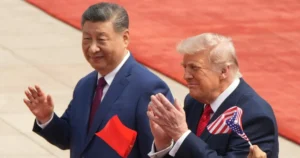
On September 20, former U.S. President Donald Trump engaged in a high-stakes telephone conversation with Rashad al-Alimi, the Chairman of the Presidential Leadership Council of Yemen. The discussion, which reportedly centered on the rapidly evolving security landscape in the Red Sea, occurred as Houthi forces intensified their efforts to consolidate control over territory surrounding the critical Bab al-Mandeb strait. This diplomatic engagement underscores the mounting pressure on global security architectures as the Houthi movement seeks to expand its strategic footprint, threatening the viability of one of the world’s most vital maritime trade chokepoints.
The conversation between Trump and Alimi comes at a precarious moment for the Middle East, characterized by a complex intersection of regional conflict, energy supply anxieties, and shifting geopolitical alignments. According to sources familiar with the exchange, Alimi sought direct assurances and expanded U.S. military support for the internationally recognized Yemeni government in its ongoing struggle against Houthi militants. However, despite the gravity of the request, Trump reportedly refrained from offering any immediate, tangible military commitments, opting instead to maintain a cautious stance that reflects the broader uncertainty regarding U.S. intervention in the region.
The Strategic Significance of the Bab al-Mandeb Strait
The recent military maneuvers by Houthi forces have brought the Bab al-Mandeb—a narrow passage connecting the Red Sea to the Gulf of Aden—to the forefront of international concern. This strait is a fundamental artery for global commerce, facilitating the transit of goods between Asia, the Middle East, and Europe. Any disruption to the freedom of navigation through this corridor carries profound economic consequences, particularly for the global energy market.
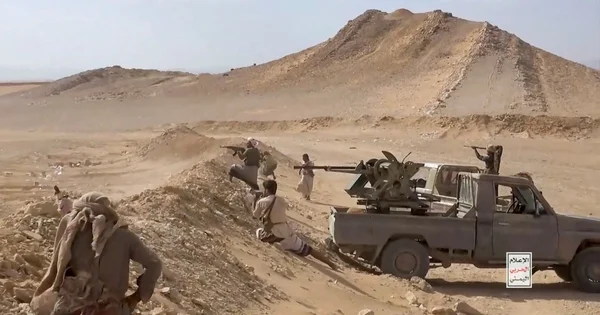
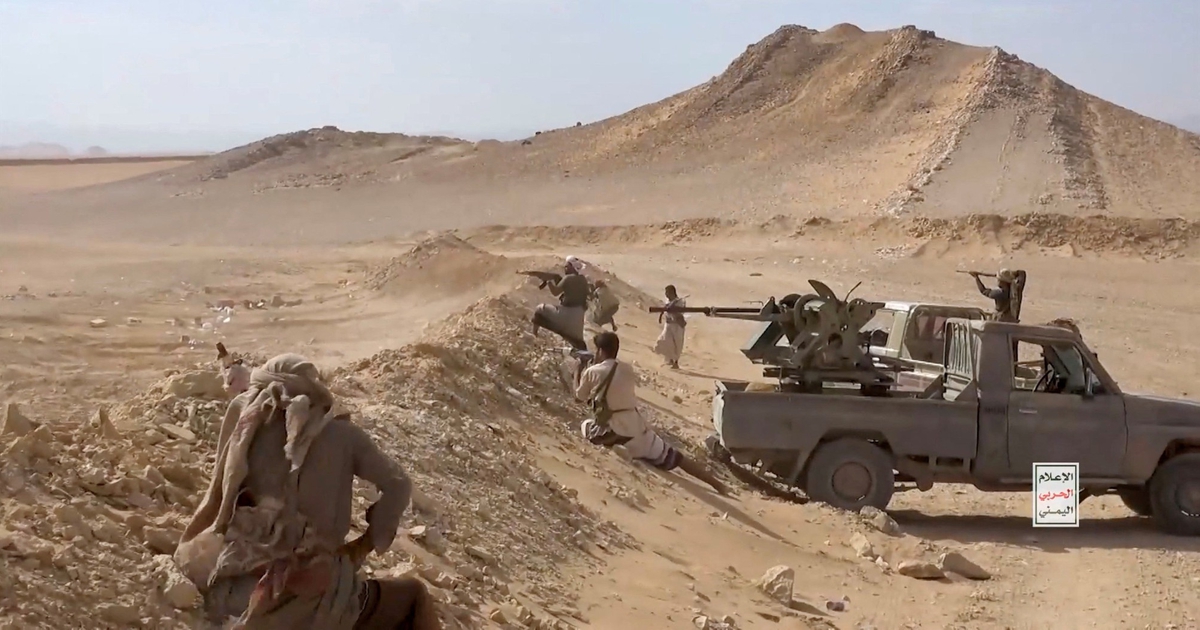
On September 21, reports surfaced that Houthi militants were actively attempting to seize the Kahboub mountain range, a region of paramount strategic value straddling the provinces of Taiz and Lahij. The capture of these high-elevation points would grant the insurgents a distinct tactical advantage, allowing them to exert direct fire control over supply routes that link the Red Sea coast to the southern territories currently held by the Yemeni government. By controlling these heights, the Houthis would be in a position to effectively sever logistics chains, further isolating government-held areas and escalating the humanitarian and military crisis.
Chronology of Escalation: September 2026
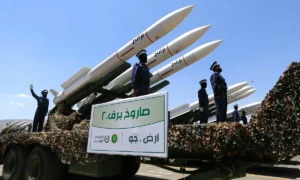
The week leading up to the discussion between Trump and Alimi was marked by a sharp increase in kinetic activity. On September 20, the same day as the diplomatic call, Houthi forces claimed to have conducted a series of strikes against targets within Saudi Arabia, specifically targeting Riyadh. While Saudi authorities have maintained a measured silence regarding the specifics of the incident, the claim alone reflects the Houthi’s increasing willingness to project power beyond the borders of Yemen.
The surge in military operations throughout September represents a significant escalation in the conflict, pushing the confrontation to a new level of intensity. The following timeline outlines the rapid deterioration of the situation:
- Early September 2026: Houthi forces begin massing troops near the Taiz-Lahij border, signaling a shift from defensive posturing to aggressive territorial expansion.
- September 15, 2026: Intelligence reports confirm increased drone and missile activity in the Al Jawf province, indicating a synchronized effort to stretch government defenses.
- September 20, 2026: Houthi forces announce strikes against Riyadh. Later that day, Donald Trump conducts a phone call with Rashad al-Alimi to address regional stability.
- September 21, 2026: Houthi militants launch a renewed offensive to capture the Kahboub mountain range, aiming to solidify their grip on the Bab al-Mandeb periphery.
Global Energy Markets and the "Hormuz-Mandeb" Dilemma
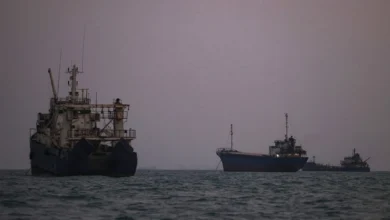
The instability in Yemen has forced a recalculation of energy security, particularly as the risks surrounding the Strait of Hormuz continue to mount. Saudi Arabia, historically reliant on the Bab al-Mandeb for a significant portion of its oil exports, has been forced to divert more volume through the Strait of Hormuz to avoid the contested Red Sea zones.
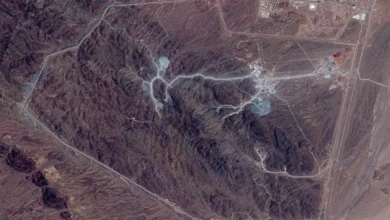
Data satellite analysis reveals a stark shift in transit patterns. In early August, Saudi oil exports through the Strait of Hormuz were approximately 700,000 barrels per day. By late September, that figure surged to 2.9 million barrels per day. This redirection has exacerbated the financial burden on the Kingdom, as maritime insurance premiums and shipping costs have climbed sharply in response to the heightened threat environment.
Energy analysts note that the dual pressure of the Houthi threat at the Bab al-Mandeb and the ongoing volatility between the U.S. and Iran has kept global oil prices elevated, consistently hovering above the 100 USD per barrel mark. This price floor is largely attributed to the persistent fear that a full-scale blockade or targeted attacks on tanker infrastructure could trigger a global energy shock.
The Diplomatic Balancing Act
The interaction between the U.S. political establishment and the Yemeni leadership highlights a difficult policy dilemma. For the United States, the challenge lies in balancing the commitment to support long-term regional allies—such as Saudi Arabia—while simultaneously avoiding entanglement in a protracted, multi-front military conflict.
According to reporting by The New York Times, the U.S. administration had been preparing a potential air strike campaign against Houthi assets on September 20, following an urgent request from Saudi Crown Prince Mohammed bin Salman. However, sources suggest that these plans were abandoned at the eleventh hour. This hesitation reflects a broader reluctance to engage in direct combat operations without a comprehensive strategy to contain the fallout.
This is not the first time the U.S. has navigated this path. During the first two months of 2025, the U.S. conducted a series of targeted strikes against Houthi positions, eventually halting operations after securing a fragile ceasefire agreement. At the time, the U.S. maintained back-channel communications with Houthi representatives, who had previously claimed they would not target U.S.-flagged vessels. However, as the geopolitical landscape has darkened, that tenuous understanding appears to be fracturing.
Implications for Regional Stability
The international community is now closely monitoring whether the Houthi movement’s recent territorial gains will prompt a more robust response from the UN and regional powers. The classification of the Houthi movement as a terrorist organization by the U.S. and several European allies remains a point of contention that limits the effectiveness of traditional diplomatic mediation.
If the Houthi forces succeed in securing the heights overlooking the Bab al-Mandeb, the implications for global trade could be severe. The strait is not merely a regional waterway but a global utility; nearly 10% of total seaborne petroleum trade and a substantial portion of containerized cargo pass through this narrow passage annually. A sustained threat to this corridor would likely necessitate an international maritime security mission, similar to those seen in the late 20th century to protect tankers in the Persian Gulf.
As the situation develops, the focus remains on whether the current diplomatic channels—including those utilized by figures like Trump—can de-escalate the hostilities before they reach a point of no return. With the Yemeni government struggling to hold its ground and the Houthi forces emboldened by their recent operational successes, the path toward a sustainable ceasefire appears narrower than ever. The international community faces a critical juncture where the necessity of maintaining open global trade routes may ultimately necessitate a more decisive and unified response to the security vacuum in the Red Sea.