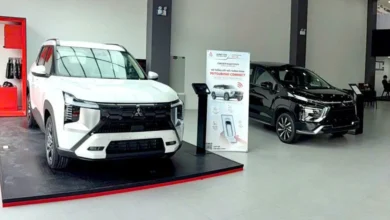
Top Used Car Selections Under 150 Million VND in Vietnam: A Practical Guide for Budget-Conscious Buyers

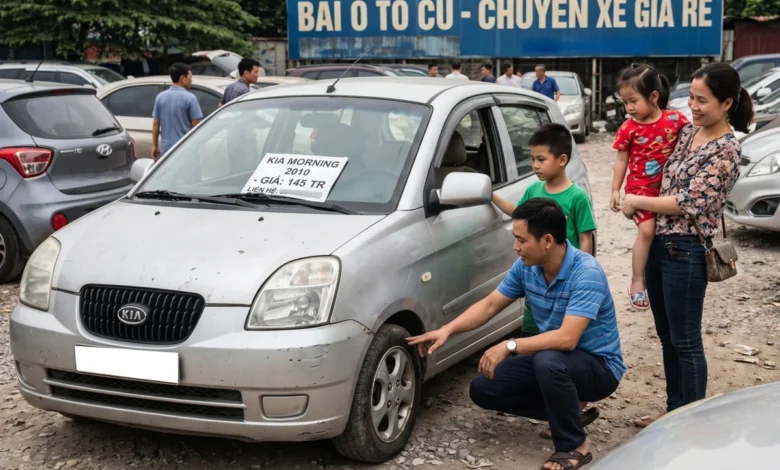
With a budget of approximately 150 million VND, purchasing a used car in the Vietnamese market requires a high degree of pragmatism and a clear understanding that modern aesthetics, advanced technology, and contemporary designs are largely out of reach. In this price bracket, the primary objective for consumers shifts from luxury to survivability, focusing on core values such as mechanical durability, ease of repair, availability of affordable spare parts, and low operating costs. For many Vietnamese families looking to transition from motorbikes to four-wheeled transport for safety and weather protection, this segment represents a vital entry point into car ownership. Industry experts and long-term car dealers suggest that while the options are limited, there are several "legendary" models that remain reliable even after 10 to 20 years of service.
The Economic Context of the 150 Million VND Car Segment
The secondary car market in Vietnam has seen significant fluctuations over the past decade. As the middle class expands, the demand for affordable mobility has surged. However, Vietnam’s high tax regime on new vehicles—including Special Consumption Tax and high registration fees—keeps new car prices elevated compared to neighboring Southeast Asian nations. This creates a robust demand for vehicles priced under 200 million VND.
For 150 million VND (approximately $6,000 USD), a buyer is typically looking at vehicles produced between 2009 and 2015. These cars have often surpassed the 100,000-kilometer mark and may have histories involving commercial service, such as taxis or early ride-hailing platforms. Consequently, the selection process must be rigorous, prioritizing the mechanical integrity of the engine and chassis over the condition of the paint or the features of the infotainment system.
Top Recommendations for Reliable Used Cars Under 150 Million VND
Based on technical evaluations from seasoned mechanics and market liquidity data, four models stand out as the most viable options for Vietnamese consumers in the current economic climate.
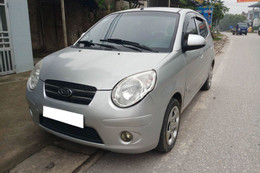
1. KIA Morning (2010–2012): The Universal Urban Choice
The KIA Morning has long been a staple of Vietnamese streets. Produced and distributed by Truong Hai Auto Corporation (THACO), this A-segment hatchback is arguably the most "accessible" car in the country. Within a 150 million VND budget, buyers can typically find the 1.1L manual transmission (MT) versions or even the 1.1L automatic transmission (AT) "base" models from the 2010–2012 era.
Advantages:
The Morning’s greatest strength lies in its ecosystem. Because it is so common, spare parts are available in almost every garage across Vietnam, from major cities to rural provinces. The components are exceptionally affordable, and the mechanical layout is simple enough for most technicians to service without specialized equipment. Its compact dimensions make it ideal for navigating the narrow alleys of Hanoi or Ho Chi Minh City. Furthermore, the Morning retains its value well, allowing owners to resell the vehicle with minimal depreciation when they are ready to upgrade.
Disadvantages:
The trade-off for its convenience is a cramped interior, particularly in the rear seating area. Noise, vibration, and harshness (NVH) levels are high, and the vehicle can feel unstable when driven at high speeds on highways. The safety features are rudimentary, often lacking airbags or ABS in the lower trim levels of that era.
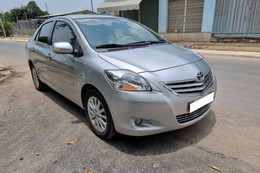
2. Toyota Vios (2009–2012): The King of Durability
In the Vietnamese automotive psyche, the Toyota Vios is synonymous with "indestructibility." For a budget of 150 million VND, buyers can access the second-generation Vios (2009–2012), specifically the 1.5E MT variant. It is important to note that many Vios units at this price point were formerly used as taxis (the "Limo" trim), so buyers must exercise caution during inspection.
Advantages:
The 1.5L 1NZ-FE engine used in this generation is legendary for its longevity. It is a "workhorse" capable of reaching 300,000 to 500,000 kilometers if maintained properly. The Vios offers a significantly larger cabin and trunk space compared to A-segment hatchbacks, making it a better choice for families with children or those who frequently carry luggage. Its fuel efficiency remains competitive even by modern standards.
Disadvantages:
The design of the 2009–2012 Vios is considered dated. The interior is utilitarian, featuring hard plastics and a basic analog instrument cluster. More importantly, vehicles manufactured before 2011 are subject to a 6-month registration (inspection) cycle in Vietnam, which adds to the annual administrative burden and cost for the owner.
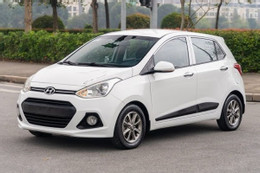
3. Hyundai Grand i10 (2013–2015): The Balanced Contender
The Hyundai Grand i10 entered the Vietnamese market as an import from India before local assembly began. It quickly challenged the KIA Morning’s dominance by offering a slightly larger footprint. For 150 million VND, buyers can often find the 1.0L MT "Base" versions from 2013 to 2015.
Advantages:
The "Grand" in its name signifies its superior wheelbase compared to the Morning, providing much-needed legroom for rear passengers. The ride quality is generally perceived as more "solid" and stable than its KIA counterpart. Like the Morning, the Grand i10 benefits from a massive network of service centers and cheap parts.
Disadvantages:
A significant portion of Grand i10s in the used market were used for Grab or traditional taxi services. These "ex-service" cars often have high mileage and worn-out interior components. The 1.0L engine is adequate for city driving but struggles when the car is fully loaded or climbing steep grades.
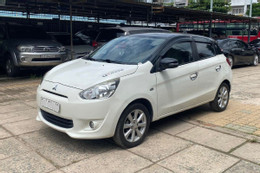
4. Mitsubishi Mirage (2014–2015): The Imported Efficiency
For those who prioritize Japanese engineering and fuel economy, the Mitsubishi Mirage 1.2 MT is a compelling alternative. Often imported as a Completely Built Unit (CBU) from Thailand, the Mirage offers a different value proposition.
Advantages:
The "Made in Thailand" label carries a prestige of build quality in Vietnam. The Mirage features a 1.2L MIVEC engine that is exceptionally fuel-efficient, often consuming only 4.5 to 5 liters per 100 kilometers. The chassis and bodywork are generally more resistant to rust compared to locally assembled cars of the same age. It also offers a surprisingly spacious interior for its exterior dimensions.
Disadvantages:
The Mirage’s three-cylinder engine produces a distinct "growl" and can be noisy under acceleration. Its "bubbly" design has not aged as gracefully as some competitors, and spare parts—while available—can be slightly more expensive and harder to find immediately compared to Toyota or KIA components.
Technical Analysis: The 80/20 Budgeting Rule
Purchasing a 150 million VND car is only the first step. Automotive experts recommend the "80/20" rule for this segment: allocate 130–135 million VND for the purchase and reserve 15–20 million VND for an immediate "refresh."
Upon acquisition, a car of this age typically requires a major service including:
- Replacement of all fluids (engine oil, coolant, brake fluid, transmission fluid).
- Inspection and possible replacement of the timing belt and water pump.
- New tires, as older tires may have hardened or lost grip.
- Brake system overhaul (pads, rotors, and cylinders).
- Suspension check (bushes, shocks, and ball joints).
Investing this 20 million VND upfront transforms a "risky" used car into a reliable daily driver.
Chronology of Market Shifts and Regulations
The availability of these cars is influenced by Vietnamese government policies. In 2020, Decree 10 required commercial transport vehicles to switch to yellow license plates. This led to a wave of older service vehicles being sold off to the private market as owners upgraded to meet newer standards or exited the business during the pandemic. This influx has kept the prices of the Vios and Grand i10 stable despite inflation.
Furthermore, the Vietnam Register (Cục Đăng kiểm) has strict regulations regarding vehicle age. Cars older than 12 years must undergo inspection every 6 months rather than every 12 or 18 months. This is a critical factor for buyers of 2009–2012 models to consider, as it necessitates more frequent visits to inspection centers, which have recently faced backlogs due to regulatory crackdowns.
Expert Advice: Avoiding the "Lemon" Trap
Professional car inspectors warn against "unusually cheap" listings. A Vios or Morning priced 20-30% below market value often hides a history of severe accidents, engine flooding (hydro-lock), or "clocking" (odometer fraud).
"In this price range, the paper trail is as important as the engine," says Nguyen Van Nam, a veteran used car dealer in Hanoi. "Buyers should check the registration history to see if the car was registered to a taxi company. While service cars aren’t inherently bad if maintained, they usually require a more thorough mechanical inspection of the gearbox and engine compression."
Broader Impact and Conclusion
The existence of a vibrant sub-150 million VND car market is essential for Vietnam’s socio-economic development. It provides a safer transport alternative for families who would otherwise be exposed to the elements and traffic risks on motorbikes. While these vehicles lack the "flash" of modern EVs or luxury SUVs, they represent the "workhorse" spirit of the Vietnamese economy.
In conclusion, while 150 million VND requires the buyer to sacrifice modern comforts, it is a sufficient budget to secure a reliable, durable vehicle if the choice is made with a focus on mechanical fundamentals. By selecting "national favorites" like the KIA Morning or Toyota Vios, and keeping a contingency fund for maintenance, consumers can enjoy the benefits of car ownership without the crushing weight of high-interest debt or rapid depreciation. Prudence, professional inspection, and realistic expectations remain the three pillars of a successful used car purchase in Vietnam.