Mitsubishi Attrage market strategy shifts as aggressive dealership discounts drive prices below entry-level segment standards

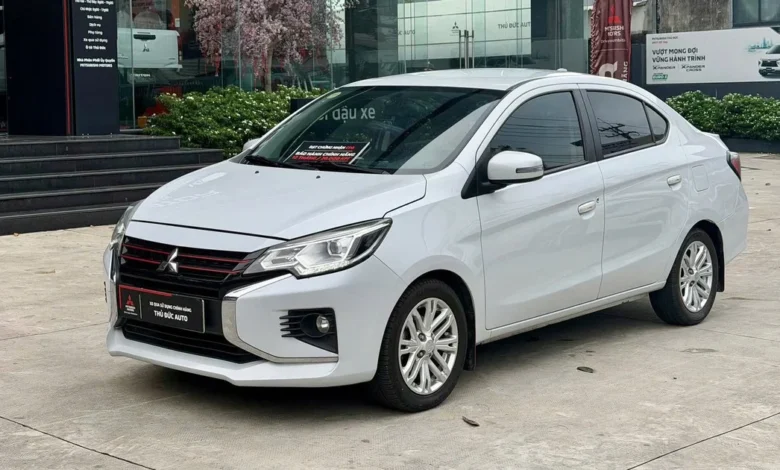
The automotive landscape in Southeast Asia, particularly within the Vietnamese market, is currently witnessing a significant pricing realignment. Mitsubishi Motors, through its network of authorized dealerships, has initiated a series of aggressive promotional campaigns for the Mitsubishi Attrage, with some retail locations offering price reductions of up to 90 million Vietnamese Dong (VND). This strategic move has effectively brought the retail price of a B-segment sedan down to the competitive territory typically occupied by A-segment city cars, forcing a re-evaluation of value propositions among entry-level vehicle buyers.
The Dynamics of the Current Discount Campaign
The current pricing structure for the Mitsubishi Attrage is not uniform; rather, it varies significantly based on the specific dealership, regional inventory requirements, and the specific production year of the vehicle. While the official suggested retail price (MSRP) remains the baseline, the actual transaction price has become increasingly fluid.
For instance, at a dealership in Tay Ninh, the entry-level Manual Transmission (MT) variant of the Mitsubishi Attrage is being offered at approximately 334 million VND. This represents a substantial decrease from its typical market standing of 380 million VND. Beyond the direct price reduction, these promotional packages often include value-added incentives, such as one year of complimentary scheduled maintenance and an assortment of genuine automotive accessories. Industry observers note that for a consumer with a modest initial capital outlay—as low as 67 million VND in some instances—the barrier to entry for a brand-new vehicle has been lowered to an unprecedented degree.
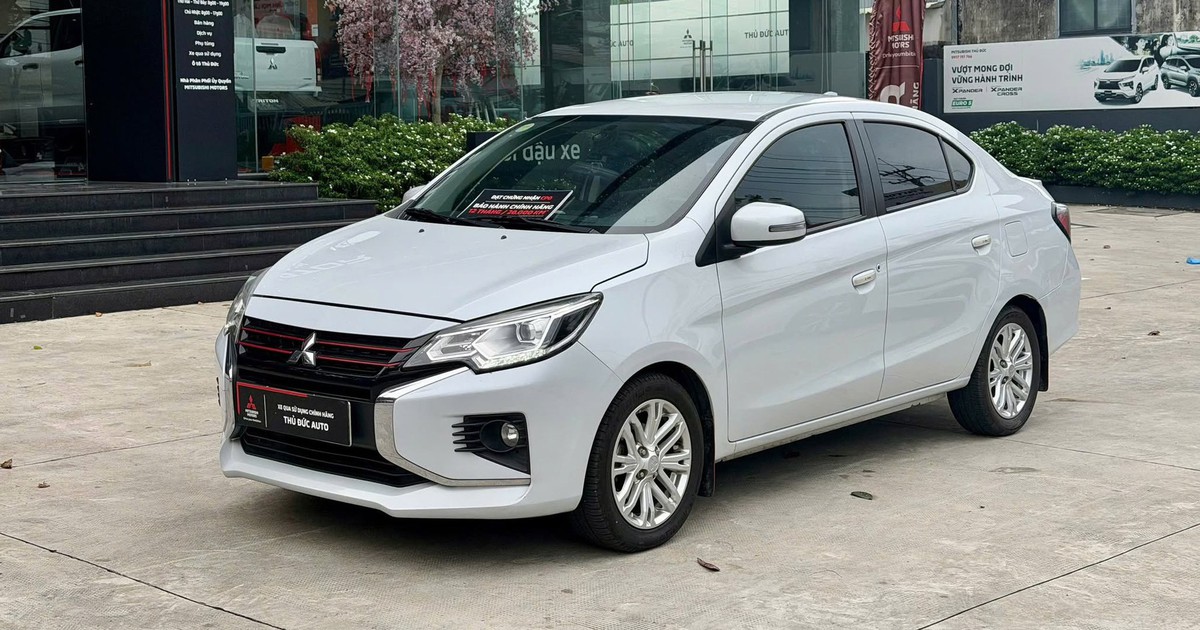
The most dramatic reductions, however, are reserved for the top-tier trims. The CVT Premium variant, which carries a standard list price of 490 million VND, is being cleared at some dealerships for 400 million VND. It is important to note that these specific high-value discounts are primarily targeted at units manufactured in the 2025 production cycle. This is a standard industry practice during the final fiscal quarter, as manufacturers and dealers prioritize the liquidation of "older" inventory to make room for incoming 2026 models.
Contextualizing the Market Impact
The decision to aggressively discount the Attrage creates a complex ripple effect throughout the local automotive market. By pushing the price point of the Attrage toward the 330–400 million VND range, Mitsubishi is directly challenging the market dominance of A-segment hatchbacks.
The Kia Morning and the Hyundai Grand i10, which typically command a price range between 360 million and 455 million VND, are now facing direct price competition from a vehicle that technically resides in a higher segment. The B-segment designation typically implies a larger chassis, increased interior volume, and often superior highway stability compared to the A-segment. Consequently, a consumer who may have been settled on a compact city car like the i10 might find the prospect of a larger, imported B-segment sedan at a comparable or lower price point to be a compelling alternative.
Vehicle Specifications and Value Proposition
The Mitsubishi Attrage currently sold in Vietnam is imported as a completely built unit (CBU) from Thailand. This origin status often serves as a point of confidence for regional buyers, as Thailand-built vehicles generally maintain a reputation for consistent quality control within the ASEAN automotive ecosystem.
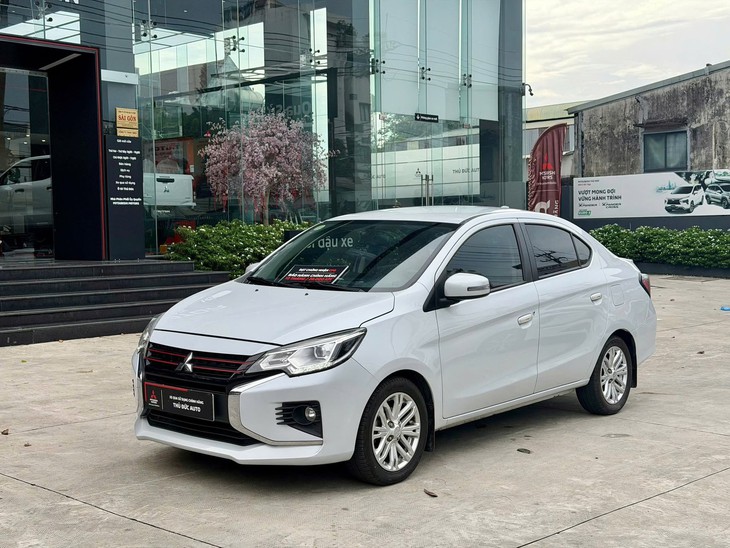
The vehicle is powered by a 1.2-liter MIVEC, three-cylinder engine, designed primarily for fuel efficiency and urban maneuverability rather than high-performance output. It produces approximately 78 horsepower and 100 Nm of torque. While these figures are modest by global standards, they are well-suited to the dense traffic patterns of Southeast Asian metropolitan areas. The drivetrain options include a standard five-speed manual transmission or a Continuously Variable Transmission (CVT).
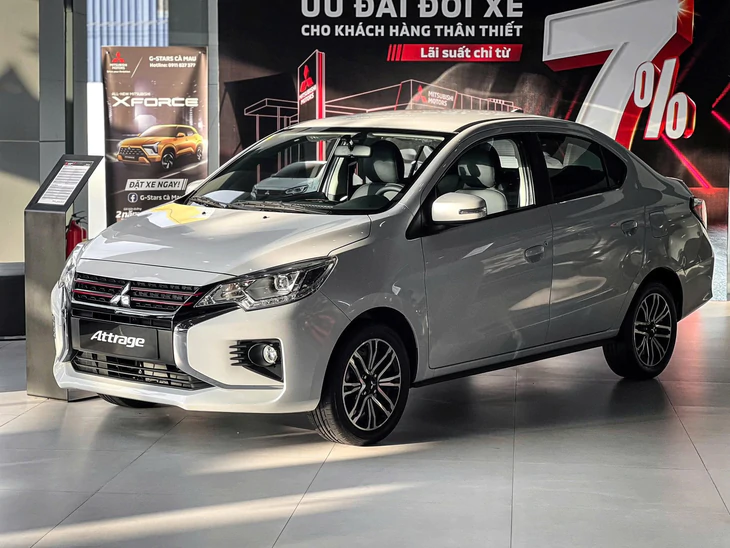
Safety and technology features, while not class-leading, provide the essential requirements for the modern driver. The CVT Premium trim includes Bi-LED headlights, daytime running lights, 15-inch alloy wheels, and an interior cabin equipped with a 7-inch touchscreen infotainment system that supports Apple CarPlay and Android Auto. Standard safety architecture across the lineup includes Anti-lock Braking System (ABS), Electronic Brakeforce Distribution (EBD), dual airbags, a rearview camera, and cruise control.
Analytical Perspective: The "Year-End" Liquidation Strategy
The aggressive pricing strategy seen in October 2026 is a microcosm of the broader cyclical nature of the automotive trade. Dealerships operate under strict inventory turnover mandates. As the year approaches its conclusion, the pressure to meet annual sales targets intensifies. Simultaneously, the impending arrival of next-year models necessitates a clearing of the showroom floor.
From an economic perspective, this period provides a "buyer’s market" for those who prioritize immediate value over the potential resale benefits of a vehicle with a newer model-year designation. The 90 million VND discount is not merely a marketing tactic; it is an inventory management necessity.
However, analysts caution that such deep discounting can have long-term effects on brand perception and residual value. When a vehicle is consistently sold at prices significantly below its MSRP, the secondary market value of that vehicle may adjust downward to reflect the lower acquisition cost of new units. Prospective buyers should weigh the immediate savings against the potential impact on future trade-in or resale values.
The Broader Implications for Competitors
The pressure now shifts to manufacturers of A-segment vehicles. Hyundai and Kia, the leaders of the A-segment in the region, must now decide whether to engage in a "race to the bottom" regarding pricing or to lean into the brand loyalty and the specific utility features that differentiate their hatchbacks from the Attrage.
Furthermore, this move by Mitsubishi underscores the intensifying competition in the B-segment sedan market. With consumers increasingly sensitive to inflationary pressures and the rising cost of living, the ability of an automaker to offer "more car for less money" has become the primary driver of market share acquisition.
Summary of Market Chronology (2026)
- Q1-Q2 2026: Market stabilization following the introduction of updated 2026 model variants. Pricing remains largely consistent with manufacturer MSRPs.
- Q3 2026: Consumer demand begins to fluctuate due to macroeconomic factors. Dealers start implementing moderate, localized promotions to sustain volume.
- October 2026: Inventory levels for 2025-manufactured units reach a critical threshold. Mitsubishi dealerships initiate widespread, deep-discount campaigns, with price cuts reaching the 90 million VND milestone for top-tier trims.
- Late Q4 2026 (Projected): Market focus will likely transition to "clearance" events for all remaining non-2026 inventory. Analysts expect other manufacturers to introduce competitive financing offers or maintenance-inclusive bundles to prevent losing market share to the discounted Attrage.
Conclusion
The current situation involving the Mitsubishi Attrage serves as a timely reminder of the volatility inherent in the retail automotive sector. For the consumer, it represents a rare window of opportunity to secure a B-segment sedan at an A-segment price. For the industry, it is a clear signal that the competition for the entry-level buyer is fiercer than it has been in recent years. As the year draws to a close, the market will continue to monitor whether this aggressive pricing strategy translates into a sustainable increase in market share for Mitsubishi, or if it merely accelerates the industry-wide trend toward compressed margins in the entry-level categories.