Motorcyclist narrowly escapes fatal collision after cutting off heavy truck at Thai Nguyen intersection

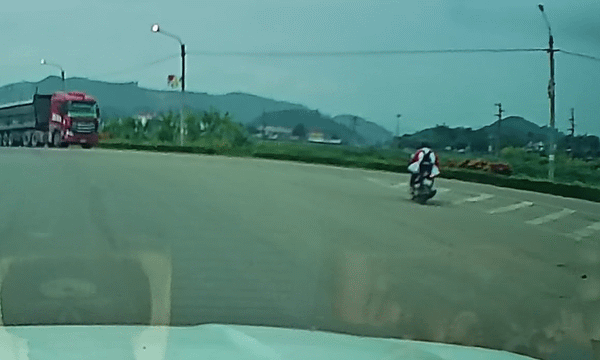
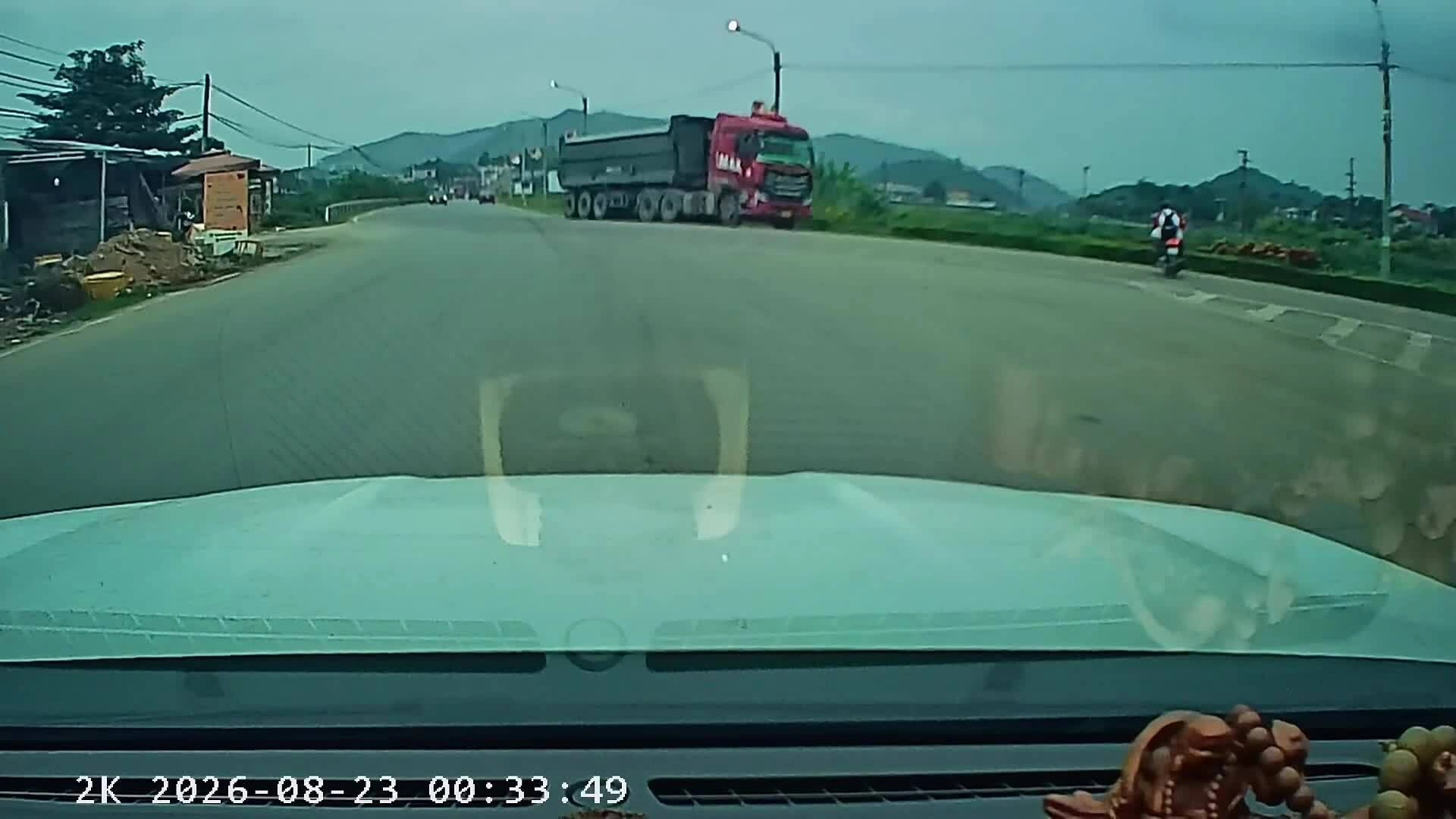
The escalating challenge of road safety in regional transport hubs came to the forefront on November 6, when a reckless maneuver by a motorcyclist nearly resulted in a catastrophic accident on National Highway 37 in Thai Nguyen Province. Dashcam footage captured a heart-stopping moment at the Co Van T-junction in An Khanh Commune, where a rider suddenly accelerated from a minor access road, darting directly across the path of an oncoming heavy freight truck traveling on the privileged main artery. Thanks to swift reactions and effective braking by the truck driver, a collision was averted, leaving transportation safety advocates and local authorities once again raising alarms regarding hazardous driving behaviors at secondary-to-primary road intersections.
Chronology and Anatomy of a Near Miss
The incident unfolded during peak daylight hours on November 6, capturing the inherent vulnerabilities present at un-signalized intersections throughout Vietnam’s expanding national highway network. According to visual evidence provided by witness Ngo Hong Quan, the sequence of events began when the motorcycle operator approached the intersection via a rural branch road. Despite the presence of explicit warning signage indicating an upcoming junction with a prioritized highway—signifying that traffic on the minor road was legally obligated to yield—the rider failed to decelerate adequately.
Instead, the motorcyclist executed a sudden burst of acceleration, surging directly into the path of the oncoming multi-ton commercial vehicle. Commercial trucks of this class possess massive physical momentum and require significantly extended stopping distances compared to standard passenger vehicles. The heavy vehicle operator was forced to engage emergency braking maneuvers instantly. The margin between a safe passage and a fatal impact was measured in mere fractions of a second, highlighting the extreme risks associated with impulsive road-crossing decisions.
Infrastructure Challenges and Regional Traffic Context
The location of the incident, the Co Van T-junction along National Highway 37 within An Khanh Commune, is a well-traveled nexus connecting agricultural and industrial zones in Thai Nguyen Province. Regional transport corridors such as this frequently experience mixed traffic flows, combining high-speed commercial freight, agricultural transport vehicles, and localized two-wheeled traffic including motorcycles and electric bicycles.
Transportation safety experts note that intersections where minor rural roads or residential alleys intersect with major national highways are notorious hotspots for severe traffic incidents. Drivers emerging from secondary roads often suffer from cognitive biases, underestimating the speed of oncoming traffic on primary routes or assuming that smaller vehicles can clear lanes faster than physics permits. The presence of warning signs at the Co Van junction confirms that the regulatory framework was established; however, human compliance remains a persistent variable that infrastructure alone cannot completely control.
Comparative Analysis: A Broader Trend of Vulnerability
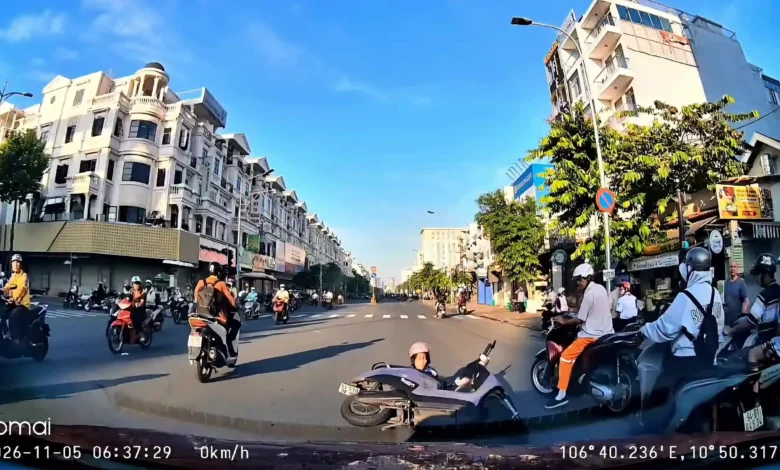
This incident in Thai Nguyen is not an isolated event, but rather part of a troubling national trend involving abrupt lane-changes and right-of-way violations by two-wheeled commuters. Just one day prior, on November 5, a strikingly similar and more violent collision was recorded on Quang Trung Street in Ho Chi Minh City. In that instance, a young student operating a high-speed electric motorcycle suddenly veered left across the path of an oncoming automobile while the car was executing a legal turn. The resulting impact threw the rider clear of the vehicle, serving as a graphic reminder of the physical devastation that accompanies failure to yield.
Traffic data compiled across urban and rural sectors indicates that two-wheeled operators—including motorcyclists, scooter riders, and electric bicycle users—represent a disproportionate percentage of traffic casualties. The physical vulnerability of riders, combined with frequent lapses in defensive driving habits, creates a volatile mixture on modern roadways where vehicle speeds and traffic densities are steadily increasing.
Defensive Driving Principles and Regulatory Framework
In the wake of the Thai Nguyen close call, road safety organizations and traffic police have reiterated fundamental defensive driving principles designed to prevent such near-misses from escalating into fatalities.
First and foremost, operators navigating from secondary roads onto major thoroughfares are mandated by law and common sense to significantly reduce their speed well in advance of the junction. Comprehensive visual sweeps of both directions are required before attempting any crossing or merging maneuver. Crucially, at intersections marked with yield signs or priority warnings, the legal burden rests entirely on the driver entering from the minor road to cede the right-of-way to all traffic already established on the main route.
Furthermore, driving instructors emphasize the critical importance of understanding vehicle dynamics, particularly regarding heavy commercial transport. Due to gross weight ratings and physics-based inertia, large trucks cannot stop on demand. Attempting to "beat" a truck through an intersection by accelerating at the last moment is characterized by safety analysts as an extreme form of hazardous risk-taking, often equated to gambling with one’s life.
Broader Economic and Social Implications
The economic and societal costs of traffic collisions involving commercial freight and vulnerable road users extend far beyond the immediate parties involved. For transport logistics companies, unexpected emergency braking events and collision investigations cause delivery delays, potential cargo damage, and increased operational stress for commercial drivers who are often unfairly penalized for accidents caused by reckless third parties.
From a public health perspective, the strain on emergency medical services and regional healthcare facilities resulting from preventable road trauma remains a significant concern for municipal authorities. Each near-miss captured on dashcam footage serves as a diagnostic indicator of systemic issues within driver education, licensing enforcement, and localized safety compliance.
As infrastructure projects continue to link rural production centers with major metropolitan markets across Vietnam, ensuring the safety of secondary-to-primary road transitions will require a multifaceted approach. This strategy must encompass rigorous public awareness campaigns, enhanced traffic police patrols at high-risk junctions, and stricter enforcement of right-of-way regulations to protect all road users from the catastrophic consequences of split-second recklessness.