Ho Chi Minh City Master Plan 2025-2050 Sets 100-Year Vision to Transform into a Global Megacity

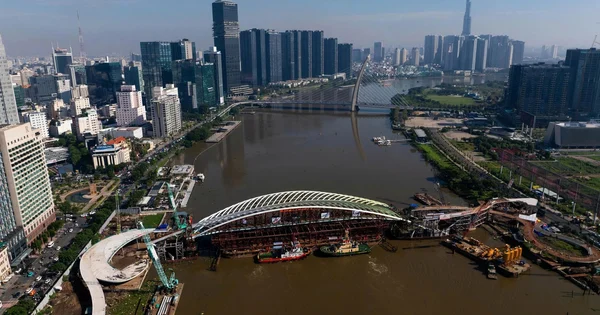
Ho Chi Minh City is embarking on a historic spatial and economic transformation following the recent issuance of Conclusion 112 by the Politburo, led by Permanent Member Tran Cam Tu. This directive greenlights the comprehensive Master Plan for Ho Chi Minh City covering the period from 2025 to 2050, with a visionary 100-year outlook. The blueprint is designed to redefine Vietnam’s southern economic powerhouse as a dynamic development catalyst, an efficient multi-layered spatial entity, and a globally competitive metropolitan hub capable of standing alongside the world’s leading urban centers.
Strategic Objectives and Economic Projections for 2050
At a recent session, the Ho Chi Minh City People’s Council officially approved the comprehensive master plan, establishing a multi-centric megacity model capable of accommodating a projected population of nearly 27 million residents by 2050. The framework shifts the city’s trajectory away from its post-consolidation, grid-like framework toward an integrated, highly specialized urban network.
Under the approved metrics, Ho Chi Minh City aims to scale its Gross Regional Domestic Product (GRDP) per capita dramatically. From the current baseline of approximately $7,500, the target is to reach at least $14,500 by 2030, $25,000 by 2035, and an ambitious $75,000 per capita by 2045. Economic growth targets dictate that average GRDP expansion must remain at a minimum of 10 percent annually through 2030, with total GRDP scaling to between $200 billion and $225 billion.
To operationalize this century-long vision, the city’s development has been mapped across distinct phases. The 2026–2030 period focuses on four primary pillars: breakthrough technologies, innovation, strategic infrastructure, and urban services. The subsequent 2031–2035 phase will leverage this foundational infrastructure to maximize productivity. By 2036–2045, the economy is slated to pivot decisively toward a knowledge-based model, followed by sustained, sustainable growth post-2045 geared entirely toward achieving global city status.
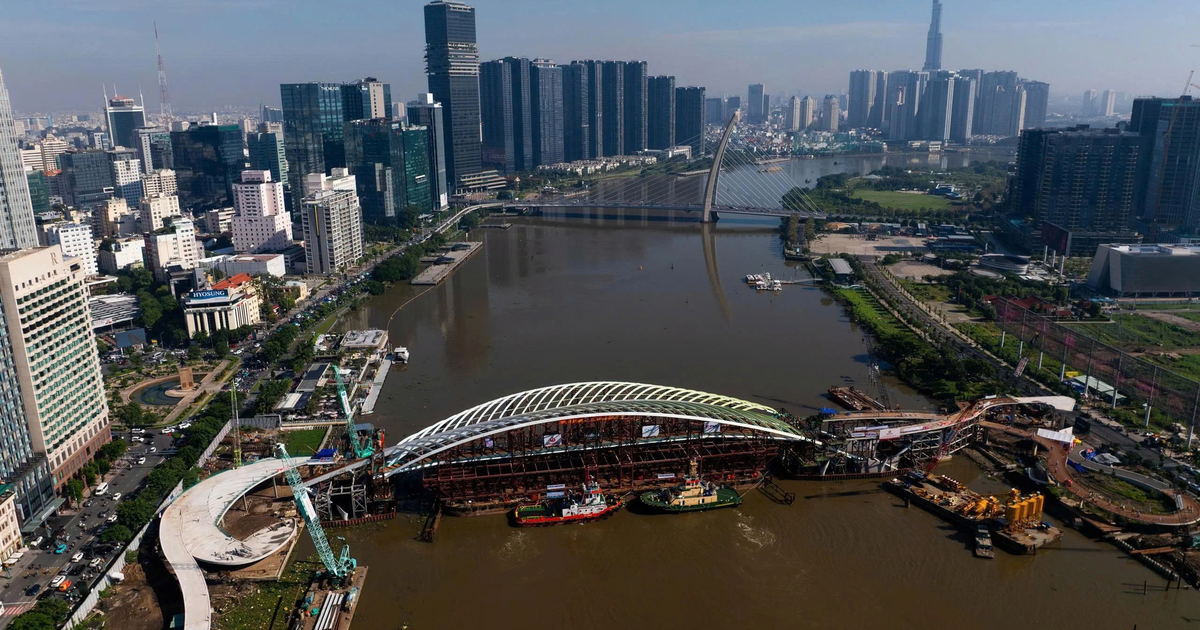
A Multi-Tiered Spatial Structure: Five Growth Corridors and Five Sub-Centers
The newly minted urban architecture reorganizes the expanded territory into five strategic growth corridors, five sub-centers, five strategic linkages, and ten administrative development zones. This spatial reorganization seeks to exploit both subterranean and elevated dimensions, moving beyond traditional surface-level land exploitation.
The core of this new metropolis centers on the historic Saigon-Cholon-Thu Thiem urban axis, which will function as the central nucleus for high-end commerce, advanced services, and international financial institutions. Surrounding this core, the five growth corridors distribute specialized economic functions:
- The Eastern Corridor focuses on innovation, research, and development, anchored by the Saigon Hi-Tech Park and Vietnam National University, HCMC.
- The Western Corridor is designated for specialized urban clusters in healthcare and education.
- The Northern Corridor prioritizes advanced manufacturing, high-tech industry, and smart logistics hubs.
- The Southern Corridor acts as the gateway for maritime economics, port infrastructure, free trade zones, and international logistics.
Furthermore, marine economy has been elevated to a primary growth driver. By tightly integrating industrial production with deep-water port systems—specifically the Cai Mep-Thi Vai and Can Gio transshipment hubs—the city intends to embed itself more deeply into global supply chains. Transportation infrastructure is no longer viewed merely as a mechanism for internal transit, but as the structural skeleton organizing economic activity, human settlement, and regional production. Urban rail, regional rail networks, and rapid transit links to airports and seaports will form the backbone of this new paradigm. Additionally, urban planning strategies have officially pivoted from defensive flood management to climate-adaptive urban design.
Macroeconomic Implications and Regional Spillover Effects
Evaluating the macroeconomic ramifications of the master plan, experts emphasize that Ho Chi Minh City’s strategic repositioning will yield massive nationwide benefits. Dr. Nguyen Van Dien, Head of the Department of Political Economy at the Ho Chi Minh Academy of Politics Region II, notes that the targets, while aggressive, are entirely feasible given the legal foundations provided by the National Assembly’s special urban governance mechanisms.
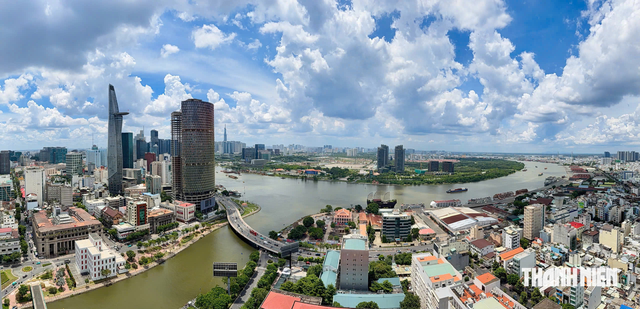
"Ho Chi Minh City generates approximately one-third of the state budget and one-quarter of the nation’s GDP," Dr. Dien observed. "When the city achieves rapid, breakthrough growth, it acts as an economic locomotive pulling the entire national economy forward. More importantly, the successful pilot programs and special mechanisms implemented here will establish a scalable blueprint for other major cities such as Hanoi, Hai Phong, Da Nang, and Dong Nai, elevating the country’s overall development baseline."
Assoc. Prof. Dr. Tran Hoang Ngan, a member of the National Assembly, echoed these sentiments, highlighting the city’s recent performance on the global stage. Citing the Oxford Economics Global Cities Index, which recently ranked 1,000 global cities, Dr. Ngan pointed out that Ho Chi Minh City climbed 81 positions from 286 to 205 following its administrative consolidation. The ultimate objective is to propel the city into the global top 100.
"The integration of the five growth corridors, five sub-centers, and five strategic linkages creates a unified, mutually supportive chain," Dr. Ngan stated. "With synchronized investments in urban rail, energy grids, and digital infrastructure, we are witnessing a fundamental structural transformation that turns the centennial vision into a tangible reality."
Overcoming Implementation Hurdles and Resource Constraints
Despite the optimism surrounding the 100-year master plan, economic analysts and urban planners caution that execution remains the decisive factor. Past pitfalls involving prolonged "suspended planning"—which wastes resources and causes widespread public frustration—must be rigorously avoided. Any future adjustments to the master plan must stem from robust scientific data and long-term vision rather than short-term administrative impulses.
Financing the infrastructure required for this vision represents a formidable challenge. The city requires an estimated $130 billion to construct its comprehensive railway, metro, and expressway network. Scholars emphasize that without addressing capital constraints, smart logistics and international financial centers cannot reach their full potential.
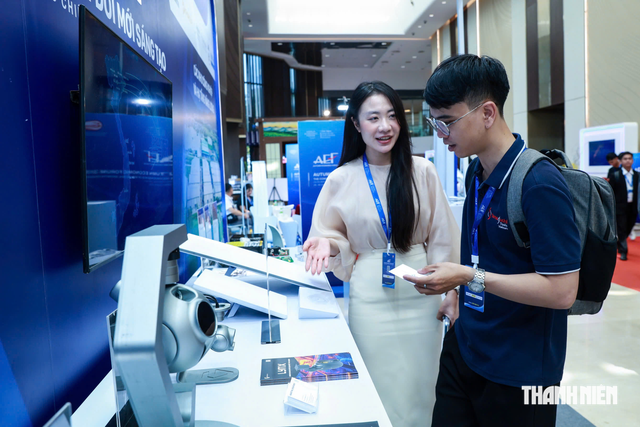
To attract international capital on par with global financial hubs like Singapore, Hong Kong, Tokyo, or New York, the city must expedite the establishment of sophisticated financial, commodity, and digital asset exchanges. Moreover, human capital acquisition remains vital. In an era marked by global population aging, Ho Chi Minh City holds a distinct demographic advantage with its young, dynamic labor force. However, administrative bottlenecks regarding work permits, housing access, and residency documentation for international experts and high-skilled diaspora members must be streamlined.
Strategic Alignment with National Growth Goals
Conclusion 112 explicitly mandates that the Ho Chi Minh City Party Committee continue refining its development models to maximize the post-merger advantages of its expanded territory. The Politburo directive stresses the importance of avoiding scattered investments, coupling economic expansion tightly with human-centric cultural development, environmental protection, climate change adaptation, and national defense.
By establishing clear strategic priorities and deploying resources efficiently, Ho Chi Minh City is systematically removing historical bottlenecks. The alignment between central strategic guidance and local implementation opens an unprecedented window of opportunity. Supported by improved governance, targeted institutional reforms, and sustainable capital mobilization, the 100-year master plan serves as the ultimate master key, unlocking Ho Chi Minh City’s potential to compete confidently as a premier global megacity in the decades to come.