Novaland targets revenue exceeding 20 billion USD, an eightfold increase in debt management strategy

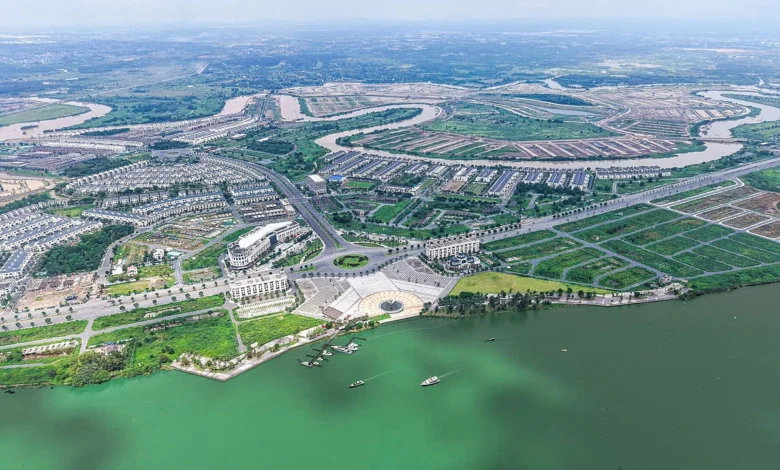
Novaland Group (NVL) has unveiled a comprehensive strategic roadmap extending to 2030, signaling an ambitious period of growth and structural realignment. The real estate giant aims to achieve a total revenue exceeding 516.8 trillion VND—approximately 20 billion USD—derived from its core project clusters. This target represents an eightfold increase compared to the company’s current debt levels of approximately 61.9 trillion VND, as of the most recent financial disclosures.
The announcement, delivered during an investor meeting held on November 7, marks a pivotal moment for the developer as it seeks to stabilize its balance sheet while simultaneously accelerating project delivery. By focusing on four key strategic hubs—the Ho Chi Minh City central projects, Aqua City, NovaWorld Phan Thiet, and NovaWorld Ho Tram—the company intends to secure a cumulative profit of 188.3 trillion VND (approximately 7.3 billion USD) over the next five years.
Strategic Pillars and Project Revenue Drivers
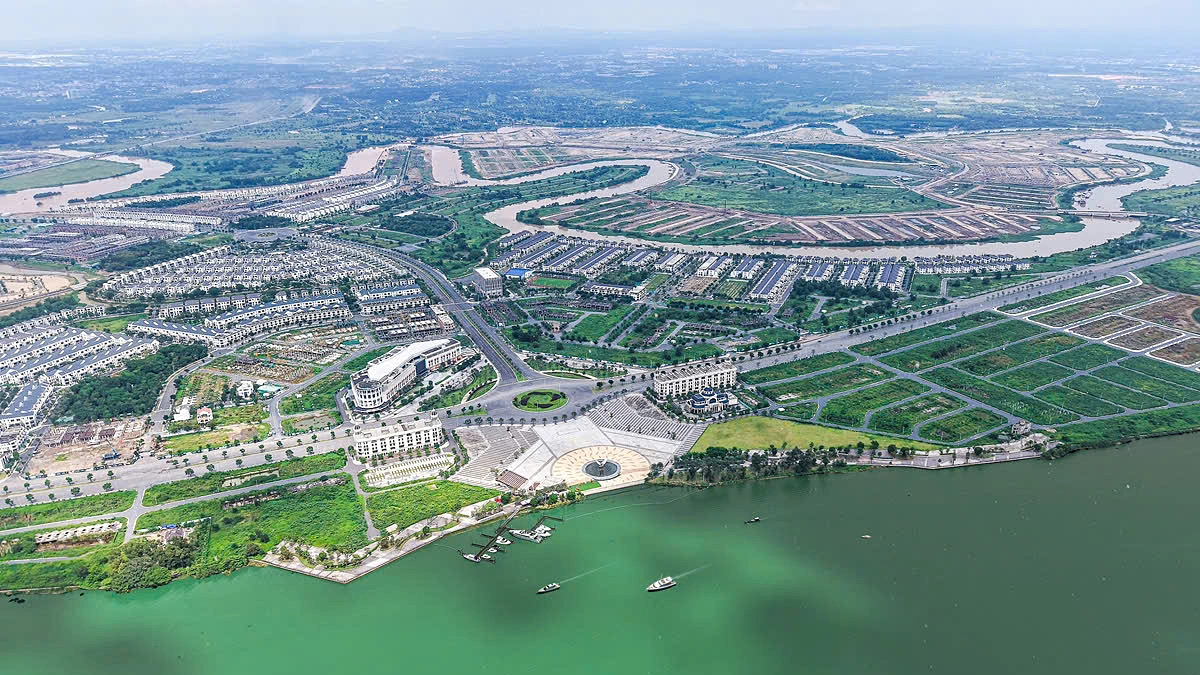
The cornerstone of this ambitious projection is the Aqua City project, which is poised to contribute the largest share of both revenue and profitability. According to the company’s projections, Aqua City is expected to generate nearly 219 trillion VND in revenue and roughly 88.1 trillion VND in profit. These figures account for 42% and 47%, respectively, of the aggregate targets across the four primary project clusters.
The financial significance of Aqua City is underscored by its delivery schedule. As of the end of September, the project encompassed nearly 13,200 products, with approximately 1,300 units already handed over to customers. Novaland’s development timeline is aggressive: the company expects to deliver an additional 200 units in the fourth quarter of this year, followed by 2,200 units in 2027, and over 5,400 units in 2028. By 2029, the firm anticipates completing the transfer of 4,100 units.
Nguyen Thi Xuan Han, Head of Investor Relations at Novaland, emphasized that Aqua City serves as the primary engine for the company’s growth during the 2027–2028 period. Beyond the revenue targets, the company is prioritizing the operational integration of utility systems within these developments to enhance the value proposition for investors and residents alike.
Complementing this is the NovaWorld Phan Thiet project, which carries a revenue projection of 221.5 trillion VND and a profit target of 73.3 trillion VND. While this project is vital to the group’s long-term portfolio, its financial impact is weighted toward the latter half of the decade, specifically the 2029–2030 period. Meanwhile, projects located within the central districts of Ho Chi Minh City are expected to provide a consistent revenue stream, projected at 48 trillion VND with a profit of 14.7 trillion VND.
Navigating Debt and Financial Restructuring
The announcement of these high-growth targets occurs against a backdrop of ongoing efforts by Novaland to manage its debt obligations. As of the end of September, total debt stood at 61.89 trillion VND, representing a modest reduction of 826 billion VND since the beginning of the year.
The composition of this debt has shifted in response to the company’s operational requirements. Domestic loans now constitute the largest portion of the group’s liabilities, totaling over 32.9 trillion VND. This figure represents an increase of 2.9 trillion VND compared to the end of 2025, a growth attributed to the strategic injection of capital required to accelerate construction and project completion.
Conversely, foreign debt has decreased from over 2.6 trillion VND to approximately 1.98 trillion VND. Additionally, the company has successfully reduced its private placement and public bond obligations by 1.1 trillion VND, bringing that balance down to 9.1 trillion VND.
Tran Thi Phuong Thao, Director of the Capital Markets Department at Novaland, noted that the company has implemented a segmented approach to debt resolution. By categorizing debts by their nature and source, the company has been able to engage in direct, productive negotiations with bondholders and credit institutions. These discussions are focused on tailoring repayment plans to align with the cash flow generation of specific project phases and the company’s contractual obligations.
"Our delivery schedule for the coming years is built upon a realistic assessment of our ability to raise capital," Thao stated. "We are working closely with our lending banks to ensure that fund disbursement is tied strictly to actual construction progress. Our priority remains the completion of projects that offer the fastest turnaround for cash flow, which in turn allows us to honor our debt obligations."
Operational Performance and Market Context
In the first nine months of the year, Novaland reported net revenue of over 10.2 trillion VND, doubling its performance compared to the same period in the previous year. Profit after tax reached 2.87 trillion VND, exceeding the annual plan by 55%. However, industry analysts point out that cash flow collection remains a point of focus. During this same nine-month window, cash collected from customers reached approximately 6.3 trillion VND, a figure that highlights the gap between recognized accounting revenue and actual cash inflow—a common characteristic of large-scale real estate development cycles.
The broader market implications of Novaland’s strategy are significant. By committing to a transparent delivery schedule and a clear debt reduction path, the company aims to restore investor confidence in a sector that has faced considerable headwinds due to liquidity constraints and regulatory adjustments in recent years.
Future Outlook and Economic Implications
The transition toward 2030 for Novaland is not merely a matter of balance sheet management; it is a fundamental shift in business model. The transition from a developer that focuses on rapid land acquisition to one that prioritizes the operational, revenue-generating lifecycle of its assets is a move that mirrors global trends in real estate investment.
By 2028, the company aims to have handed over more than 9,000 products. This massive influx of completed inventory is expected to provide the capital necessary to sustain the group’s operations and reduce reliance on external financing. The integration of high-end utilities and infrastructure within these mega-projects is intended to drive recurring revenue and improve the overall marketability of the remaining land bank.
The success of this roadmap depends heavily on several external factors, including interest rate stability, continued support from domestic banking institutions for construction financing, and the overall recovery of the domestic property market. While the targets are ambitious, the company’s ability to exceed its 2024 profit forecasts suggests a level of operational resilience.
As Novaland enters the final stretch of the current year, the market will be watching the fourth-quarter delivery figures closely. The ability to meet the 200-unit target for the final quarter will serve as a bellwether for the company’s ability to meet its more expansive goals for 2027 and beyond. The firm’s focus on "Project-Linked Financing"—whereby capital is tied to the physical progress of specific developments—appears to be the chosen mechanism to bridge the gap between its current financial commitments and its long-term growth vision.
In summary, the next five years will be critical for Novaland. The company is effectively betting on its ability to execute large-scale construction projects while simultaneously deleveraging. If the company maintains its current pace of construction and successfully executes its debt restructuring, it stands to emerge as a more streamlined and financially stable entity by the turn of the decade.