Ocean Flower Island: Inside the Rise, Fall, and Reimagining of China’s Unlikely Artificial Resort Megaproject

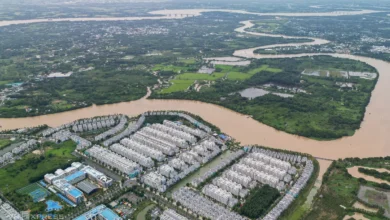
The grand ambition behind Ocean Flower Island—a massive, flower-shaped artificial archipelago off the coast of Danzhou, Hainan Province—once envisioned a self-sustaining tourism and residential utopia mirroring the opulence of Dubai. Promoted aggressively by the embattled real estate behemoth China Evergrande Group, the project was designed to accommodate up to 200,000 residents across a staggering 7.8-square-kilometer expanse reclaimed from the sea. However, years after its initial rollout, Ocean Flower Island stands today as a glaring monument to the systemic risks of China’s debt-fueled real estate model—a place where architectural grandeur clashes sharply with fluctuating occupancy rates, and where multi-billion-dollar investments have been forced into complex administrative and functional transformations.
From a 160 Billion Yuan Megaproject to Empty Towers
When Evergrande first unveiled Ocean Flower Island, the corporate titan projected a total investment value of 160 billion yuan (approximately $22 billion USD or 624,005 billion VND). The financing structure behind the development relied heavily on a high-leverage business model: corporate borrowing from domestic banks, high-cost trust financing, and advanced deposits from prospective homebuyers, rather than substantial self-owned capital reserves.
The master plan for the archipelago was extraordinarily ambitious. It featured three distinct petals blooming over the ocean, housing tens of thousands of residential apartments alongside sprawling tourism, hospitality, and entertainment infrastructure. Among its centerpiece attractions were the 5,121-room Castle Hotel, vast water parks, marine theme parks, international convention centers, commercial shopping districts, and multiple recreational complexes. On paper, it was conceived as a thriving coastal metropolis. In reality, the pace of actual occupancy lagged far behind construction milestones. By January 2022, after nearly six years of intense development, Evergrande disclosed in an investor letter that cumulative capital expenditures had reached only about 81 billion yuan, with residential units completed for approximately 60,000 households.
The Phenomenon of the Migratory Birds: Winter Surges and Summer Lulls
Despite its designation as a ghost town during off-peak periods, Ocean Flower Island is far from permanently deserted; rather, it operates under a unique seasonal rhythm driven by China’s domestic migration patterns.
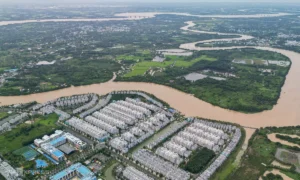
During the off-peak season spanning from April to September, the island’s resident population dwindles to a sparse 15,000 to 20,000 people. Nighttime aerial views of the massive residential complexes reveal a striking picture of stillness, with fewer than 10% of apartments showing illuminated windows, while commercial streets and retail storefronts limp along with bare-minimum operations.
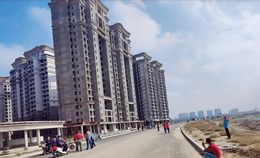
Conversely, the island undergoes a dramatic demographic transformation during the peak winter season from October to March. As Northern China plunges into sub-zero temperatures, the population of Ocean Flower Island surges past 50,000 to 80,000 people, occasionally touching 100,000 during the Lunar New Year holiday. This influx consists primarily of retirees affectionately known as "migratory birds"—northern citizens who travel south to Hainan to escape the bitter winter cold. These seasonal residents typically rent sea-view apartments for modest sums ranging from 500 to 700 yuan per month (approximately 1.9 to 2.7 million VND) during off-peak periods, or purchase properties outright from distressed investors looking to cut their losses at a fraction of their peak market value.
Property values on the island reflect this volatility. Small apartments—such as 23-square-meter units valued at roughly 170,000 yuan (646 million VND) and 39-square-meter units priced around 180,000 yuan (684 million VND)—trade for prices equivalent to the cost of a modest family car in China’s major tier-1 cities. For retirees seeking a warm winter sanctuary located just a ten-minute drive from local multi-specialty hospitals, these heavily discounted units offer an accessible refuge, even if the broader economic viability of the development remains precarious.
The Regulatory Saga of Island No. 2: From Demolition Orders to State Acquisition
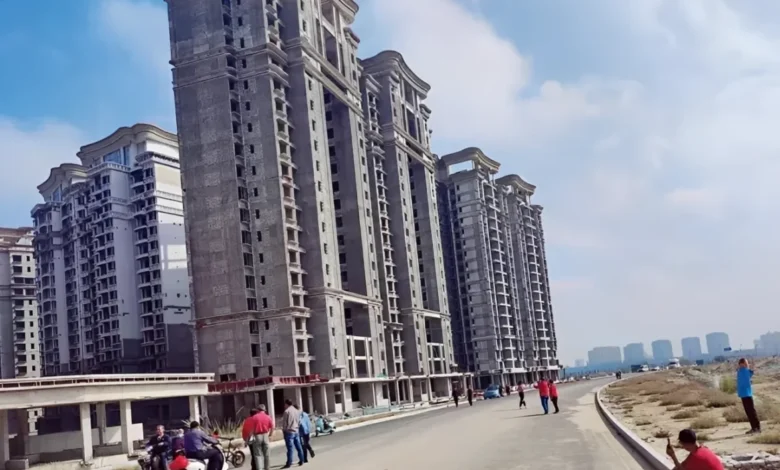
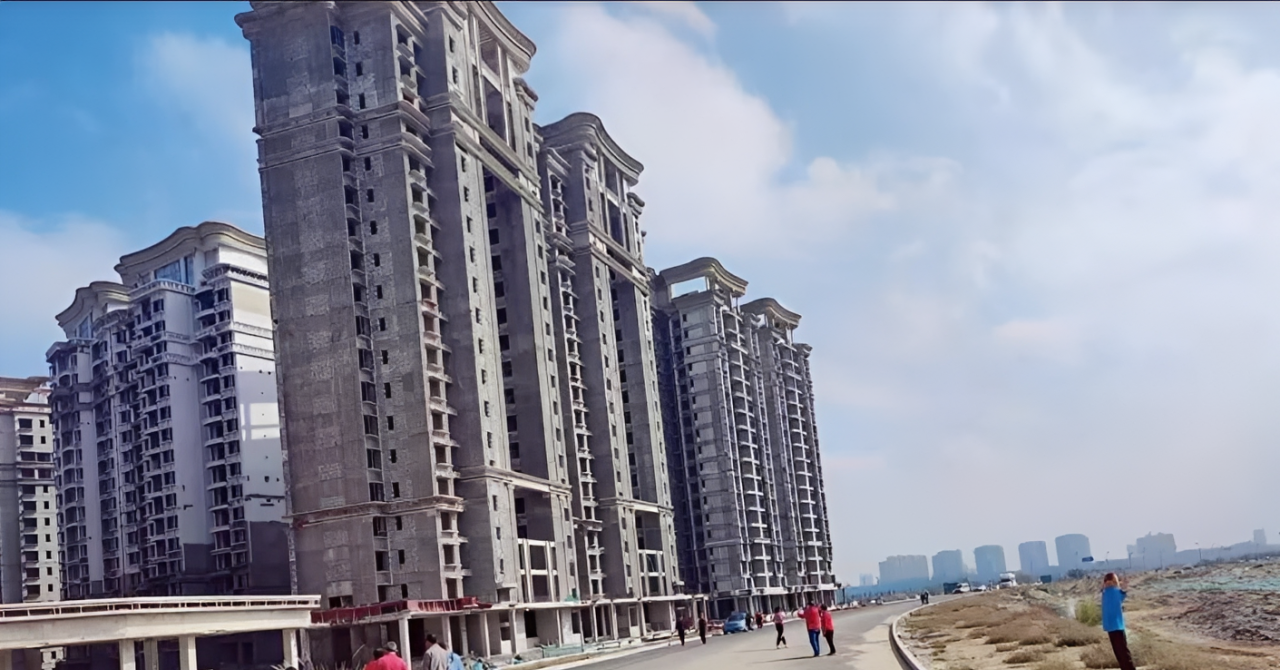
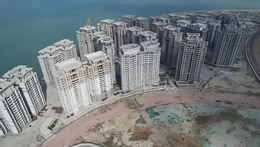
Perhaps the most dramatic chapter in the history of Ocean Flower Island involves the regulatory enforcement surrounding the 39 nearly completed residential towers situated on Island No. 2.

The trouble began in 2021 when the Danzhou city government issued a sudden demolition order for these 39 buildings, covering a total floor area of over 430,000 square meters, citing severe violations of environmental protection and urban planning regulations. Evergrande initially filed appeals against the ruling. By April 2022, the enforcement stance shifted from outright demolition to administrative seizure and functional readjustment.
By May 2026, the local government had fully absorbed the 39 towers under state control, repurposing them into affordable rental housing and hotel apartments managed within the state-monitored housing pool to serve local industrial and livelihood needs. According to the revised municipal master plan, 16 of the towers were designated for long-term rental housing, 4 were converted into hotel apartments, and the remaining 19 were slated for new investment promotion initiatives. This decisive pivot averted the immense waste of demolishing structural assets worth hundreds of millions of dollars, instead converting them into publicly regulated resources.
Complementary infrastructure has also slowly adapted to support the resident population. The Binhai branch of the Hainan Western Central Hospital officially commenced operations on July 20, 2024, significantly bolstering local medical service capacity. Meanwhile, neighborhood supermarkets maintain affordable pricing comparable to mainland rural counties, fresh produce markets operate daily within residential zones, and local public bus routes—such as Route 105—continue to traverse the island with fares priced under 1 yuan per trip.
The Collapse of Evergrande and Wider Systemic Implications
Even as Ocean Flower Island struggles to find structural equilibrium under public administration, its parent company, China Evergrande Group, has sunk deep into corporate liquidation.
Evergrande defaulted on the vast majority of its debt obligations in late 2021, setting off a cascading liquidity crisis across China’s real estate sector. In January 2024, the High Court of Hong Kong officially ordered the liquidation of the group. Nearly three years into the wind-down process, court-appointed liquidators have managed to recover approximately $435.9 million USD, against recognized creditor claims totaling roughly $46 billion USD, resulting in a debt recovery rate of less than 1%. Initial payouts to unsecured creditors are not anticipated until early 2027, with the final recovery amounts remaining highly uncertain.
At its peak, Evergrande was among China’s largest property developers, carrying a staggering total liability load estimated at around $300 billion USD. The conglomerate’s collapse has become a definitive textbook case study illustrating the structural vulnerabilities of a real estate development model excessively reliant on high financial leverage and speculative pre-sales.
While Ocean Flower Island was not the sole catalyst behind Evergrande’s downfall, the megaproject starkly highlights the profound chasm between corporate ambitions of building massive tourism-real estate enclaves and the grim realities of actual market demand, long-term maintenance costs, and shifting regulatory frameworks. As local authorities work to salvage and repurpose stranded assets like the Island No. 2 towers, Ocean Flower Island endures as a complex living archive of China’s real estate boom and bust cycle.